
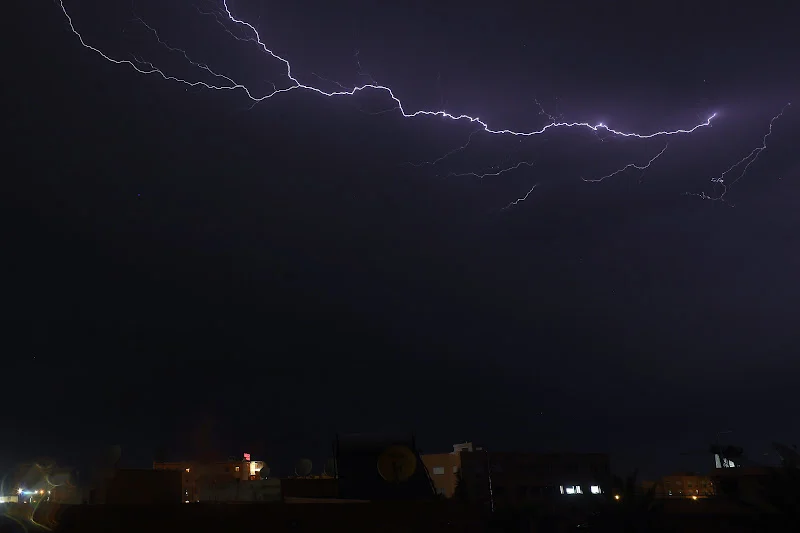
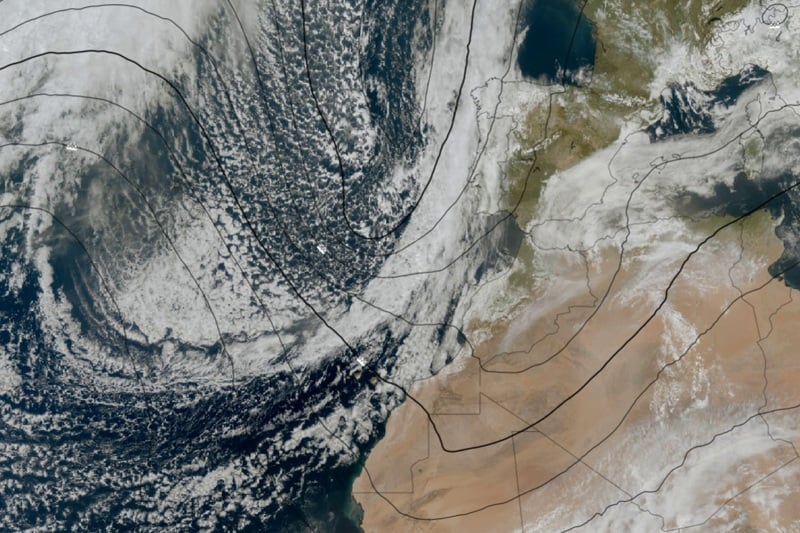
Storm Francis continued to batter Morocco through the weekend and into early this week, bringing torrential rain, hurricane‑force winds, and snow in the mountains, prompting widespread infrastructure disruptions across multiple regions.
The deep Atlantic low has triggered red weather alerts from the national meteorology service, with authorities warning that the most dangerous conditions could persist until mid‑week.
As of January 5, authorities report that several key transport routes remain impassable due to flooding, washed‑out surfaces and unsafe travel conditions despite efforts to restore normal traffic.
According to the official bulletin from the Ministry of Equipment and Water, dozens of road segments were reopened after rainfall eased in some areas, but 18 major axes remain closed because of continuing high water levels in wadis or unsafe conditions caused by the storm’s effects.
These closures include five national roads, four regional roads, and nine provincial roads across multiple provinces where floodwaters or damaged infrastructure prevent safe passage.
The most affected areas include Ouarzazate, Tinghir, Chichaoua and Taroudant, where valleys have over saturated and isolated rural and mountain localities.
Even where roads have been reopened by Ministry of Equipment crews and partner maintenance teams, restrictions remain in place in spots prone to flash flooding.
Some reopened routes still ban heavy vehicles or ask motorists to exercise extreme caution near wadis and low points.
In the Souss‑Massa region, intense rainfall caused forceful floods in multiple wadis, leading to the complete shutdown of the road linking Tiznit and Agadir.
Dozens of buses, trucks and private cars were reported stuck along this corridor, with motorists waiting for water to recede and for emergency crews to secure the road before travel can resume safely.
Local officials warned that continued high water and strong currents make attempts to pass the location unsafe until conditions improve.
Authorities are actively monitoring conditions and said they will reopen additional sections as soon as water levels fall and safety can be guaranteed.
Emergency and municipal authorities are also coordinating roadside support and monitoring of weaker structures, including bridges and culverts, especially in areas still under red weather alerts.
Civil protection units have urged drivers to avoid non‑essential travel through flooded or high‑risk areas, particularly near river beds and in the High and Middle Atlas, where snow accumulations have closed higher mountain passes and cut off some village access.
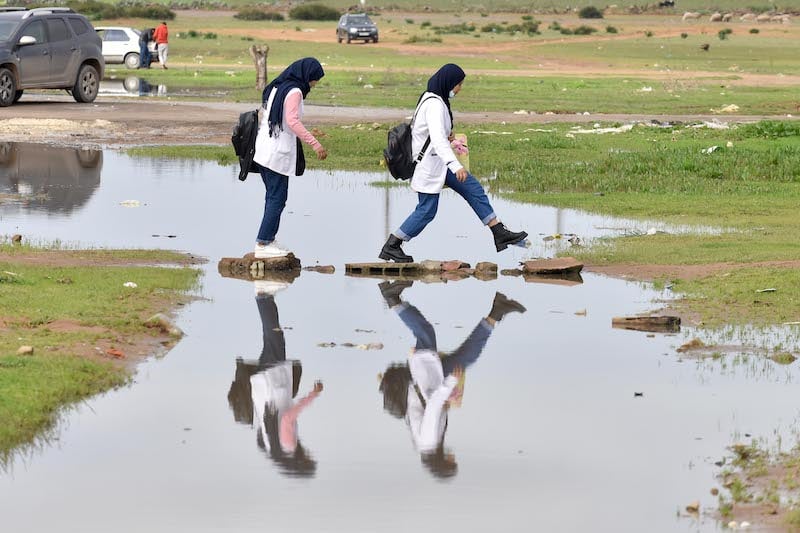
Heavy rainfall associated with the storm has overwhelmed drainage systems and pushed water levels high in valleys and low‑lying areas, forcing authorities to close or restrict traffic.
Snowfall above 1600 meters has made some mountain roads hazardous or temporarily closed, disrupting access to small villages and cutting off supply routes in remote areas. Snow chains have been advised for essential travel where roads remain open.
Coastal infrastructure has also come under strain. Strong gusts exceeding 90–100 km/h and heavy surf have battered Atlantic coastal zones.
At Marrakech‑Menara Airport, roof panels inside one terminal area collapsed under the force of winds and rain, prompting closure of parts of the arrivals hall and emergency repairs.
Officials said no injuries were reported but sections of the airport were cordoned off while maintenance teams worked to secure the structure.
Power and utilities have experienced intermittent outages in some provinces as lines and poles were damaged by falling trees or blown debris.
The heavy rains and strong winds also caused part of a traditional mud‑brick house to collapse in the village of Smoura, Aït Izdik commune, Midelt province, leaving no injuries but some material damage. The extreme weather directly triggered the collapse, with years of neglect making the old structure especially vulnerable.
Classes were suspended in Tiznit and Essaouira provinces on Monday due to the severe weather forecasts and safety concerns for students and staff.
Classes were suspended in other provinces, including Taroudant, Agadir Ida‑Outanane, Inzegane‑Aït Melloul and Chtouka‑Aït Baha, and residents were advised to stay indoors during peak storm conditions.
Morocco’s Interior Ministry and civil protection services are coordinating ongoing response efforts, including road clearance operations, monitoring of flood‑prone zones, and rapid deployment of teams to support isolated communities.
Authorities continue to broadcast frequent warnings about rising water levels and unstable road conditions, particularly in rural areas where access has been severely restricted by flooding and snow.
As of now there are no confirmed nationwide casualty figures directly attributed to Storm Francis, but conditions remain dangerous.







add your comment
Terms of publication : Not to offend the writer, people, sacred things, or attack religions or the divine self, and refrain from racist incitement and insults.