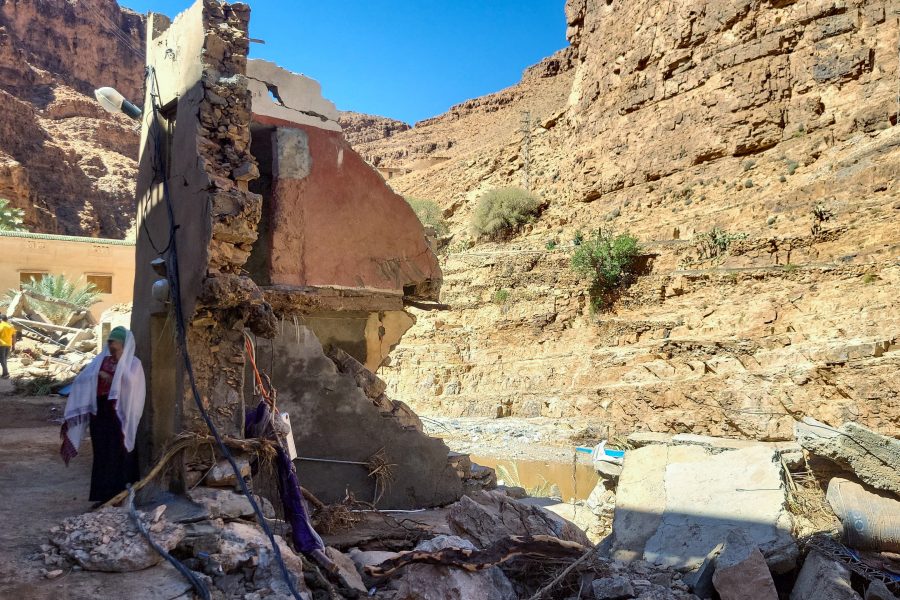
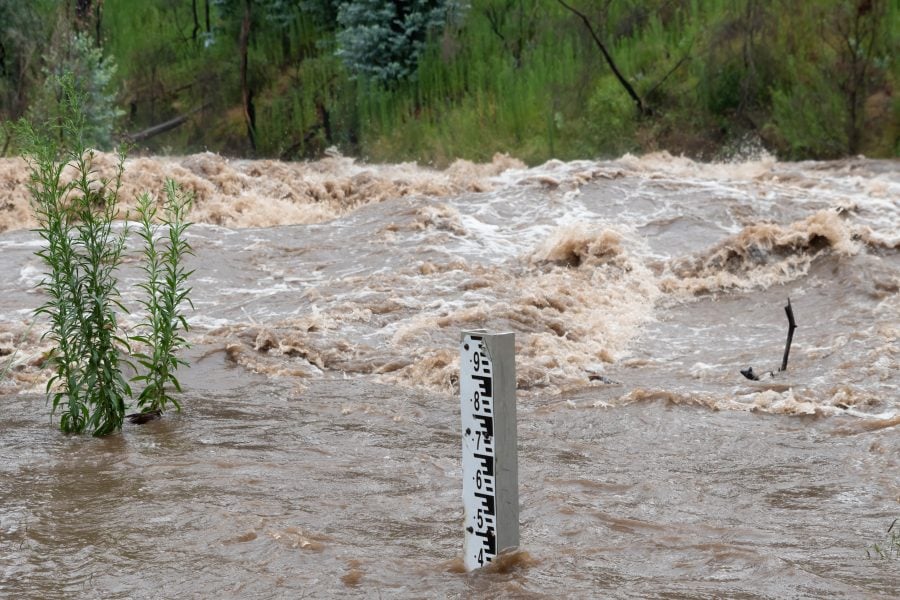
Rescuers resumed searching for seven missing people after a bus overturned in Tata, killing nine, after a weekend of torrential rainfall that reached 2 meters in height, compounding the town’s recent flood-related devastation.
13 people have been rescued, and no deaths have been recorded in residential areas in Tata but extensive material damage has been logged throughout the region, including the total or partial collapse of numerous houses, technical facilities, and road sections.
The damage also includes livestock that perished following the floods, with crops destroyed, palm trees uprooted, and arable land washed away.
“Since September 8th, the weather has been unstable. The ground hasn’t recovered from previous rains, and the latest downpours only made things worse,” said Mbarek Outchfert, President of the Ufuss Forum for Democracy and Human Right.
Road closures and collapsed infrastructure have also hindered rescue efforts. “Many provinces are completely cut off, unable to receive the aid they desperately need. They are sending distress signals, but the rescue authorities cannot reach them,” Outchfert added.
The damage also includes livestock that perished following the floods, with crops destroyed, palm trees uprooted, and arable land washed away.
Outchfert has urged the government to officially declare Tata a disaster area that would allow for expedition of reconstruction efforts.
“Local authorities don’t have the resources to address the scale of this catastrophe. We need the cooperation of other provinces and the government’s intervention. Tata must benefit from the Natural Disaster Fund,” he said.
This fund would ensure compensation for both individuals and communities affected by the disaster, including those in Tata and other areas of southern and southeastern Morocco.
Outchfert added that the government must swiftly assess the damage, prevent disease outbreaks, repair infrastructure, and rehabilitate homes. They should also designate safe areas for future construction and support agriculture and livelihoods in the oases. Restoring roads and providing temporary drinking water through tanks is critical in the immediate aftermath.
Looking ahead, the forum has called for the implementation of a risk management plan, improvements to early warning systems, and disaster preparedness training. “Civil protection centers must be better equipped with personnel and resources to handle future disasters,” Outchfert said. He also advocated for the creation of regional, provincial, and local observatories to monitor and evaluate natural disaster risks and climate change impacts on oasis regions.
Intense rainfall is occurring more frequently due to human-induced climate change in many parts of the world. Warmer temperatures enable the atmosphere to retain more moisture, while human activities, such as flood control measures and land management practices, also contribute to flooding risks.






add your comment
Terms of publication : Not to offend the writer, people, sacred things, or attack religions or the divine self, and refrain from racist incitement and insults.