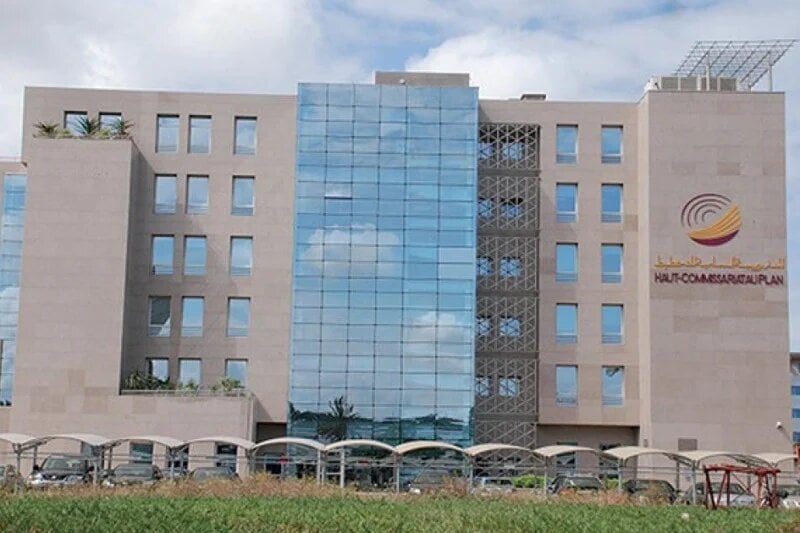
The Higher Commission for Planning (HCP) has dismissed what it describes as “unfounded conclusions” in the Organization for Economic Cooperation and Development’s (OECD) “Economic Studies: Morocco 2024” report.
The OECD report raised concerns about the lack of comprehensive statistics and timely, high-quality data, which it claims hinders effective public policy formulation in Morocco.
In response, the HCP expressed “surprise” at the OECD’s critique, pointing out that Morocco has adhered to the Special Data Dissemination Standard (SDDS) since 2005, regularly publishing metadata and schedules on the International Monetary Fund’s website.
The HCP reaffirmed its commitment to data integrity, noting that it conducts regular audits and large-scale surveys that cover various aspects of the economy and society. Results from these surveys are made available throughout the year.
Additionally, the HCP cited specific studies addressing contemporary issues, including the Sustainable Development Goals (2016), an income survey (2019), and the impact of COVID-19 on households and businesses.
The commission emphasized its compliance with the United Nations System of National Accounts, which is crucial for validating the credibility of national accounts. It also highlighted that all produced statistics are accessible online, while maintaining laws on confidentiality and individual anonymity.
Fouzi Mourji, an applied econometrics professor at Hassan II University, commented that the issue is not about data quality but rather about access to databases and their updating methodology. He noted that while statistics on Morocco’s economic situation are readily available through various channels, there have been delays in updating base years and research publications.
Zakaria Firano, an economics professor at Mohammed V University, praised the HCP for its substantial efforts in providing updated data across multiple sectors.
He also acknowledged the HCP’s commitment to enhancing its methodology and adopting international best practices, including modern technologies and big data, to effectively implement public policies.
In line with the OECD’s recommendations, Nadia Fettah, Morocco’s Minister of Economy and Finance, has previously recognized the necessity of a robust statistical framework to improve data collection and facilitate timely decision-making. She highlighted the potential role of new technologies, such as artificial intelligence and machine learning, in strengthening Morocco’s statistical infrastructure.





add your comment
Terms of publication : Not to offend the writer, people, sacred things, or attack religions or the divine self, and refrain from racist incitement and insults.