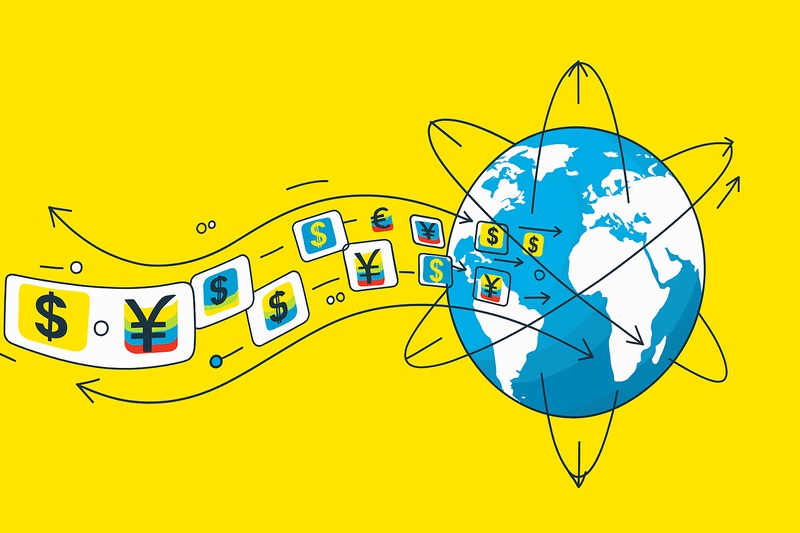
As the IMF and World Bank Annual Meetings open this week, Morocco is participating once again in the global discussions on financing development and climate resilience.
Rabat’s delegation, led by Economy and Finance Minister Nadia Fettah Alaoui and Bank Al-Maghrib Governor Abdellatif Jouahri, is presenting Morocco as both a borrower and a partner shaping new approaches to climate and development financing.
This explainer looks at how Morocco’s ties with the World Bank and the IMF have deepened, what tools it is using to fund its development agenda, and at what cost.
Morocco’s development projects don’t run on ambition alone, but on big money from global institutions by drawing on different funding channels: the World Bank Group (through IBRD, IFC, MIGA) on one side, and the International Monetary Fund (IMF) on the other.
In 2023–25, the relationships between Morocco and these institutions have deepened partly due to climate stress, fiscal pressures, and pushing for greener, more resilient growth.
The fiscal strain is real, with Morocco’s public debt hovering around 70 percent of GDP, the budget deficit about 4 percent, and growth is forecast by the IMF at roughly 3.5 percent in 2025 after repeated droughts.
Morocco is now juggling a portfolio of tools. On one hand, you have IBRD, the World Bank’s arm that lends to middle-income countries. That’s where Morocco taps for big projects, roads, social safety nets, water infrastructure, and climate resilience programs.
According to the World Bank’s “FinancesOne” data, as of late 2025, Morocco had more than US$ 28 billion in commitments from IBRD/World Bank projects (215 projects ongoing) and approved several major programs in just 2024–2025, like a $600 million development policy financing and $350 million for transport/ logistics.
In recent years, about 35 percent of new financing has been climate-tagged, one of the higher shares in the MENA region, with many active projects focusing on transport, water, and human development.
World Bank loans are cheaper than commercial borrowing but still come with interest of around 5–6 percent, small service fees, and long maturities. Morocco also pays fees on money not yet disbursed, meaning every delay has a price.
Then there’s IFC (International Finance Corporation), which doesn’t lend to the state but to private firms and public-private ventures.
The IFC, for example, pledged nearly 200 million dollars for projects in areas like farming, financial services, green energy, and earthquake recovery. It also helps private companies get funding and grow their businesses.
IFC loans are closer to market rates and higher than sovereign loans, but the trade-off is flexibility. In return, companies must follow strict environmental and social standards, and the state accepts more private involvement in public projects.
MIGA (Multilateral Investment Guarantee Agency) plays a guard role by offering guarantees or insurance against political or sovereign risk, so foreign investors feel safer putting money in Moroccan projects.
For example, MIGA backed the UM6P campus expansion in partnership with OCP, helping secure external financing. It is also key in the Tanger Med port expansion. The financing package included a guarantee from MIGA protecting lenders in a commercial tranche.
MIGA doesn’t lend money but charges annual premiums for its guarantees. Morocco effectively pays for credibility, a few million dollars a year so investors feel safe enough to commit.
These three instruments (IBRD, IFC, MIGA) work as a stack: IBRD supports sovereign and public projects, IFC supports private or hybrid projects, and MIGA reduces investor risk so capital flows in.
Morocco has leveraged that stack to push big infrastructure (ports, roads, water), social safety nets, climate adaptation, and energy transition.
The relationship has been growing more visible since Marrakech 2023, when the World Bank–IMF Annual Meetings were hosted in Morocco.
One year later, the World Bank said that the partnerships with Morocco had “grown stronger,” pointing to projects on climate change, water scarcity, human capital, and pushing to shift Morocco’s private investment share higher.
But the IMF side is where things get especially interesting. Morocco isn’t turning to the IMF because it’s in financial trouble, instead it’s using the Fund’s newer tools that are designed to help countries handle modern challenges like climate change and economic shocks.
IMF loans are almost interest-free but come with policy strings. Morocco must gradually reform energy subsidies, adjust electricity tariffs, and make sure public investment is more transparent.
In September 2023, Morocco won approval for a program under the Resilience and Sustainability Trust (RST) (sometimes referred to as RSF/RSF in press).
This IMF’s new tool designed to help vulnerable and middle-income countries invest in climate resilience, pandemics, and adjustment without overly stressing their balance sheets.
Morocco got around 1.3 billion dollars through the IMF’s RST program, money that comes with certain conditions and is meant to support a broad reform plan covering things like electricity, subsidies, and public-private partnerships.
Since then, the IMF has been checking Morocco’s progress and releasing funds in stages.
In November 2024, after a second review of Morocco’s program, the IMF approved another payout worth about 415 million dollars.
Then in March 2025, following its yearly economic assessment and a third review, Morocco received roughly 496 million dollars more. The total amount Morocco has accessed under this program is about 1.24 billion dollars.
At the same time, the IMF continues its classic role: surveillance, policy advice, and macroeconomic checks.
For 2025, the IMF said that Morocco’s inflation is calming down at around 2%. It advised the country to officially start targeting inflation, widen its tax base so more sectors contribute, cut back subsidies for unproductive state companies, and use any extra income to pay down public debt.
A major recent step came in April 2025, when the IMF approved a two-year $4.5 billion flexible credit line for Morocco. This isn’t money Morocco plans to spend right away, it’s more like a safety net the country can use if external shocks hit. Even though Morocco doesn’t need it for now, having it in place reassures investors and international partners.
These policy changes may improve fiscal stability but risk short-term backlash. Cutting subsidies, especially on fuel and butane, affected living costs, while xpanding the tax base hit informal workers and small firms that have long stayed outside the system.






add your comment
Terms of publication : Not to offend the writer, people, sacred things, or attack religions or the divine self, and refrain from racist incitement and insults.