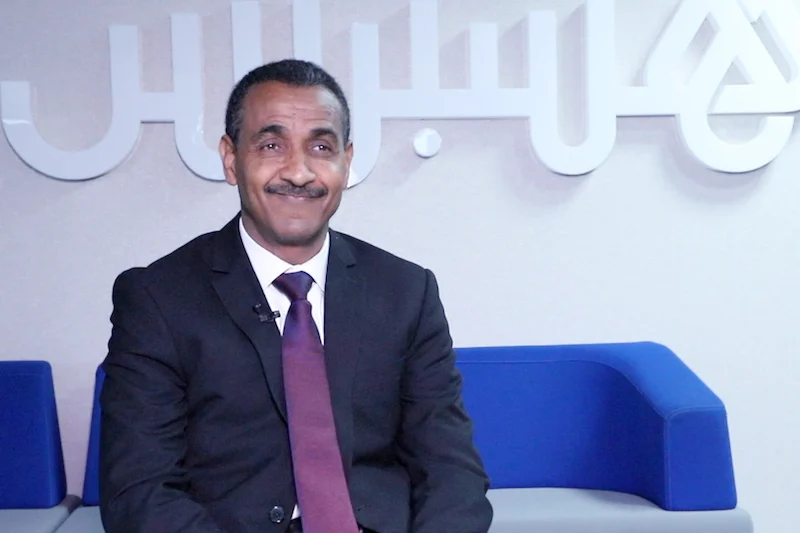
From classrooms in southeastern Morocco to the leadership of the Socialist parliamentary group in the House of Representatives, and from trade union and human rights activism in the Draa oases to the Ministry of Employment and Social Dialogue, Abderrahim Chahid has built a political career far from Rabat’s traditional centers of power.
His appointment by King Mohammed VI on Oct. 16, 2026, to serve as employment and social dialogue minister in Fatima Zahra Mansouri’s government marks a new phase in that career. It follows five years leading the Socialist Group–Federal Opposition in the lower house, where he criticized the previous government’s economic and social policies and called for stronger dialogue with trade unions and legislation that balances workers’ interests with broader social and economic considerations.
The appointment also presents a clear political paradox. Chahid opposed the version of the organic law regulating the right to strike adopted under the previous government and criticized its handling of several social issues. He must now help shape and implement policy in a sector central to relations between the state, employers and trade unions, moving from scrutinizing government decisions to taking responsibility for them.
That transition will require him to reconcile demands for higher wages, better working conditions and stronger social protections with the constraints facing businesses and the wider economy, as well as the expectations of job seekers.
Understanding the path that brought Chahid to the cabinet requires a return to his beginnings in Zagora, where his university years, involvement in the unemployed graduates’ movement, trade union activity and human rights work laid the foundations for a political career that later took him through local government, parliament and the Socialist Union of Popular Forces (USFP).
From university activism to collective reparations
Chahid comes from Zagora province in southeastern Morocco, a region that has remained central to his professional, academic and political life. His interest in the area extended beyond family and social ties to include civil society activism and academic research into the Draa oasis, reflecting a sustained engagement with the region’s development and cultural heritage.
During his university studies in Fez, he became involved in radical left-wing currents. Student activism exposed him to the ideological and organizational debates that shaped Moroccan university life at the time.
After completing his studies, Chahid joined the movement of unemployed university graduates and participated in its activities for about a year before becoming a middle-school Arabic teacher.
The experience offers a striking point of continuity with his new portfolio. Having participated in protests demanding employment, he entered the public sector as a teacher and eventually became responsible for a ministry tasked with shaping employment policy and professional relations.
While working in education, he joined the Democratic Confederation of Labor and became active in the Moroccan Association for Human Rights. He also participated in local initiatives focused on democracy, water, the environment, women’s rights and social development.
In a region confronting water scarcity, inadequate infrastructure and geographical isolation, these issues were closely interconnected. Human rights advocacy frequently overlapped with demands for economic opportunities, public services and more equitable development.
Collective reparations became one of the principal areas of Chahid’s activism, particularly in southeastern areas associated with the legacy of secret detention centers during Morocco’s Years of Lead, including Agdez, Tagounite, Kalaat M’Gouna and Skoura.
The approach sought to address the lasting effects of past abuses on surrounding communities, rather than limiting redress to individual compensation for victims.
Chahid subsequently moved from civil society advocacy into institutional work, heading the collective reparations division within the human rights and regional affairs department of Morocco’s Advisory Council on Human Rights. The position gave him experience in translating rights-based demands into programs and institutional mechanisms.
In Zagora, he was also involved in a network of associations promoting development and democracy. The network brought local organizations together around development, environmental protection and cultural and architectural heritage. Chahid served as its secretary-general before becoming its president.
This work exposed him to partnerships, project development, funding mechanisms and engagement with public institutions and external donors.
Together, these experiences gave him a foundation in negotiation and coordination between different stakeholders, as well as an understanding of how local demands can move from protest and advocacy into institutional programs.
His transition into elected office would present a different challenge: managing public resources, overseeing projects and reconciling residents’ expectations with the financial and administrative limits of local government.
From Zagora to the leadership of the Socialist parliamentary group
Following Morocco’s 2015 local and regional elections, Chahid became president of the provincial council of Zagora under the banner of the USFP, moving from civil society activism into the direct management of local affairs.
The province faced persistent challenges involving water resources, uneven access to infrastructure and public services, a limited productive base and a shortage of employment opportunities. These issues became prominent in his political discourse during his time in local government.
In 2017, as protests erupted in Zagora over difficulties accessing drinking water, Chahid emerged in the public debate as provincial council president. He described the crisis as structural, linking it to resource planning, water management and public policies affecting oasis communities. He also pointed to administrative centralization and inadequate infrastructure as obstacles to meeting residents’ needs.
The Sept. 8, 2021, legislative elections marked another turning point. Chahid won a seat in the House of Representatives for the USFP in Zagora and, on Oct. 11 that year, was elected president of the Socialist Group–Federal Opposition, as the party moved into opposition following the formation of Aziz Akhannouch’s government.
His responsibilities expanded from local development and infrastructure to legislation, public finances, economic and social policy, and relations between the executive and legislative branches.
He worked within the Finance and Economic Development Committee and took part in parliamentary oversight activities, while coordinating the work of his group.
Early in his tenure, he emphasized legal and institutional training for lawmakers, organizing sessions on constitutional and legislative procedures. He argued that familiarity with these rules was essential to exercising parliamentary oversight and legislative powers effectively.
Chahid also became a prominent participant in debates on finance bills and parliamentary questioning of the government, focusing on budget implementation, the distribution of public investment, regional disparities and the effectiveness of social programs.
Throughout the 2021-2026 legislative term, he emerged as one of the voices articulating the USFP’s criticism of the Akhannouch government. He challenged its handling of economic and social issues and criticized the response of some government departments to evaluations of public policy effectiveness.
In 2025, he also raised concerns about ministers’ absences from oral question sessions, arguing that regular attendance was essential to respecting parliament and ensuring meaningful oversight.
His parliamentary prominence coincided with his rise through the USFP’s national leadership structures. He joined the party’s political bureau and assumed organizational responsibilities related to elected representatives.
He also became a supporter of Idriss Lachgar’s continued leadership of the party during a period of debate over leadership renewal and the extension of the first secretary’s mandate.
In July 2025, Chahid publicly backed Lachgar during a regional conference in Errachidia, citing what he considered the party leadership’s political and organizational record. He later chaired proceedings at the party’s 12th national congress and was among those who submitted a motion concerning an extension of Lachgar’s mandate following changes to the relevant internal provisions.
These positions placed Chahid among the figures supporting organizational continuity within the party, while reinforcing his ties to its national leadership.
His political position thus combined three elements: an electoral base in Zagora, the confidence of the party leadership and experience coordinating a parliamentary group within Morocco’s constitutional institutions.
Chahid retained his electoral connection to Zagora in the Sept. 23, 2026, legislative elections, when the list he led for the USFP topped the constituency’s results. The party had placed second in the constituency in 2021. His reelection came only weeks before his appointment as minister.
In June 2026, he also obtained a doctorate from Ibn Tofail University’s Faculty of Languages, Letters and Arts in Kenitra. His dissertation, titled “Cultural Diversity in Morocco: Levels of Recognition and Areas of Implementation — The Draa Oasis as a Case Study,” returned to themes that had long informed his civil society work, including oasis communities, collective memory, heritage and cultural diversity.
A minister facing the test of his own positions
Chahid’s appointment as employment and social dialogue minister is arguably the most consequential test of his political career so far, given the direct connection between his new responsibilities and positions he defended as head of the Socialist parliamentary group.
The relationship between labor legislation, workers’ rights, employers and trade unions will be central to his new role.
On Feb. 5, 2025, during parliamentary debate on draft Organic Law No. 97.15 regulating the conditions and procedures for exercising the right to strike, Chahid announced his group’s opposition to the text in the form presented.
He criticized what he considered a bias toward employers’ interests and argued that the drafting process had not provided sufficient consultation and dialogue with trade unions.
The legislation was one of the most prominent social and legal disputes of the previous government’s term.
His opposition to the bill reflected a broader position in his parliamentary work: that social partners should be involved in preparing reforms affecting labor relations. In his view, negotiations with trade unions and professional organizations help create the conditions for legislation to be implemented and reduce disputes over its application.
Social dialogue will therefore be one of the new minister’s principal challenges. He will need to build agreements with trade union confederations and employers’ organizations while responding to demands for higher wages, better working conditions and stronger social protection.
These negotiations will take place against the backdrop of businesses’ concerns about operating costs, employment and investment, making the balance between workers’ demands and economic constraints a central issue.
Youth unemployment is another major test. Chahid’s own early experience in the movement of unemployed university graduates gives the issue a personal dimension, but his ministerial responsibilities now place him in charge of policies affecting large numbers of job seekers.
Addressing the challenge will require approaches involving vocational training, professional development, alignment between skills and labor-market needs, and measures to improve the economy’s capacity to absorb new entrants into employment.
His portfolio also brings him into the broader field of labor relations, including the implementation of social legislation, the legal framework governing trade unions and potential reforms to labor regulations. These issues require sustained negotiation and the ability to manage competing interests, particularly when the success of reforms depends on the agreement and cooperation of the parties involved.
Chahid’s previous work at the Advisory Council on Human Rights and his involvement in collective reparations could provide useful experience in moving from advocacy to institutional programs. His time as provincial council president also exposed him to the practical difficulties of managing public projects, while his parliamentary career gave him direct experience with legislation, oversight, budget debates and economic policy.
However, government responsibility differs from these earlier roles. Negotiations with unions and employers must lead to decisions within the limits of available resources and legal authority. Advocating for reform from opposition is also different from drafting legislation, negotiating its provisions and ensuring its implementation from within government.
The relationship between Chahid’s previous positions and his future decisions will therefore be an important measure of his performance.
His earlier work in Zagora focused on water, regional equity and the protection of local memory. His new responsibilities extend nationwide, covering workers and job seekers across Morocco, including regions where investment and economic activity remain limited.
Although he has addressed some of these concerns through local government and parliamentary work, tackling them from within the executive will require implementation tools, partnerships and programs whose results can be measured.
From scrutiny to implementation
Chahid’s career has taken him from university activism and the unemployed graduates’ movement to teaching, trade unionism, human rights advocacy, civil society leadership, local government, parliament and the leadership of the Socialist parliamentary opposition.
His appointment as employment and social dialogue minister represents the culmination of decades of political and institutional experience, but that experience alone does not guarantee success in a sector where economic interests and social demands frequently collide.
In southeastern Morocco, he advocated for development, collective reparations and regional equity. In parliament, he scrutinized public policy and challenged the government’s handling of social and economic issues. He must now translate at least some of those positions into practical decisions whose effects can be assessed in the labor market and in relations between workers, employers and the state.
Between Zagora and Rabat, and between his experience as an unemployed graduate and his new responsibility for employment policy, Chahid enters a new phase of his career.
His record in government will depend less on the number of positions he has held or the arguments he made in opposition than on his ability to manage negotiations with social partners, improve labor legislation and contribute to better employment opportunities.
Ultimately, the test of his ministerial tenure will be the results he delivers—and whether he can move from questioning public decisions to taking responsibility for their implementation.






add your comment
Terms of publication : Not to offend the writer, people, sacred things, or attack religions or the divine self, and refrain from racist incitement and insults.