
Morocco has lodged an official protest against a paragraph in the UN Security Council’s latest annual report to the General Assembly, which Rabat says unjustly reduces the Sahara dispute to only two parties, Morocco and the polisario, while omitting Algeria and Mauritania.
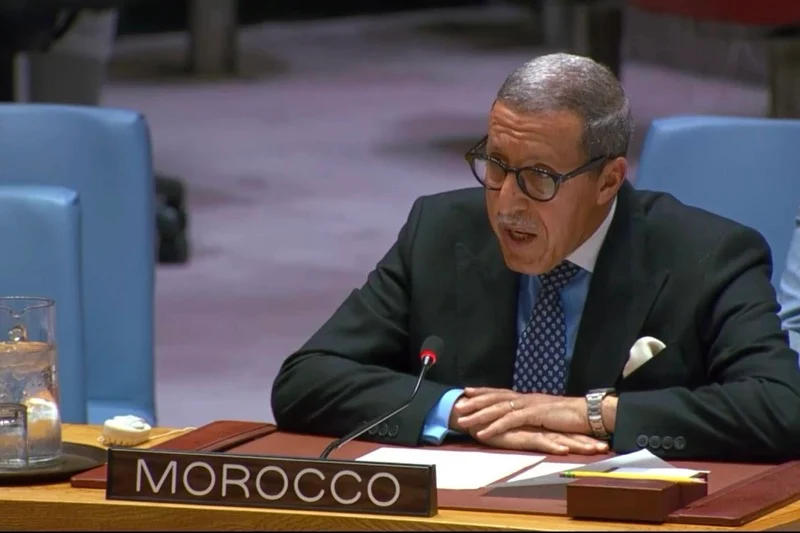
In a letter addressed to the Council’s president and members, ambassador Omar Hilale, Morocco’s Permanent Representative to the United Nations, denounced the paragraph as politically biased, unbalanced, and a serious departure from established reporting norms.
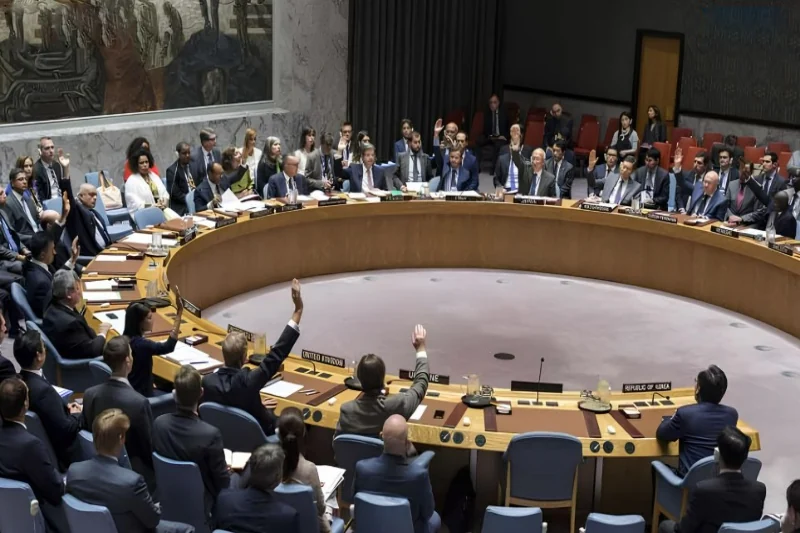
The protest follows the Security Council’s adoption of its 2024 report to the General Assembly on May 30, 2025.
Hilale expressed Morocco’s “deep surprise and categorical rejection” of the paragraph in question, which he argued presents a skewed reading of the Council’s efforts on the Sahara issue and disregards its long-standing framing of four parties to the political process: Morocco, Algeria, Mauritania, and the polisario.
These four parties have been cited repeatedly, five times in each resolution since 2018, and form the basis of all negotiations under UN auspices.
The ambassador noted that the introduction to the Security Council report explicitly states its aim is to provide a concise and balanced overview of key developments, rather than a selective or exhaustive account.
Yet, the paragraph on the Sahara issue, he said, contradicts this purpose by advancing a national position, that of the text’s drafter and one non-permanent Council member, while omitting the positions of other members and the broader Council consensus.
Hilale criticized the paragraph for ignoring the growing international momentum behind Morocco’s autonomy initiative, which he described as a “serious and credible” solution.
This initiative now enjoys the backing of 116 countries, including two permanent members of the Security Council and, as of the same day the report was adopted, the United Kingdom. Several non-permanent members, past and present, have also aligned with this position, further reinforcing its global legitimacy.
He warned that departing from the Council’s established neutrality and factual rigor risks discrediting the Council’s work in the eyes of the General Assembly.
“Instead of misleading the Assembly by reflecting national positions,” he wrote, “the report should have upheld the Council’s parameters: the four-party framework, the political solution, and the preeminence of Morocco’s autonomy plan.”
Hilale also took issue with the report’s refusal to amend or clarify the paragraph in question under the pretext of “procedural integrity.”
He argued that such a justification cannot stand in the face of factual inaccuracy, and that neutrality and truthfulness are political imperatives central to the Council’s mission as guarantor of the Sahara political process.
For all these reasons, Morocco firmly rejected what it described as a “politically motivated distortion” and a breach of the principles of impartiality, accuracy, and integrity that should govern the Council’s reporting.
Hilale’s letter was also sent to the President of the General Assembly and the UN Secretary-General and will be circulated as an official document of both bodies.

add your comment
Terms of publication : Not to offend the writer, people, sacred things, or attack religions or the divine self, and refrain from racist incitement and insults.