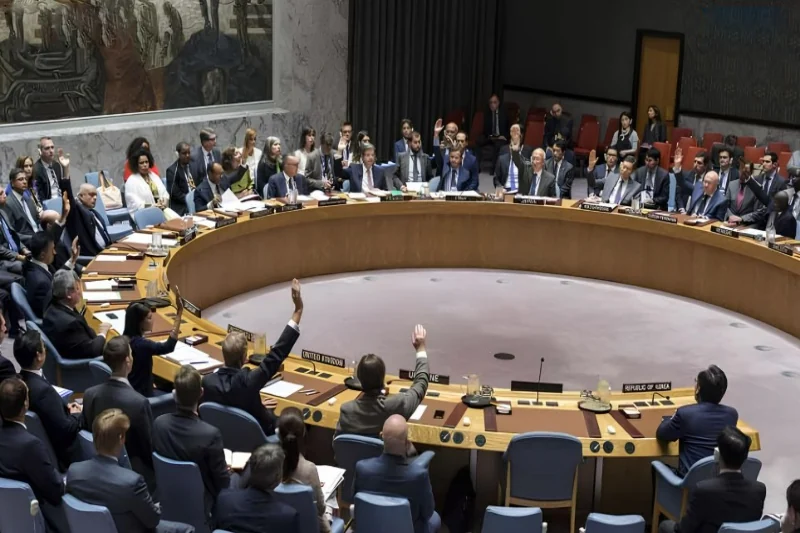
The UN Security Council is expected to vote Friday on a US-drafted resolution that would make Morocco’s autonomy proposal the exclusive basis for negotiations over the Sahara while opening the way for changes to the UN mission established 35 years ago to organize a referendum.
The vote, scheduled ahead of MINURSO’s October 31 mandate expiry, follows a week of negotiations in which Washington preserved the central political provisions of its proposal but softened plans to reduce the mission’s military presence and convert it into a political operation.
The final draft, circulated to Council members on October 29, has not been officially released. Reporting on successive versions shows that the main disputes concern the negotiating framework, MINURSO’s responsibilities, Sahrawi participation and the pace of any restructuring.
1. Will Morocco’s autonomy plan become the sole basis for negotiations?
Resolution 2797, adopted on October 31, 2025, established Morocco’s 2007 autonomy proposal as a basis for negotiations aimed at achieving a mutually acceptable political settlement.
Washington’s initial October 20 draft sought to go further, describing genuine autonomy under Moroccan sovereignty as the only feasible solution to the dispute.
According to the UN source interviewed by Hespress, objections prompted the Americans to replace that formulation with “most feasible,” while retaining Morocco’s expanded and updated autonomy proposal as the sole basis for further negotiations.
The distinction concerns both the starting point and the eventual outcome of negotiations.
Under the reported revised wording, the parties would negotiate on the basis of Moroccan autonomy, but the text would still refer to self-determination and a mutually acceptable political settlement.
The resolution would therefore narrow the proposed negotiating framework without itself constituting a final determination of sovereignty.
2. Who will lead the next round of Sahara negotiations?
The initial American draft placed Washington prominently within the negotiating process, reflecting the United States’ involvement in efforts to bring Morocco, the Polisario Front, Algeria and Mauritania back to the table.
But some Council members objected to provisions they believed could reduce the United Nations’ authority over the political process.
A UN source told Hespress that these objections led Washington to restore explicit recognition of the Secretary-General’s responsibilities and de Mistura’s role in facilitating negotiations.
The revised arrangement would preserve American diplomatic involvement while keeping the UN at the centre of the process.
That division of responsibilities is important because the Council’s resolution will guide the diplomatic efforts undertaken after tonight’s vote, including who convenes talks and how their progress is reported.
3. Is MINURSO still facing a 50% reduction?
The original US proposal envisaged reducing MINURSO’s uniformed personnel by at least 50% by January 31, 2027, followed by an end to its existing peacekeeping role in April and conversion into a special political mission.
Those provisions would have placed the operation on a fixed timetable for substantial restructuring.
Hespress’s UN source said the revised draft withdrew both the predetermined personnel reductions and the automatic transition deadline following negotiations among Council members.
Instead, the Secretary-General would be tasked with assessing MINURSO’s staffing, resources, field operations and possible restructuring before the Council takes further decisions.
That would allow the mission to continue operating without the immediate reductions originally proposed, although its long-term structure would remain under review.
Established in 1991 to supervise a ceasefire and prepare a referendum, MINURSO never organized the planned vote because the parties could not agree on the conditions for holding it.
The mission has since continued military monitoring activities, despite the breakdown of the ceasefire in 2020.
4. Could more Sahrawis participate directly in the political process?
Another proposed change would broaden the range of Sahrawi voices consulted by the United Nations.
According to the UN source who spoke to Hespress, the revised draft calls for de Mistura to consult Sahrawis living in the southern provinces, the Tindouf camps and the diaspora, extending engagement beyond the established negotiating parties.
The source said those consultations could inform the Secretary-General’s subsequent reports to the Security Council.
Such an arrangement could introduce additional perspectives into a process traditionally centred on Morocco and the Polisario Front, with Algeria and Mauritania participating in the wider diplomatic framework.
The revised proposal also addresses refugee registration in Tindouf.
Hespress’s source described a six-month deadline for completing that process, although its inclusion in the final draft has not been independently confirmed.
Registration has long been contested because it concerns reliable population figures, humanitarian assistance and the circumstances of people living in the camps.
5. Could Russia or China block tonight’s resolution?
Russia and China abstained when the Security Council adopted Resolution 2797 last year, alongside Pakistan. Algeria did not participate in that vote, which passed with 11 votes in favour.
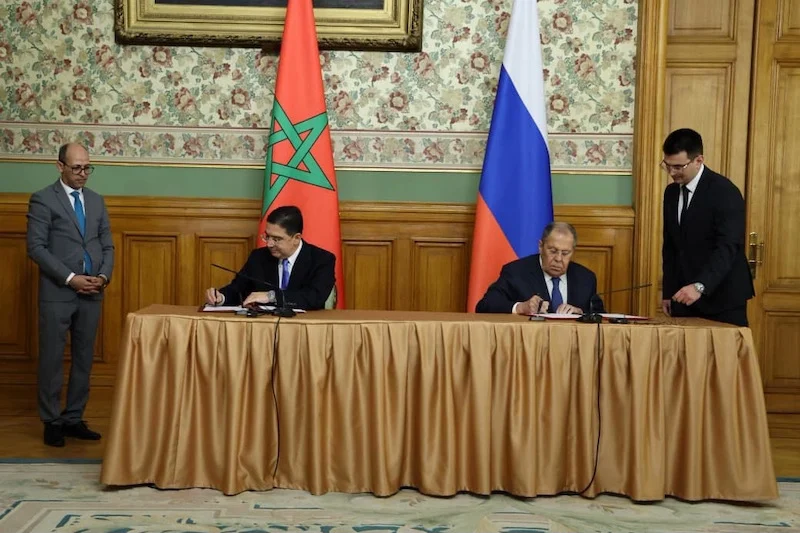
This week, Russian Foreign Ministry spokesperson Maria Zakharova said Moscow supported extending MINURSO’s mandate but would determine its position on the American draft once negotiations concluded.
Russia’s reservations have included concerns over the drafting process and the need for a political settlement consistent with the UN Charter and previous Security Council resolutions.
The revised US text seeks to address some of those concerns, particularly over the UN’s role and MINURSO’s restructuring, without abandoning the autonomy framework.
For adoption, the resolution needs at least nine votes in favour and no veto from any of the five permanent members: the United States, Russia, China, France and Britain.




add your comment
Terms of publication : Not to offend the writer, people, sacred things, or attack religions or the divine self, and refrain from racist incitement and insults.