
Gone are the days when people relied solely on traditional news outlets for forecasts; now, a new breed of Moroccan content creators is harnessing platforms like Instagram, TikTok, and YouTube to deliver accessible and digestible forecasts, simplifying the often complicated and sophisticated world of weather.
This is particularly evident as the climate crisis intensifies, driving a skyrocketing demand for simplified weather information delivered in a catchy as well as engaging manner.
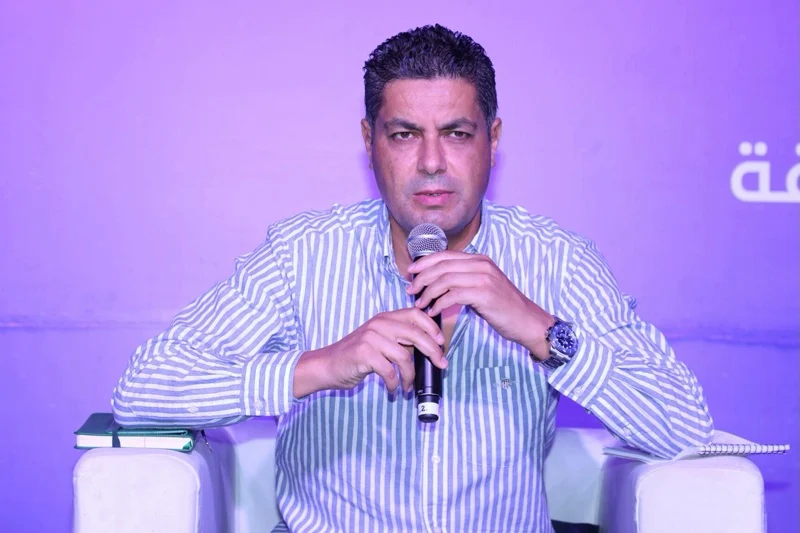
“Nature abhors a vacuum, so when there’s a lack of well-explained meteorology reports in the official media, it creates a gap that others may eventually step in to fill,” explained Ezzdine Lamine, a 36-year-old weather-related content creator.
This trend is not limited to Morocco; it’s a global phenomenon, with countless videos across social media platforms in various languages, all aimed at delivering accessible weather information.
This phenomenon is growing rapidly in Morocco as well, with significant reach on social media platforms, as seen with Khalid Ta9s on TikTok, who has over 18,000 followers and tens of thousands of views, and Taqs Al-Falah (Weather of the Farmer), which boasts over 160,000 subscribers and similarly high viewership.
“This shouldn’t be done for profit or to expand reach. You either approach it with full responsibility, knowledge, and a commitment to research and learning, or you step away from it altogether,” said Lamine, who mentioned receiving praise for his work from several respected figures in meteorology, both Moroccans working abroad and individuals from the Arab region.
Driven by his love for meteorology and his awareness of climate change impacts worldwide, Lamine felt a strong urge to create this type of content. “I believe Moroccan society remains largely unaware and disconnected from the issue, though, unfortunately, it affects us all,” he shared.
Lamine’s interest didn’t develop overnight, he recounted to Hespress EN; it began around 10 years ago.
Originally trained in computer engineering, he made a bold career shift from physiotherapy to becoming a certified mountain guide, “a role that requires a deep understanding of nature, including meteorology,” he explained.
However, the question naturally arises: how does someone with no formal education in meteorology master the advanced tools and data analysis techniques required to accurately interpret weather information before sharing it with nearly half a million followers? Clearly, it’s no easy task.
Lamine pointed to the wealth of resources available through international observatories in countries like Spain, France, and Portugal, emphasizing that, to this day, he continues to deepen his knowledge of meteorology through autonomous learning.
Recognizing the complexity of the field, the 36-year-old content creator underscored, “the responsibility feels even greater knowing my content reaches millions, especially when it involves people who could be directly impacted by the weather,”adding that his work is done voluntarily.
“Thousands of farmers and delivery workers follow me because my content helps them plan their work—whether it’s scheduling deliveries, equipment, or planting seeds. This responsibility demands accuracy and seriousness; It shouldn’t be taken lightly or done just for profit,” he shared.
Unfortunately, this sense of responsibility is often undermined by accounts spreading unfounded information and fake news, which only create fear and uncertainty among their followers, particularly during periods of severe weather fluctuations.
“Recently, there’s been a rise in unofficial weather forecasts on social media, often from individuals without the proper expertise, which mislead the public and weaken trust in official meteorological services,” warned Lhoussaine Youabed, Director of Communications at the General Directorate of Meteorology (DGM), in a statement to Hespress English.
Building on this concern, a wave of rumors circulated in August 2024 on social media claiming that Morocco was about to experience a tropical storm that would resolve the ongoing drought crisis.
However, the DGM swiftly debunked these claims, emphasizing the importance of relying on accurate, expert-backed forecasts.
This isn’t the first time social media accounts have spread false and harmful weather information, particularly during times of crisis.
On September 12, 2023, the DGM refuted rumors that they had issued an orange weather alert for the Al Haouz earthquake-affected areas, clarifying that only light rain was expected.
Worse still, the Directorate confirmed that it had issued no such alert, and the circulating reports were noting more than fake news.
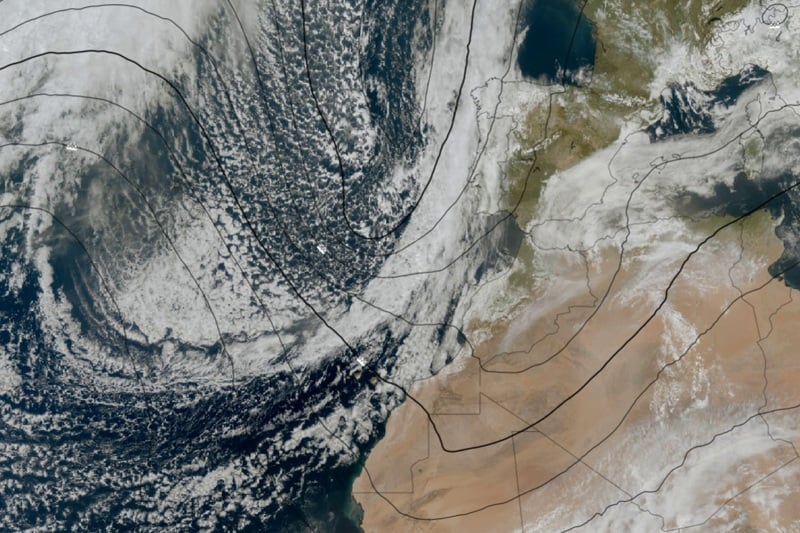
Fake weather news tends to escalate during extreme weather events in neighboring countries, such as Tropical Storm Leslie and Storm Dana. In these instances, the DGM steps in to correct the misinformation, either refuting false claims or reassuring the public with accurate forecasts.
Yet, Youabed emphasized that “creating weather-related content isn’t an issue as long as creators rely on trustworthy sources, particularly the DGM, to avoid spreading inaccurate information that could impact people’s lives—especially since many are simply chasing buzz.”
The directorate emphasized that the use of weather models by individuals without the expertise to interpret them correctly is a concern. “Without experience in analyzing Numerical Weather Prediction (NWP) models to assess their accuracy and identify errors, there’s a risk of spreading misleading information.”
“General NWP models often lack the necessary resolution for Morocco, as they don’t account for the country’s topography, mountains, deserts, or geographical features. In contrast, the Moroccan model incorporates these elements, providing a more accurate forecast by simulating how air masses will behave upon reaching the region,” he explained.
Unfortunately, this issue extends beyond Morocco. The spread of fake weather news is also rampant in other countries, such as Egypt, where misinformation continues to mislead the public.
To put an end to this, the Tourism and Civil Aviation Committee of the Egyptian Parliament took action last year, approving a draft law to reorganize the General Authority for Meteorology.
This law, according to media reports, imposes penalties on anyone who spreads false weather information on social media or issues misleading weather-related statements, bulletins, or studies falsely attributed to the authority.
Fines, ranging from 50,000 Egyptian pounds (about $1,617.88) to 5 million pounds ($161,788), aim to mitigate the economic damage caused by such misleading or inaccurate forecasts.
A similar step was taken by Saudi Arabia to tackle what they called “the chaos.” The Saudi General Authority for Meteorology and Environmental Protection worked in 2018 on regulations to address the rise of weather experts on social media.
Many of these accounts, some of which are fake, have started dominating the weather forecasting scene, fueling the spread of false news, according to several reports.
The DGM stressed that the approach adopted by Egypt and Saudi Arabia is crucial, especially considering the significant costs linked to the spread of misinformation.




add your comment
Terms of publication : Not to offend the writer, people, sacred things, or attack religions or the divine self, and refrain from racist incitement and insults.