
Government Spokesman Mustapha Baitas recently stressed the urgency of the water situation in Morocco at a weekly press briefing following a government council meeting chaired by the Head of Government, Aziz Akhannouch.
The issue was raised at the government council meeting chaired by Aziz Akhannouch, and subsequent statements by the government spokesman highlighted the scale of the challenge facing the Kingdom. Mustapha Baitas highlighted concerns linked to the water situation, pointing out that the Kingdom is currently experiencing five consecutive years of drought, which constitutes an alarming situation.
Morocco is currently experiencing five consecutive years of drought, a climatic phenomenon which is having a serious impact on water availability in the country. Faced with this dramatic situation, the Moroccan government has reacted intelligently and taken the necessary measures to deal with the crisis. Baitas emphasized that the Moroccan government has long drawn attention to the consequences of water stress and drought, making the issue a national priority.
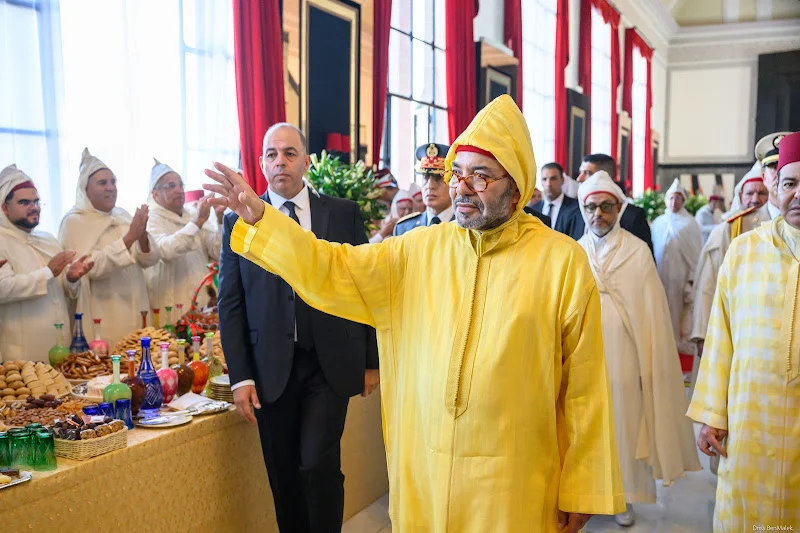
King Mohammed VI personally chairs the water monitoring committee, demonstrating the importance the Kingdom attaches to this issue. The King has chaired several meetings and continues to monitor the situation closely, giving his High Instructions to deal with the issue.
In concrete terms, the government has taken several steps to address this critical situation. It has accelerated the completion of programs and projects related to drinking water and irrigation, as well as the construction of dams and essential hydraulic infrastructures. In addition, seawater desalination plants have been set up to diversify water supply sources.
An innovative project involves linking water basins together via a water highway, the first part of which has already been completed.
This initiative will enable water to be managed more efficiently by redistributing it where it is most needed, whether for the needs of citizens or for agricultural irrigation.
The main aim of all these measures is to preserve vital water resources as much as possible and ensure their efficient use. Morocco must rise to the challenge of water stress, while at the same time meeting the water needs of its citizens and its agricultural sector, which is crucial to its economy.
Ultimately, managing the water crisis in Morocco requires a proactive and coordinated approach, combining short-term actions to respond to the urgency of the situation with longer-term projects to ensure the sustainability of the water supply. The Moroccan government is firmly committed to tackling this crisis and ensuring a better future for all Moroccan citizens, concluded Mustapha Baitas.
Drastic measures to preserve water resources
In addition to undertaking large projects to reinforce Morocco’s water reserves, local authorities have started preventative measure to ensure the rationalization of water consumption.
In Casablanca, Mondays, Tuesdays and Wednesdays of every week will now be drinking water cut-off days for car washes and public traditional baths (hammams).
In a circular decreeing these measures, the region’s wali Mohamed Mhidia said the shortage of water resources resulting from several years of drought is behind this decision.
Lawns, whether belonging to administrations, businesses or private individuals, are also concerned by the decision, applied equally to gardening companies and plant nurseries, under penalty of sanctions.
Watering green spaces and sports fields with drinking water or well water is strictly forbidden. The filling of public and private swimming pools is limited to once a year, with the compulsory introduction of recycling and cleaning technologies.







add your comment
Terms of publication : Not to offend the writer, people, sacred things, or attack religions or the divine self, and refrain from racist incitement and insults.