
The Ministry of Economy and Finance has issued a warning about the national economy, stating that it is once again facing unfavorable weather conditions that pose a threat to the government’s growth expectations.
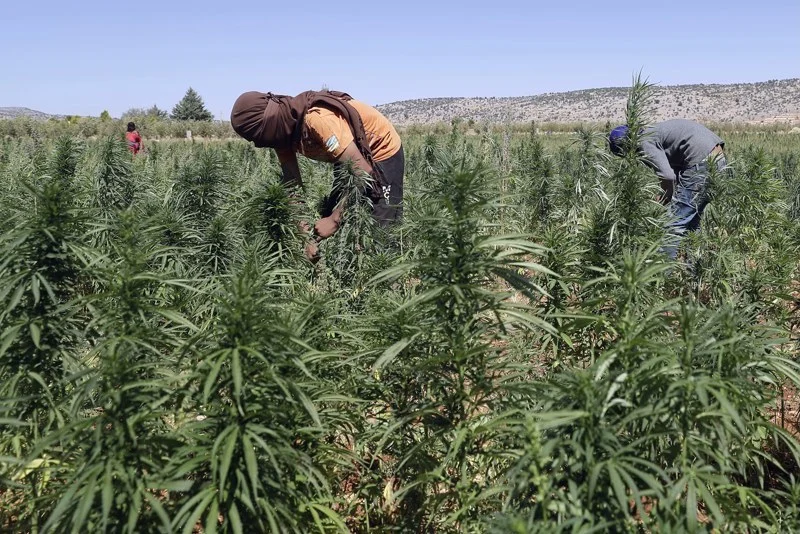
The government had set a target of achieving a 4 percent economic growth rate for the current year in the Finance Law 2023, despite concerns over the impact of the agricultural sector, which contributes around 14 percent to the gross domestic product.
However, several institutions, including Bank Al-Maghrib, the International Monetary Fund, and the World Bank, have revised their forecasts for economic growth downward to approximately 3 percent or even lower. They attribute this adjustment to the effects of drought on agriculture and inflation on consumption.
According to the Ministry of Economy and Finance’s report from the Directorate of Treasury and External Finance, inflation continues to surpass the average levels of previous years, reaching 7.8 percent in April, as reported by the High Commissioner for Planning.
Economist Youssef Karawi Filali, who heads the Moroccan Center for Governance and Management, expressed his concerns regarding the impact of irregular and weak rainfall on agricultural yields. He believes that grain production, which was expected to support growth as per the 2023 Finance Law, will be significantly affected, leading to a growth rate not exceeding 1.5 percent.
The agricultural season of 2022-2023 experienced delayed rainfall, causing the postponement and disruption of autumn crops. Unusually high temperatures were also recorded, with rainfall occurring only in November 2022 and February 2023, and at lower levels in early March and April.
Official figures indicate that the cumulative rainfall by April 27 amounted to approximately 207 millimeters, marking a 13 percent increase compared to the previous agricultural season, which was the driest in forty years. However, this year’s rainfall remains 36 percent lower than a normal agricultural season.
Filali further highlighted the challenges faced by Morocco, including ongoing inflation, economic stagnation, a decline in employment rates, and an increase in company bankruptcies. He emphasized that while the agricultural sector significantly contributes to the gross domestic product, the country currently lacks substantial industrial added value that could compensate for an average or weak agricultural season. He noted that the achievements in the automotive and aircraft sectors, although impressive, do not translate into significant domestic added value as most products are exported.
Data shows that the total imports of dams for agricultural use reached 4.48 billion cubic meters by April 27, representing a filling rate of about 33 percent compared to 31 percent in the previous season.
Domestic grain production is expected to reach only 55.1 million quintals, far below the 75 million quintals projected in the 2023 Finance Law. As a result, Morocco will need to import approximately 50 million quintals from abroad to meet the estimated national demand of 100 million quintals per year.




add your comment
Terms of publication : Not to offend the writer, people, sacred things, or attack religions or the divine self, and refrain from racist incitement and insults.