
Morocco’s improved dam reserves have raised expectations for the 2026-2027 agricultural season, which is expected to officially begin in the second half of October, with farmers hoping to expand cereal and legume cultivation and improve yields after a previous season marked by stronger production and a recovery in water resources.
Rainfall and snowfall in recent months have strengthened optimism across the agricultural sector, particularly in areas where years of drought had reduced cultivated land and increased production costs.
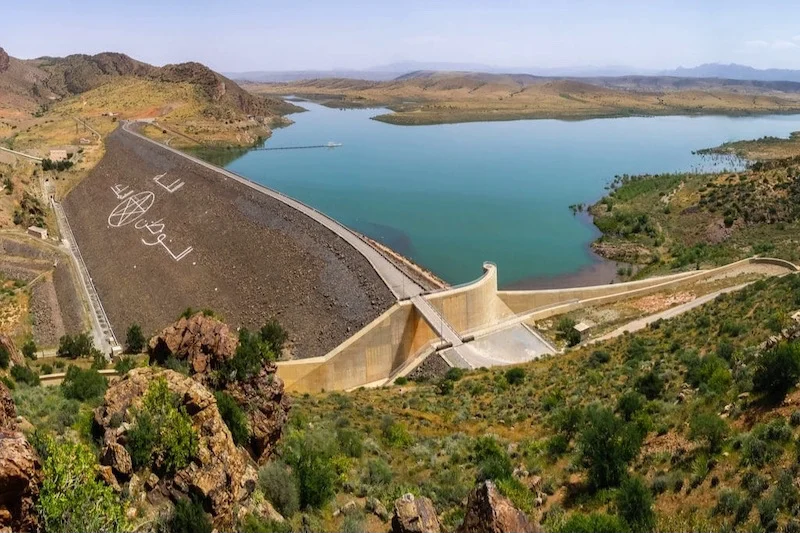
According to the latest figures available from the Ministry of Equipment and Water, Morocco’s dams were 65.51% full as of October 1, compared with 32.68% on the same date last year. Water reserves reached 11.15 billion cubic meters, up from approximately 5.45 billion cubic meters a year earlier, an increase of more than 104%. The improvement could support irrigated farming, ease pressure on groundwater reserves and help farmers plan irrigation in areas supplied by dams.
Figures circulating among agricultural professionals suggest that the area planted with cereals and legumes could increase from around 3.9 million hectares last season to more than 5 million hectares in 2026-2027, a potential rise of over 28%. Improved soil moisture and renewed confidence among farmers could encourage the cultivation of land left fallow in recent years.
These expectations follow a season in which cereal production was estimated at around 90 million quintals, strengthening hopes of another strong harvest if rainfall remains sufficiently regular.
Preparations for the new season are expected to include the provision of more than one million quintals of selected seeds and over 600,000 tonnes of phosphate fertilizers. According to estimates from agricultural professionals, soft wheat and barley seeds are priced at around 400 dirhams per quintal, while durum wheat seeds cost between 400 and 450 dirhams.
However, the positive outlook does not eliminate persistent challenges, including uneven water availability across river basins, shortages of certain seed varieties suited to rain-fed farming, and high energy and labor costs. These factors could constrain farmers’ ability to expand production and translate favorable conditions into higher yields.
Improved water reserves create opportunities for cultivation
The recovery in dam reserves has shifted some farmers’ priorities ahead of the new season, from managing water shortages toward expanding cultivated areas and improving agricultural productivity. The change is particularly significant for irrigated farming areas where reduced water allocations and irregular irrigation schedules in recent years have affected production decisions and investment.
Despite the nationwide improvement, water availability remains uneven across Morocco’s river basins. At the beginning of October, the Sebou basin’s dam-filling rate stood at 77.77%, while the Al Wahda Dam, the country’s largest, was 81.26% full. Figures from the end of August showed lower levels in the Oum Er-Rbia basin, at 59.5%, and the Souss-Massa basin, at 48.6%, highlighting differences in the extent to which agricultural regions can benefit from the recovery.
Jawad Lemrani, an agricultural engineer and irrigation solutions consultant, stressed the importance of distinguishing between higher national dam reserves and the amount of water actually delivered to farms. Improved reserves do not necessarily mean that irrigation constraints have been overcome in every basin, given differences in available resources, crop requirements and the infrastructure used to transport and distribute water.
Technically, higher reserves give water-management authorities greater flexibility in scheduling allocations, particularly for crops that require regular irrigation during critical growth stages. Actual benefits will nevertheless depend on the volume of water available for distribution, competing demands and the capacity of irrigation networks to deliver supplies to farms at the right time.
The improvement could be particularly significant for higher-value crops that were affected during previous drought seasons by reduced planting areas or increased reliance on groundwater pumping. Greater access to surface water could help reduce pressure on aquifers in areas facing sustained groundwater depletion, although it would not remove the need to conserve water.
Localized irrigation systems, soil-moisture monitoring and irrigation schedules adapted to crops’ actual needs will remain important to converting the current recovery into more sustainable gains. Expanding irrigated acreage without accounting for water availability throughout the season could renew pressure on supplies, particularly if winter rainfall is delayed or temperatures rise.
The central challenge is therefore to ensure that farmers use the improved conditions to select suitable crops and plan planting areas according to available resources, rather than increasing water demand without sufficient safeguards. The reserves recorded at the beginning of October offer a positive starting point, but cannot guarantee that water supplies will remain at similar levels in the coming months.
Production prospects and the cost of agricultural inputs
Agricultural professionals are closely watching rainfall over the coming weeks, as it will be crucial in determining how much land is planted with cereals and legumes, particularly in rain-fed areas that depend directly on precipitation. Despite the improved water situation, expanding cultivated areas to more than five million hectares will depend on favorable conditions for plowing and sowing, as well as farmers’ ability to cover the costs of starting the season.
Seed and fertilizer supplies have improved in some respects, but shortages of certain certified varieties suited to specific soil and climatic conditions remain a concern in several regions. This is particularly relevant for soft wheat, durum wheat and barley, whose water requirements and resistance to water stress differ.
Aziz Anzam, an agricultural engineer who runs an agricultural consultancy and research office in Casablanca, said that expanding planted areas would not automatically lead to a corresponding increase in production. Yields depend on several interconnected factors, including seed quality and suitability to local conditions, sowing dates, balanced fertilization and rainfall during key stages of crop development.
The timing and geographical distribution of rainfall may prove as important as the total volume recorded. Heavy precipitation over a short period may be less beneficial than moderate, regular rainfall coinciding with germination, growth and grain formation. Delayed autumn rains could also force some farmers to postpone sowing, shortening the growing period and increasing crops’ exposure to weather risks later in the season.
Production costs remain a major obstacle, particularly for small and medium-sized farms. Spending on seeds, fertilizers, land preparation, machinery and labor can limit farmers’ ability to cultivate all available land, even when weather conditions improve.
The recovery in vegetation and natural pasture could also benefit livestock farming by reducing reliance on purchased feed and improving conditions for feeding herds.
This would support efforts to rebuild Morocco’s national livestock herd following the cumulative effects of years of drought and rising feed costs on animal numbers and farm productivity.
However, restoring the livestock sector will take time and require sustained improvements in feed availability and favorable economic conditions for farmers. Lower feeding costs over a single season would not be enough to offset losses accumulated in previous years. Higher energy, transport and labor costs could also limit the benefits of better pasture conditions.
Morocco’s 2026-2027 agricultural season therefore presents an opportunity to increase crop production and bring some land back into cultivation after years of drought. Realizing that potential will depend on continued support for farmers in accessing agricultural inputs and managing water resources.
While the recovery in dam reserves provides grounds for optimism, rainfall during the autumn and winter will remain a decisive factor in determining whether production targets are achieved and whether the improved outlook translates into stronger domestic food supplies and higher rural incomes.





add your comment
Terms of publication : Not to offend the writer, people, sacred things, or attack religions or the divine self, and refrain from racist incitement and insults.