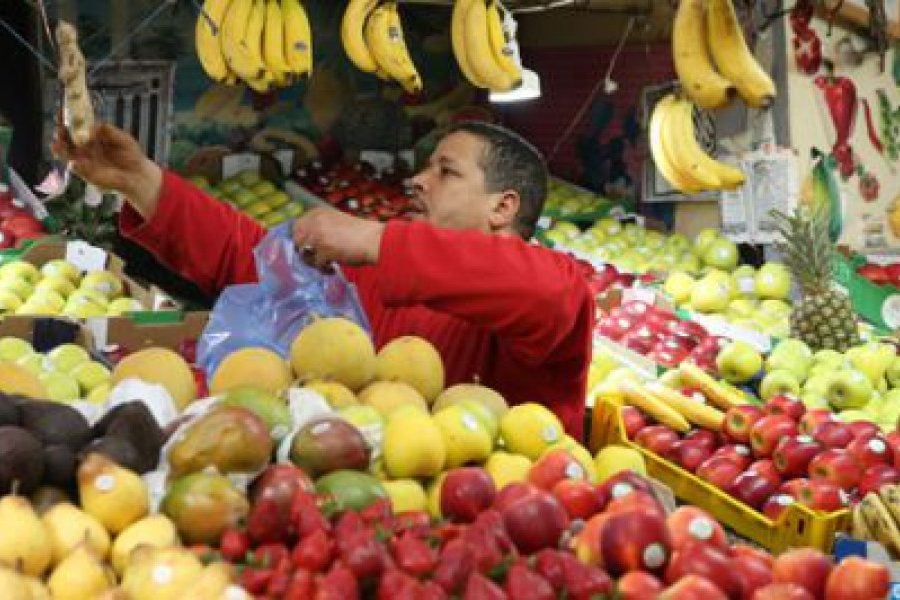
Moroccan consumers may have noticed a growing trend in recent years: summer fruits are becoming larger, more visually appealing, and increasingly expensive. Agricultural professionals and consumer advocates say the shift is being driven by the growing use of imported hybrid seeds, which offer higher yields and stronger commercial returns than traditional local varieties.
According to Hespress AR, a growing number of farms are adopting imported hybrid seeds that produce larger and more attractive fruits. The transition has increased the commercial value of agricultural land and encouraged greater investment, with some farm prices reportedly rising from around MAD 500,000 to as much as MAD 2 million.
A fruit and vegetable wholesaler from Meknes, speaking to Hespress EN on condition of anonymity, said the trend affects a wide range of crops, including watermelons, melons, apricots, persimmons, peaches, and cherries.
Seedlings can cost between MAD 30 and MAD 50, depending on the variety, quality, and farmers’ budgets, he explained.
“Alternative crops have become more common because the yields can be very high and generate greater profits,” the wholesaler said.
Local varieties losing ground
As farmers seek higher productivity and stronger market demand, traditional fruit varieties are increasingly being replaced.
Local varieties often struggle to compete with hybrids in terms of size, appearance, and yield, making them less attractive from a commercial standpoint.
“Farmers have almost completely abandoned local fruit varieties and switched to these alternative seeds,” the wholesaler said, adding that many hybrid varieties also require less water than traditional crops.
Consumer advocates warn that the trend could threaten Morocco’s agricultural heritage.
Bouazza Kharrati, president of the Moroccan Federation for Consumer Rights, said the growing reliance on imported hybrid seeds is reducing the cultivation of native varieties and placing some local crops at risk.
A growing share of the market
According to market research firm Mordor Intelligence, hybrid seeds accounted for approximately 45.4% of Morocco’s seed market in 2025.
The firm estimates that hybrid varieties can increase yields by between 20% and 40% compared with open-pollinated seeds, making them particularly attractive to farmers seeking higher returns.
Kharrati cautioned that many imported seeds are first-generation, or F1, hybrids.
“Most imported seeds are F1 hybrids, meaning they stop at the first generation,” he said.
While farmers can benefit from strong yields during the first growing season, saving seeds for future planting often produces weaker results. In some cases, plants may grow but fail to generate commercially viable harvests.
This dependence requires growers to purchase new seeds every season, increasing production costs and reliance on foreign suppliers.
Dependence on imported seeds
The trend extends beyond fruit production.
Mohamed Naji, a research professor at the Hassan II Institute of Agriculture and Veterinary Medicine, claimed that more than 80% of vegetable seeds used in Morocco are imported from Israel, while Dutch, Spanish, and other European suppliers account for much of the remainder.
Morocco has also increased its imports of seed potatoes. Industry data from EastFruit show imports reached approximately 60,000 tonnes during the 2022–23 season, the highest level in at least five years.
The majority of these imports come from the Netherlands, the United Kingdom, Denmark, and France, with Dutch suppliers maintaining the largest market share and Danish exports rising sharply since the 2017–18 season.
As hybrid varieties continue to gain ground, the debate is likely to intensify over how Morocco can balance agricultural productivity, water efficiency, and profitability with the preservation of local fruit varieties and long-term food sovereignty.






add your comment
Terms of publication : Not to offend the writer, people, sacred things, or attack religions or the divine self, and refrain from racist incitement and insults.