
Morocco’s High Authority for Audiovisual Communication (HACA) says social media have become increasingly important tools for citizen mobilization, allowing Moroccans, particularly young people, to organize, voice demands and amplify social movements.
In a new study titled Social Media and Political Communication: Between Opportunities for Influence and Risks of Disinformation, HACA examines how digital platforms have reshaped political communication and citizen participation in Morocco. The report also highlights the risks of disinformation, algorithmic manipulation and political polarization.
February 20 Movement pioneers online mobilization
The February 20 Movement, which emerged in 2011 during the Arab Spring, is identified as an early example of social media-driven mobilization in Morocco.
According to the report, activists used platforms including Facebook and YouTube to connect young people, students and unemployed Moroccans around demands for political and social change.
The movement demonstrated how digital platforms could facilitate coordination and give citizen campaigns wider visibility.
Hirak Rif turns social media into a coordination tool
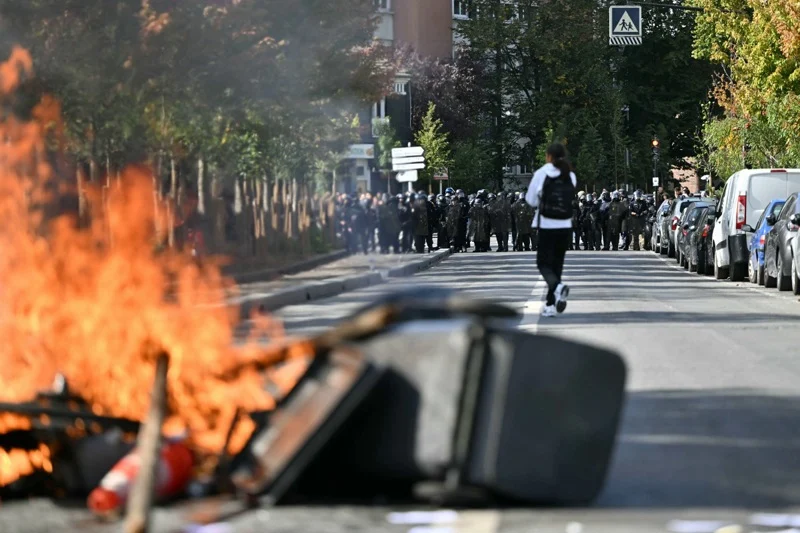
HACA also highlights the 2016-2017 Hirak Rif protests, when social media played a major role in spreading information about the movement and its demands.
The death of fish vendor Mohcine Fikri in Al Hoceima in October 2016, after he was crushed in a garbage truck while trying to retrieve confiscated fish, triggered widespread public anger. Images and videos of the incident circulated widely online.
Facebook and WhatsApp were subsequently used to share information about demonstrations, while Facebook Live and YouTube helped activists circulate videos explaining demands related to social justice and economic development.
The report notes that social media also helped give the movement visibility beyond Morocco.
Al Haouz earthquake highlights digital solidarity
The report identifies another role for social media after the September 2023 Al Haouz earthquake.
Facebook, WhatsApp and Instagram helped associations, volunteers and donors coordinate relief efforts and reach communities affected by the disaster.
Online fundraising campaigns also allowed Moroccans living abroad to contribute to relief operations, while videos and testimonies shared on social media drew wider attention to the response.
Gen Z 212 marks a new phase of mobilization
HACA also examines the emergence of the Gen Z 212 movement, which began in September 2025 around an online community on Discord and subsequently expanded across other platforms.
The movement initially focused on concerns over health care, education and social inequalities, with digital platforms used to coordinate protests in several Moroccan cities.
HACA notes that the movement also raised concerns about the spread of false information, artificially amplified hashtags and activity by foreign-based accounts on X.
The report presents these issues as part of broader risks surrounding digital mobilization, where social media can facilitate participation while also creating opportunities for manipulation and disinformation.
More broadly, HACA argues that social networks have become important public spaces in Morocco, but says their impact on democratic life will depend on digital literacy, responsible use, greater transparency and mechanisms to address abuses.
add your comment
Terms of publication : Not to offend the writer, people, sacred things, or attack religions or the divine self, and refrain from racist incitement and insults.