
Morocco’s national weather service said an Atlantic low-pressure system known as Storm Marta is indirectly affecting the country’s northern regions on Monday, bringing heavy rain, strong winds and snowfall to several areas.
The General Directorate of Meteorology said the system is pushing moist, unstable air masses toward northern Morocco, resulting in significant rainfall in the northwest, the Rif Mountains, Tangier, Loukkos, Gharb and parts of the Atlas range. Snow has been reported over higher elevations of the Atlas Mountains due to cold air in the upper atmosphere.
The weather service said conditions are expected to gradually stabilize from Wednesday as the Azores high-pressure system intermittently extends toward the country, limiting further disturbances in central and southern regions. However, secondary Atlantic depressions could bring renewed rainfall to the northern half of Morocco toward the end of the week, with possible snowfall over the Atlas Mountains and the eastern high plateaus, before broader stabilization is expected from Sunday.
Orange alert issued
Authorities maintained an orange-level weather alert in several provinces on Monday due to severe weather conditions.
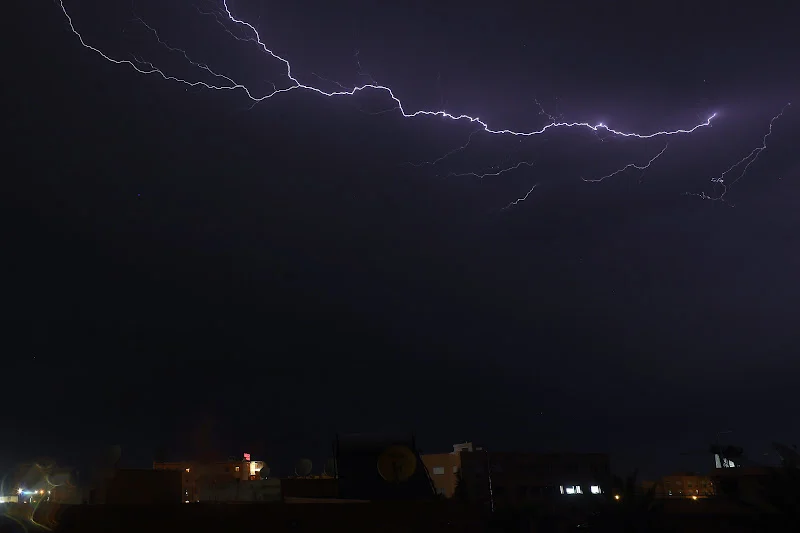
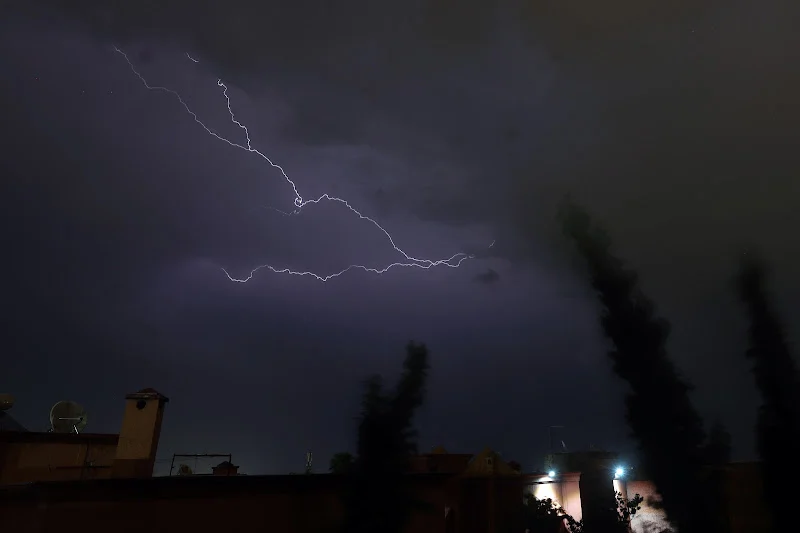
Heavy thunderstorms, potentially accompanied by hail, are forecast in Tangier-Assilah, M’diq-Fnideq, Fahs-Anjra, Chefchaouen, Tetouan, Larache and Ouezzane, with rainfall totals expected to reach between 40 and 60 millimeters from 11 a.m. Monday until noon Tuesday.
Additional rainfall of 25 to 30 millimeters is expected in Kenitra, Taounate, Sidi Kacem, Taza and Al Hoceima through Monday evening. Strong local winds ranging from 75 to 80 kilometers per hour are also forecast in Taza, Guercif, Taourirt, Boulemane, Figuig and Midelt until Monday night.
Atmospheric river phenomenon
Hussein Youabed, a spokesperson for the meteorology directorate, said Morocco has experienced a succession of Atlantic weather systems in recent days, including Storm Leonardo, which affected the country last Tuesday and Wednesday.
That system brought exceptionally heavy rainfall, exceeding 100 to 150 millimeters within 24 hours in parts of Loukkos and the northwest, he said. Tangier recorded rainfall equivalent to nearly two months’ average precipitation in just two days.
Youabed attributed the extreme conditions to an “atmospheric river,” a phenomenon that transports large amounts of moisture from tropical regions across the Atlantic toward North Africa through strong westerly winds.
Storm Marta, though less intense than Leonardo, still produced significant rainfall, including 92 millimeters in Tangier within 24 hours, he said. Its effects are continuing across Loukkos, Gharb, Atlantic coastal areas and the Atlas Mountains, where snowfall has been reported.
Rainfall is expected to continue Tuesday in the northwest, though with reduced intensity, before a period of relative stability on Wednesday and Thursday. Lighter Atlantic systems could return later in the week, bringing additional rain and snow to northern regions, according to the weather service.
Meteorological officials warned that rapid and repeated rainfall has saturated soils in several regions, reducing absorption capacity and increasing surface runoff, river levels and flood risks. Authorities urged continued caution, particularly in flood-prone areas.
The World Meteorological Organization has stressed the importance of accurate forecasting and early warning systems to help communities and authorities mitigate the risks posed by extreme weather events.







add your comment
Terms of publication : Not to offend the writer, people, sacred things, or attack religions or the divine self, and refrain from racist incitement and insults.