
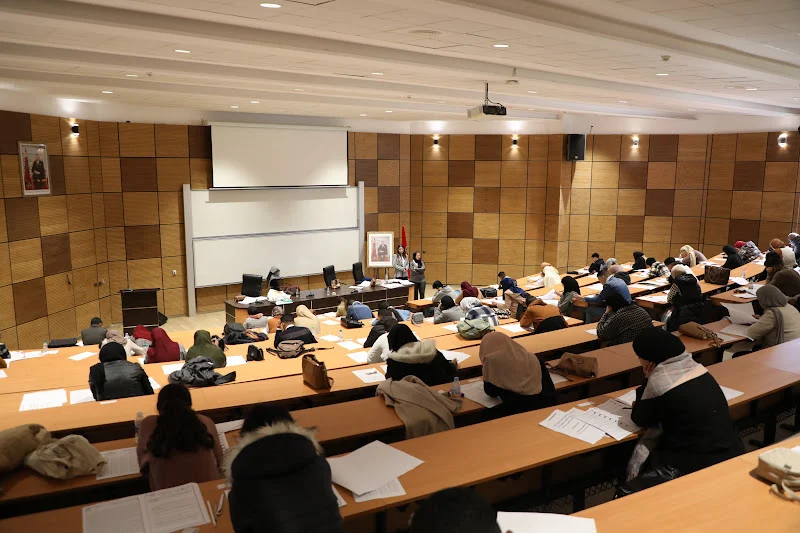
Morocco’s Ministry of Higher Education has once again revised its rules for Master’s degree admissions, just weeks after scrapping written and oral entrance exams.
A ministerial memo sent this week to university presidents and signed by Minister Abdellatif Miraoui said that each Master’s program will now be free to set its own admissions method.
Until now, programs followed a single system: file review, a written exam and an interview. In July, the ministry shifted to a file-only process. Following pushback from universities, the decision is now left to program teams.
“The aim is to allow pedagogical teams to choose the most suitable way to select students, while keeping the process transparent and quality-controlled,” the memo said. The method chosen must be listed in the program’s official “descriptive sheet,” to be reviewed by the National Agency for Evaluation and Quality Assurance.
Each program will create a selection committee that includes the dean, department head and program coordinator, among others. The committee is responsible for publishing accepted and waitlisted students in reports sent to the university presidency.
Eligibility remains broad, covering holders of Bachelor’s degrees, along with technology, medical and pharmacy diplomas. Students from Morocco’s “Centers of Excellence” still receive automatic admission to linked programs.
The ministry is also streamlining the framework for Master’s studies, reducing time for general “knowledge units” to make room for more programs and larger enrollment, while strengthening the role of program coordinators in academic and administrative management.
Still, the constant reforms have left many students frustrated.
Jihane Rahhou, a student hoping to pursue a Master’s degree, questioned the fairness of the system. “In my class, the top grade was 15, but in Agadir there were students who got 17. Using only files makes things even less fair,” she said, arguing that grades do not necessarily reflect readiness for research.
Academics echoed those concerns. A source at Mohammed V University told Hespress Ar that inconsistent grading across faculties makes equal selection difficult and faulted the ministry for pushing reforms without broad consultation.
Administrative law professor Redouane Aamimi, also at Mohammed V University, called the reform another “untested experiment,” though he said it could strengthen specialized tracks and departmental oversight. He warned that relying on grades alone “appears fair on paper but masks significant disparities between faculties.”
Researcher Hicham Marrakchi said questions remain over whether descriptive sheets will be standardized or vary by faculty, while law professor Rachid Medour argued the changes could simplify admissions and give students with “excellence” degrees clearer pathways into Master’s programs.
For now, the ministry’s rapid shifts continue to fuel debate among students and professors over fairness, transparency and the future of higher education in Morocco.







add your comment
Terms of publication : Not to offend the writer, people, sacred things, or attack religions or the divine self, and refrain from racist incitement and insults.