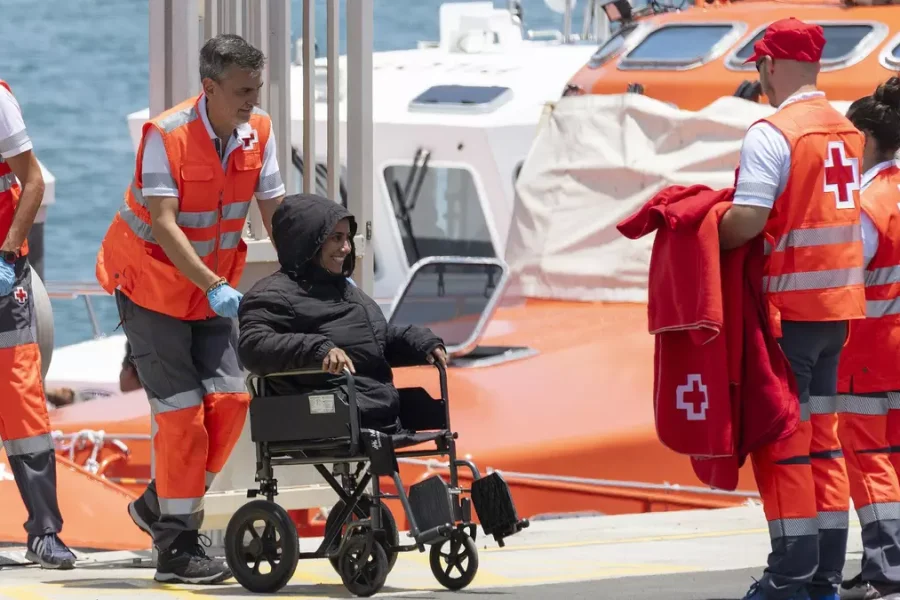
A 39-year-old Moroccan woman who lost both legs in a childhood accident has arrived in the Canary Islands after a perilous, irregular sea crossing from Morocco, Spanish and international media reported.
Rescued on July 30 alongside 39 other migrants, including women and children, she reached Lanzarote, one of the Canary islands, in a wheelchair, visibly exhausted yet smiling, according to Cadena SER and Antena 3 Noticias.
Spanish rescue services said the inflatable boat, which had departed northern Morocco in late July, was intercepted about 40 kilometers off Lanzarote after spending several days at sea.
Passengers, dehydrated and some suffering from hypothermia, were transferred to Arrecife port, where emergency teams and the Red Cross provided blankets, food and medical care.
The woman’s arrival, draped in a coat, seated in a wheelchair on the dock , left a strong impression on seasoned responders. “We had never seen anything like it,” a veteran member of the rescue operation told Radio Insular.
Born in Casablanca, the woman reportedly lost her legs in a traffic accident at the age of four. Despite severe physical disability, she embarked on the dangerous journey after travelling to Agadir to join a migrant group bound for Spain’s Atlantic archipelago, InfoMigrants said.
Authorities in the Canary Islands noted that the crossing from Morocco to Lanzarote typically takes several days and is often carried out in unseaworthy vessels, placing passengers at extreme risk. Spanish police and migration officials have opened standard procedures to identify the passengers, assess asylum claims, and provide temporary shelter.
Her case comes amid renewed concerns over irregular migration routes from Morocco to the Canaries, which have seen fluctuating arrivals in recent months.
According to Spain’s Interior Ministry, most migrants attempting the Atlantic route originate from West Africa, Morocco and the Sahel, though the profile increasingly includes women, minors and people with disabilities.
The Canary Islands emergency response network has faced sustained pressure since early 2024, with local reception facilities often operating at or near capacity.
Lanzarote’s port authorities said the group rescued with the woman was transferred to migrant reception centers for health checks and processing.




add your comment
Terms of publication : Not to offend the writer, people, sacred things, or attack religions or the divine self, and refrain from racist incitement and insults.