
Morocco’s energy minister, Leila Benali denied reports that the country would halt hydrogen production by 2030, citing caution as a deliberate measure to build supply chains and secure long-term offtake agreements.
“We will not use taxpayer money, not only because Morocco doesn’t have the means to do that, but because today, in an inflationary world, it would be a shame to use taxpayer money to put subsidies into new technologies that are not, in many cases, proven or industrialized,” she said in an interview with Hespress EN, without setting a firm deadline for when a go-or-no-go decision would be made.
She said progress hinges on market signals and technological maturity, with early optimism reflected in preliminary agreements signed by leading global hydrogen producers and emerging developers to advance projects in Morocco.
Over the coming months, the consortiums will conduct in-depth feasibility studies covering technical, environmental, and financial viability that would eventually inform their final investment decisions, a key milestone that would secure full commitment and unlock construction.
“We will accompany investors every six months, every three months, hand in hand to manage together technology risks, financial risks, economic risks, geopolitical risks,” Benali said, backed by Morocco’s strong track record of public-private partnerships, with the PPP model evolving from Morocco’s solar and wind successes into grid modernization and now hydrogen.
“Today, we are in a situation where we really want to capitalize on those lessons. It would be a shame not to capitalize on this huge experience,” Benali said, an experience that has come with its share of hard lessons.
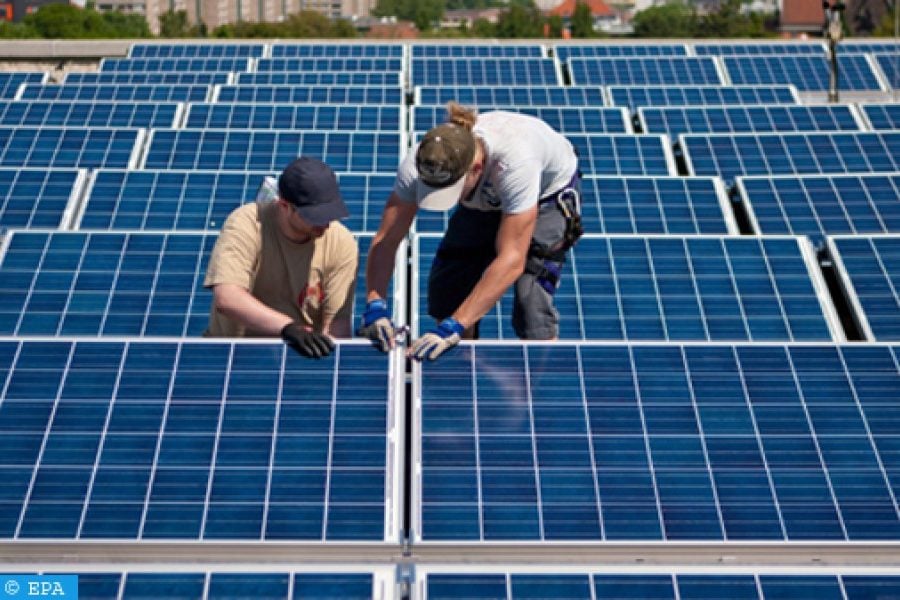
The Noor Midelt I project, for instance, became bogged down in delays over whether to prioritize concentrated solar power or cheaper photovoltaic systems, a dispute that stalled progress and drove up costs.
This means that when technology choices falter, it’s not just private investors who bear the brunt, national energy targets, public finances, and Morocco’s reputation as a stable investment hub are also on the line.
Read also: Why Morocco’s ambitious renewable energy plans face delays
Hydrogen, especially green hydrogen, is still in the early stages of industrialization and standardization, which for the minister creates higher risk.
“I said it 2022, and I still stick by it, that anyone who is able to produce green hydrogen at less than $2 a kilogram is welcome to invest in Morocco,” Benali said, framing the message as a clear filter: projects that meet strict commercial viability thresholds will move forward, ensuring that the country’s hydrogen ambitions are grounded in market realities, not hype.
China’s dominance in the clean tech value chain is often overlooked, she said noting that across key technologies, electrolyzers, batteries, storage, electric mobility, and industrial applications, China controls more than 80% of global market share.
“I’m not going to make bets with Morocco’s taxpayer money on technologies that have to be developed.”
“This is a very competitive area, But where we need to emerge again as the last man standing,” she said, framing Morocco’s energy vision as a push to become the most competitive supplier of green energy, both regionally and globally.
This strategy, she explained, is rooted in Morocco’s long-term resilience plan launched by King Mohammed VI in 2009, built on three pillars: ramping up renewable generation, advancing energy efficiency, and deepening regional integration.
“The idea is to insulate Morocco from tariff shocks and geopolitical turbulence,” she said, pointing to massive grid investments and exceptional solar and wind capacity, particularly in the southern provinces.
Benali dismissed comparisons with oil and gas strategies, emphasizing that Morocco’s strength lies not in fossil fuels but in leveraging its natural and infrastructural advantages to be the lowest-cost clean energy producer.
“We have the population and technical abilities, and we have the governance in place to to put to put that in place. So there’s nothing that prevents us from do it apart from ourselves.”







add your comment
Terms of publication : Not to offend the writer, people, sacred things, or attack religions or the divine self, and refrain from racist incitement and insults.