
Minister of Equipment and Water Nizar Baraka refuted claims made on social media during an oral questions session on Tuesday, asserting that cloud seeding was linked to the floods in the southeast during August and September.
The Minister defended that “Al-Gaith’s cloud seeding program undergoes careful scientific oversight and adheres to international standards,” emphasizing “the close monitoring and analysis of weather conditions to avoid cloud seeding in extreme situations that could be hazardous and require warning alerts.”
Read also: What is cloud seeding and why is it sparking controversy in Morocco?
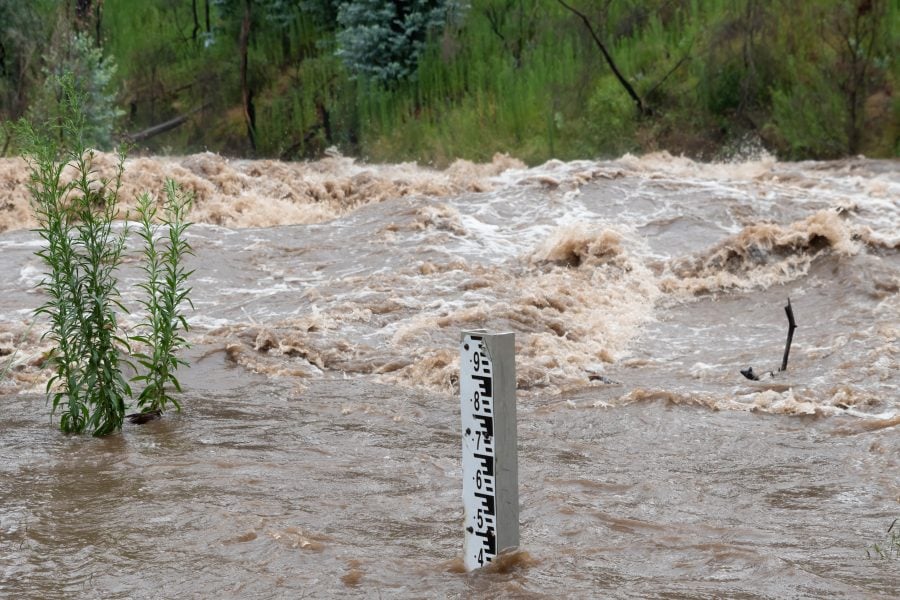
Baraka explained that “cloud seeding operations are planned for non-extreme weather conditions that meet the criteria for successful implementation,” reaffirming that “this recent flooding did not involve such techniques; it was a divine occurrence.”
The Minister also presented the results of ground and aerial cloud seeding operations conducted since 2021, which included 140 artificial rainmaking initiatives—52 of which were executed by aircraft.
He emphasized the measures being undertaken to expand and enhance the Al-Gaith program, an initiative that involves a multi-ministerial agreement encompassing the Ministries of Equipment, Water, Interior, Economy and Finance, Agriculture, Fisheries, Rural Development, and Water and Forests, as well as the National Defense Administration and the Royal Gendarmerie, all under the auspices of the National High Commission for the Rainfall Program.
Baraka said, “to protect communities and infrastructure from floods, the government and the ministry have implemented several proactive measures, including updating and modernizing the climate and hydrometric measurement network and installing monitoring devices.”
“We’ve also worked on building the necessary infrastructure through the ministry and water basin agencies, protecting 250 flood-prone sites across the country in 250 local communes,” he added, mentioning that “the dams we’ve built, whether large, medium, or small, play a vital role in flood protection.”
The Minister cited the “Fask Dam in the Guelmim region as an example, noting how it has protected the city and surrounding area from catastrophic floods, commending the roles of the Mansour Eddahbi, Agdz, and Moulay Ali Cherif dams in reducing damage.”
The minister reiterated that “managing crises and climate risks involves several government sectors working together in a collaborative approach for integrated risk management.”
He mentioned that “a budget of 2.5 billion MAD has been set aside to address the impacts of floods in the south and southeast, aimed at rehabilitating affected areas in the regions of Errachidia, Midelt, Ouarzazate, Tinghir, Zagora, Figuig, Jerada, Taroudant, Tata, Tiznit, Guelmim, and Assa-Zag, following royal directives.”
Baraka highlighted the Ministry ‘s plan to rehabilitate damaged roads and infrastructure by the end of 2024, with contracts initiated for 71 road segments and 69 infrastructure projects. He added that the ministry is also working on flood mitigation in eastern and southeastern regions, including a small dam in Ait Farsi in Tinghir.








add your comment
Terms of publication : Not to offend the writer, people, sacred things, or attack religions or the divine self, and refrain from racist incitement and insults.