
National identity leads to more group support from sports fans compared to team identity which has no effect, showed a recent study published on the Nature journal.
Titled “Subtle primes of in-group and out-group affiliation change votes in a large scale field experiment,” the study from Daniel Rubenson and Christopher T. Dawes demonstrated that football fans offer less support for players who have left the club they support.
Priming the national identity of a player in pictures or descriptions increased in-group voting by 3.6% compared to receiving no information about nationality.
The effect of the national identity prime is greatest among individuals reporting having a strong national identity.
Football players compete in a professional club but also come from different, sometimes rival, countries.
This duality begs the question, how does group membership affect our behavior? The study published the results on the impact of group identity on the behavior of over 400,000 football fans from 35 countries.
The separation line
The report states that in social identity theory, “belonging to a group gives us a sense of belonging and boosts our self-esteem. We tend to categorize people according to their membership in a group, dividing the world into us and them.”
People often favor individuals who belong to their same social group and discriminate against those who belong to the other group.
Studying this behavior is difficult. the researchers partnered with popular football app Forza Football, to design an experiment investigating the role of social identities in decision-making.
The experiment was conducted during Forza’s annual poll to determine the best soccer player in the world.
“We randomly changed the information users saw on the ballot in the 2018 poll to include either the players’ nationality, their professional club, or just their name and photo. Forza users saw one of these three ballots and clicked on the player they thought was the best,” said the researchers.
Shared nationality
The study knew users’ favorite clubs as well as their nationality. This allows to test how individuals vote when a player is presented as belonging to their social group or as being from an outside group.
When a Belgian Manchester United fan was shown that Kevin de Bruyne is Belgian, it created a common identity. But when the same person was shown that de Bruyne plays for rival club Manchester City, it created an unshared identity.
The study found “strong evidence of group patronage based on national identity. Showing players’ nationality in addition to their name and photo increased group voting by 3.6% compared to voting without nationality.”
In contrast, providing information about a player’s professional club did not change voting behavior. In other words, a person was more likely to vote for a player of the same nationality. On the other hand, a supporter sharing a club with a player had no effect on the vote.
The effect of sharing club identity and national identity, according to the study, is probably due in part to “the predominance of each identity. Football fans usually think of players in terms of their club and not their national team.”
Therefore, it was more effective in increasing the importance of national identity than that of club affiliation.
The study also measured the degree of identification of supporters with their favorite team and their nationality. It turns out, unsurprisingly, that the effect of nationality on voting is greater among people for whom this identity is more important.
Vote for and vote against
“People don’t just vote for their home group, they also vote against candidates from their exclusion group.” Professional football players sometimes change teams during transfers.
“This creates an excellent test of the idea that individuals are actively voting against someone they view as an out-of-group candidate.” The researchers concluded
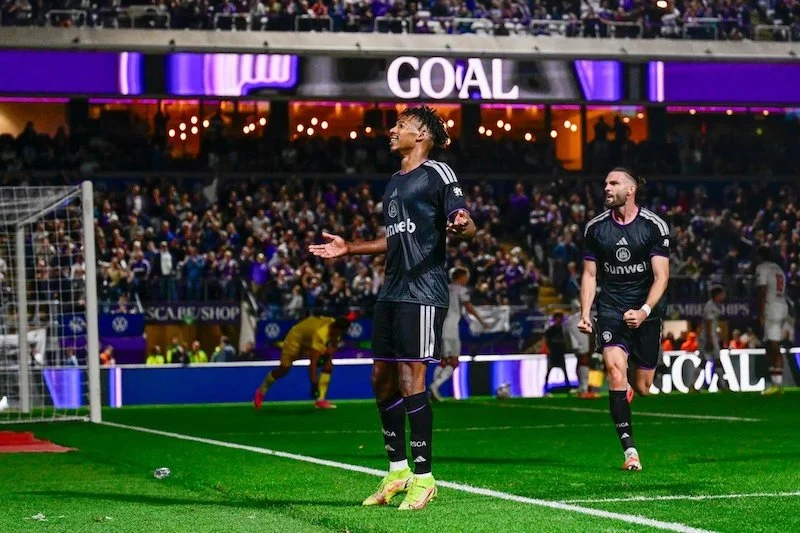
In 2017, Mohamed Salah joined his current club Liverpool from Italian side AS Roma. This means that, for AS Roma supporters, Salah was part of the home group, but now he is part of the exclusion group.
When presented with a ballot showing the fact that a former in-group member is now out-group (on another team), users were significantly less likely to vote for the player.
For these fans, providing team information resulted in a 6.1% decrease in voting for an out-of-group player.
Recent research by a team of political scientists indicates that star players like Salah can reduce bias. They found that Islamophobia had decreased in the Liverpool area due to Salah’s presence.
The research suggested that sports fans can be quite fickle and that identifying strongly with the home group is directly related to a backlash effect towards outgroups.
Sports reflect key social, economic and political values and developments. Sometimes sport is used to bridge or widen ethnic, racial, religious and partisan divides.





add your comment
Terms of publication : Not to offend the writer, people, sacred things, or attack religions or the divine self, and refrain from racist incitement and insults.