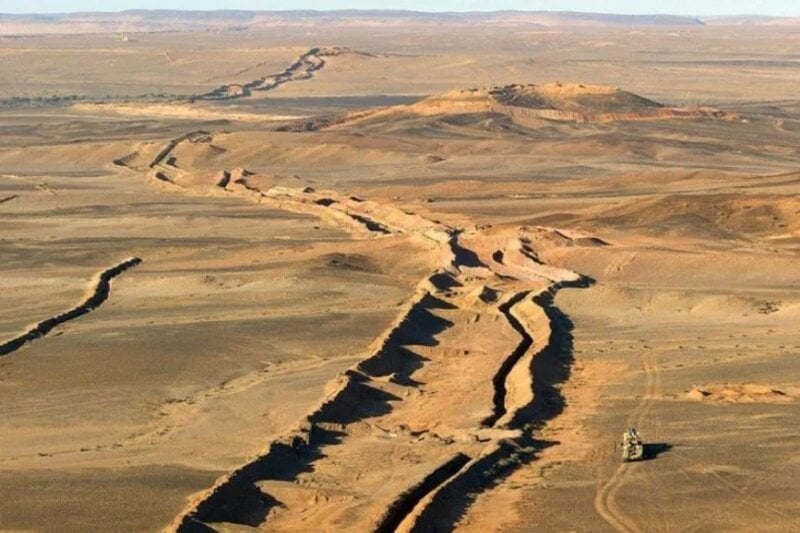
Proposed by Morocco in April 2007, the Autonomy plan gives sizable autonomy to the inhabitants of Western Sahara under the sovereignty of Morocco.
Within the framework of the proposed plan, the Kingdom will retain the attributes of sovereignty, “including the national flag, and the currency, ”as well as “the national security, the external defense, external relations the religious prerogatives of the King, and the Kingdom’s judicial system.”
The Autonomy plan escalated the dispute between Morocco and Polisario-, which has rejected it- continuing to demand a referendum on full self-determination. Polisario further wants a “fully independent Sahrawi Arab Democratic Republic.”
Important details about Morocco’s plan
According to Morocco’s plan, the autonomous region will be given the authority to govern itself democratically, with unique legislative, executive, and judicial bodies. “They will have the financial means necessary for the region’s development in all areas, and they will participate actively in the nation’s economic, social, and cultural life.”
The autonomous territory will have a Head of Government and a Parliament, both of which will vote on local laws in conformity with the Morocco’s constitution.
For example, laws and regulations issued by Sahara autonomous Region should be consistent with the Region’s autonomy Statute and with the Kingdom’s Constitution.
Furthermore, the region’s autonomy statute will be the subject of several negotiations after being submitted for a referendum. This referendum gives these populations, “their right to self-determination, as per the provisions of international legality, the Charter of the United Nations and the resolutions of the General Assembly and the Security Council.”
Once the parties have agreed on the proposed Autonomy, a Transitional Council composed of representatives from Morocco and Polisario, will assist with “repatriation, disarmament, demobilization, and reintegration of armed elements who are outside the territory, as well as with any other action aimed at securing the approval and implementation of the present Statute, including elections.”
UN-led mediation in resolving the dispute
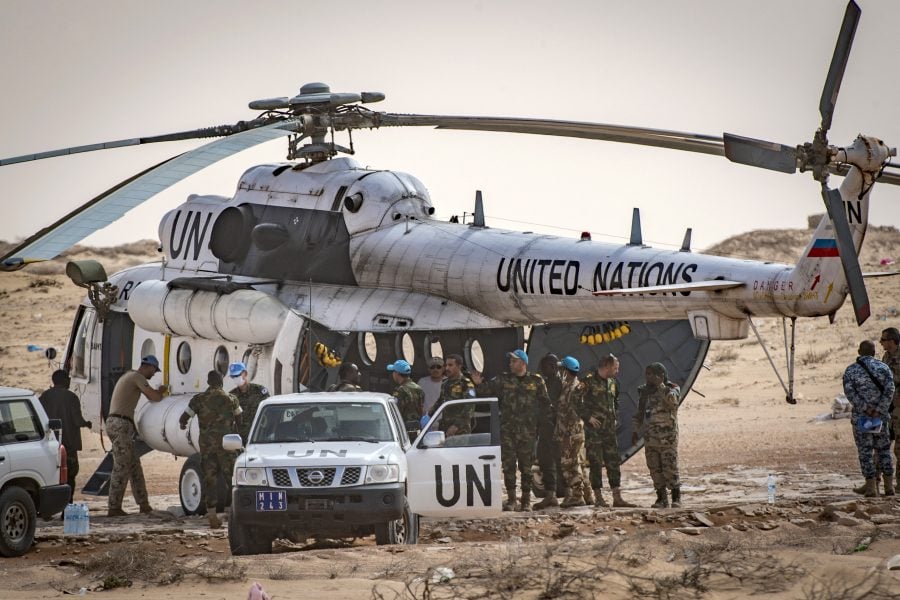
As an intervening party, the United Nations (UN) has played a major role in the dispute for almost 40 years, especially after the establishment of the UN Mission for Western Sahara, MINURSO in 1991, with an aim of establishing “a referendum between independence and joining Morocco.”
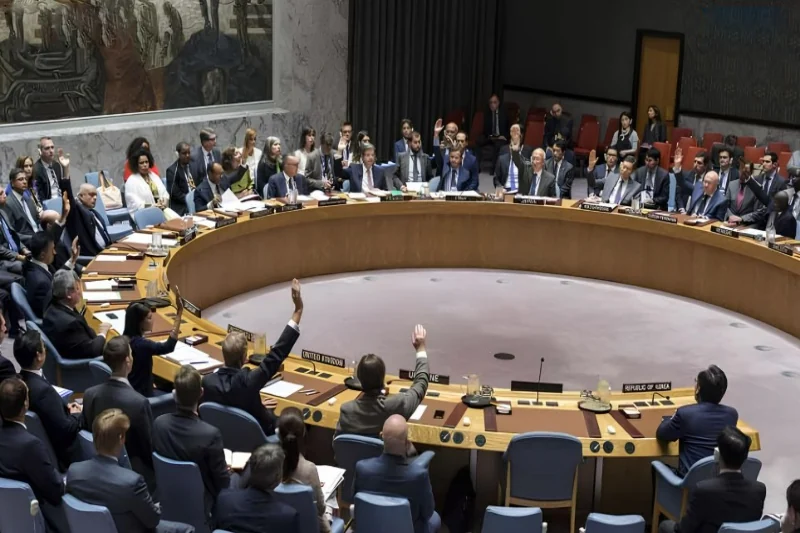
Recently, The UN Security Council has adopted Resolution 2602, extending the mandate of the MINURSO, the UN mission operating in Western Sahara, for another year.
The resolution has repeatedly emphasized the United Nations Security Council’s (UNCS) calls for a “realistic, practicable, enduring and mutually acceptable political solution.”
Despite supporting the Polisario front, financially and diplomatically, Algeria has long claimed itself as an observer to the conflict. Thus, the newly UN resolution has once again emphasized that “no negotiations could take place without Algeria’s involvement as a main party to the conflict.”
The 2602 Resolution further noted it is “reiterating its call upon Morocco, Polisario, Algeria and Mauritania to cooperate more fully with each other, including through building additional trust, and with the United Nations, as well as to strengthen their involvement in the political process and to achieve progress towards a political solution.”
Morocco’s permanent representative to the UN, Omar Hilale, welcomed the adoption of Resolution 2602, saying that it comes at a time of “optimism for the re-launch of the exclusively UN political process,” after the recent appointment of Staffa de Mistura, as a personal envoy to the UN Secretary General for Western Sahara.
Growing international support to Morocco’s Autonomy plan
A number of countries have expressed their support for the Moroccan Autonomy Plan, as the “only truly realistic solution” to the long-dispute over Sahara.
Spain was the latest country to join the list of global players that supported Morocco’s sovereignty and territorial integrity and support the Autonomy proposal.
The Spanish government broke with decades of “neutrality” over the Western Sahara conflict, calling the Autonomy plan “the most serious, realistic and credible basis” for resolving the conflict.
The Spanish new position over Western Sahara came to end a long diplomatic crisis that broke out in April 2021 between the two countries, due to Spain’s decision to shelter Brahim Ghali for hospitalization.
Following the latest developments after Spain’s new move, King Mohammed VI invited last week Spanish Prime Minister, Pedro Sánchez, to visit Morocco.
Spanish Minister of Presidency, Felix Bolanos, said that Sanchez’s visit to Morocco would have “positive” impacts on Moroccan-Spanish bilateral relations.
Important countries such as the United States, Israel, Germany, the United Kingdom and the United Arab Emirates also reaffirmed “their continued support to Morocco in its political approach to resolve this regional conflict.”
In addition to this, Morocco achieved several diplomatic gains in the past decade by opening consulates in Dakhla and Laayoune; following some African and Arab countries support for Morocco’s sovereignty Sahara.
Morocco’s Autonomy plan was first suggested in 2007, after James Baker, the UN Personal Envoy to Western Sahara from 1997 to 2004, had failed to reach consensual means to reconcile the positions of Morocco and the Polisario Front separatist group.
King Mohammed said last year that his country will not sign any trade agreements with countries “that oppose Moroccan sovereignty over Western Sahara.”
In his Green March speech of November 2021, the King said the country would not accept economic partnerships that do not extend to Western Sahara.



add your comment
Terms of publication : Not to offend the writer, people, sacred things, or attack religions or the divine self, and refrain from racist incitement and insults.