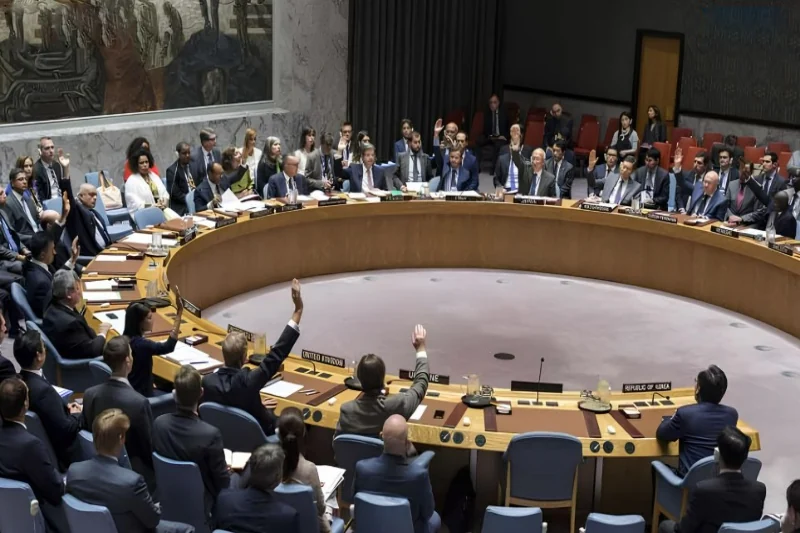
Morocco no longer intends to wait for a new UN Security Council resolution on the Sahara after Friday’s diplomatic deadlock, according to two international law experts who said the Russian veto had not overturned the negotiating framework established by Resolution 2797.
Abdelfattah Belamchi, president of the Moroccan Center for Parallel Diplomacy and Dialogue of Civilizations, told Hespress that the Royal Cabinet’s October 30 statement marked a decisive shift in Rabat’s approach to the dispute.
“Morocco’s position is that it will not wait for any new Security Council decision,” Belamchi said, arguing that the kingdom had broken with decades of reliance on the Council’s periodic consideration of the Sahara.
The statement followed Russia’s veto of an American draft backed by 11 Council members that sought to establish Morocco’s expanded autonomy initiative as the sole basis for negotiations and restructure the UN mission, MINURSO.
A competing Russian proposal to renew the mission’s existing mandate for another year received only three affirmative votes, failing to reach the nine required for adoption.
Neither draft was adopted, leaving Resolution 2797, passed in October 2025, as the Council’s latest resolution on the dispute.
The resolution established Morocco’s autonomy proposal as the basis for negotiations toward a mutually acceptable political settlement providing for self-determination. It also recognized genuine autonomy as potentially the most feasible outcome.
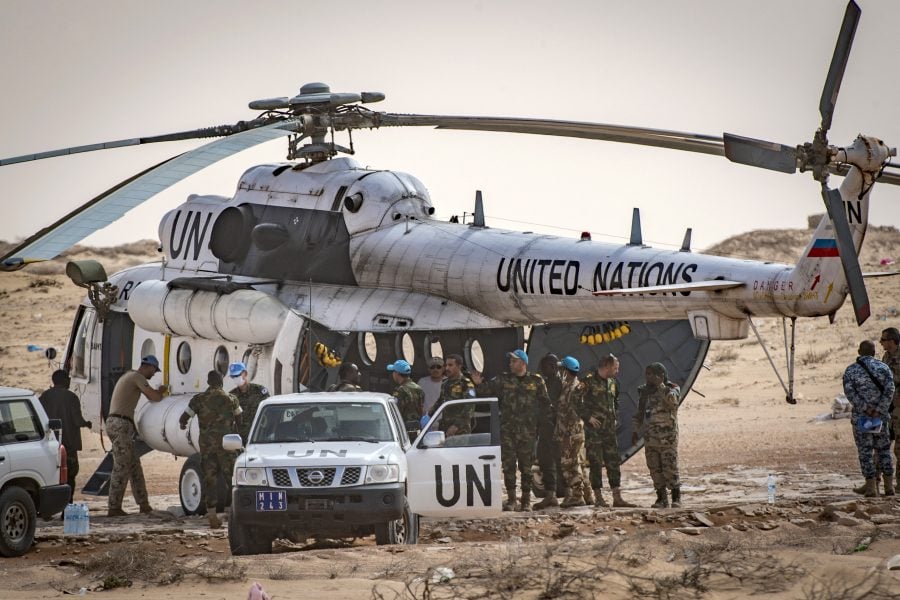
Its provision extending MINURSO’s mandate expired on October 31, however, without a replacement.
Driss Lekrini, professor of international law and international relations at Cadi Ayyad University in Marrakech, said the Russian veto could not invalidate the earlier resolution or erase the diplomatic significance of its adoption.
He argued that the failure of both proposals exposed the Council’s inability to advance the dispute, while the American draft’s 11 affirmative votes demonstrated substantial support for an approach centered on Moroccan autonomy.
For Lekrini, the deadlock strengthens Morocco’s case for ending a prolonged period of UN involvement built around MINURSO’s repeated renewals.
He said Rabat could seek to terminate the mission’s role while continuing to exercise authority over its southern provinces and maintaining security against possible instability.
The Royal Cabinet’s statement went further than calling for MINURSO’s departure. It said the non-renewal should also end the Security Council’s periodic consideration of the Sahara dispute, including reports by the Secretary-General and briefings by his Personal Envoy.
Lekrini argued that repeated vetoes could strengthen Morocco’s grounds for seeking the issue’s removal from the Council’s agenda, particularly as international support for the autonomy initiative expands.
Belamchi similarly described the Royal Cabinet’s announcement as a decision rather than a declaration awaiting subsequent UN approval, although he acknowledged that the reactions of international institutions and other parties remained difficult to predict.
The Council has not agreed to remove the Sahara from its agenda. Resolution 2797 expressly stated that it would remain seized of the matter, and Friday’s failed votes did not produce a decision reversing that position.



add your comment
Terms of publication : Not to offend the writer, people, sacred things, or attack religions or the divine self, and refrain from racist incitement and insults.