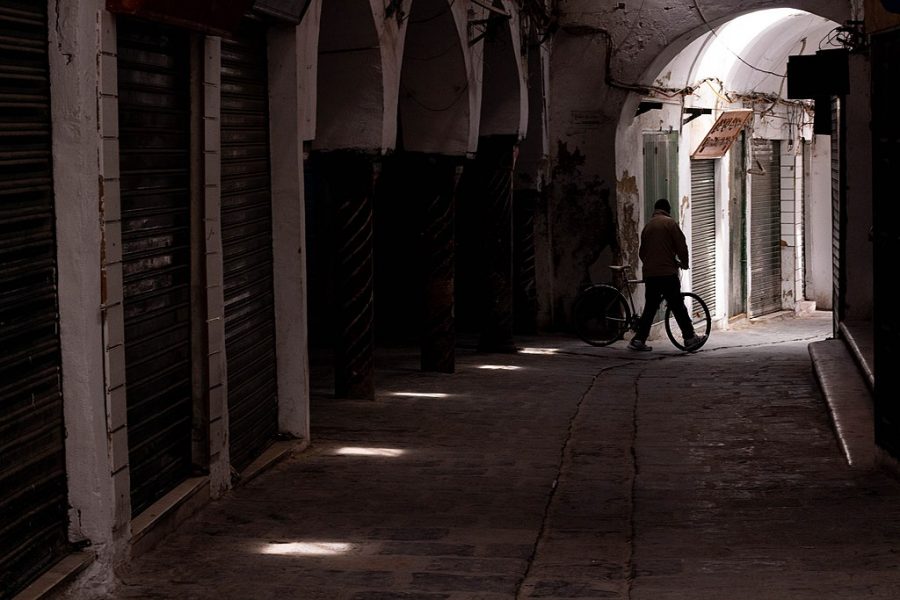
Morocco’s civil counsel against all forms of discrimination (GADEM) issued a report detailing the “perverse” affects of the government’s state of health emergency, which has lasted for 2 years since the detection of the first COVID-19 infection in the country.
The closure of national borders, restrictions on mobility, rights of assembly and demonstration, curfews, vaccination, and random police controls and checkpoints have all been introduced in times of high infection rates.
Such measures, and the legislations that have been issued to allow them, have contributed to reinforcing existing systemic discrimination,” says the report, which adds that the restrictions under the state of emergency “established a climate and framework for new, emerging forms of discrimination.”
Excessive prerogatives, with little to no control
“Walis and governors have been given greater power to act effectively against the spread of COVID-19,” says GADEM, explaining that despite the implementation of reinforced security means may be necessary, “they should be supervised and controlled,” in order to protect and ensure the respect of the constitutional, fundamental rights and freedoms for guaranteed to all.
The counsel additionally pointed out the “strong involvement” of the Ministry of the Interior to the detriment of that of local elected officials, both in the making of decisions and in their application.
Moreover, the Moroccan Parliament was “not able to fully enact its role fully during this period,” as multiple regulations and decrees, deemed necessary during this period, passed without requiring the legislative branch’s green light, nor was the institution included in the drafting of such laws.
Penal offenses against society’s most vulnerable
In addition to the “arbitrary” nature of regulation aiming to limit the spread of the virus, GADEM calls out the creation of a criminal offense relating to the violation of the state of health emergency, with utter disregard to some individuals’ situation, who are by default unable to respect the restrictive measures.
“Foreigners, homeless people and individuals with substance abuse and addiction issues, have been confronted with situations deemed to be an offense even though they were unable to comply with certain measures,” read the report, as the counsel argues such individuals “require reinforced protection, and specific medical and health care support,” not jail time.
According to data exposed in the counsel’s report, 490 foreigners, “mostly from West and Central Africa” had been arrested in the kingdom’s biggest cities, during the period between March 2020 and December that year.
Among the arrested foreigners were “50 minors and 26 women, two of which were pregnant,” says the counsel. None of the detainees were brought before a judge and no arrest records were made.
GADEM says that some of the detainees were not even informed of the duration of their arrest, as 311 individuals were transferred to detention centers in Rabat, Assilah, Bir Guendouz and Laayoune, the latter being where many foreigners “were detained way past the quarantine period.”
This Thursday, March 24, the Moroccan government once again extended the state of health emergency in Morocco, despite the constantly dropping number of daily COVID-19 infections and virus-related deaths.
According to the government, the extension is to maintain the important progress made so far in terms of the fight against the pandemic, but with the dwindling domestic COVID-19 numbers, Moroccans are all the more confused about the prolonging of the exceptional constitutional measure.



In addition to the violations mentioned above, the measures taken during the state of emergency curfew have caused severe psychological problems to many people! It is really astonishing how they prolong the curfew while other highly infected countries have ended all the measures that limit individuals’ freedom.