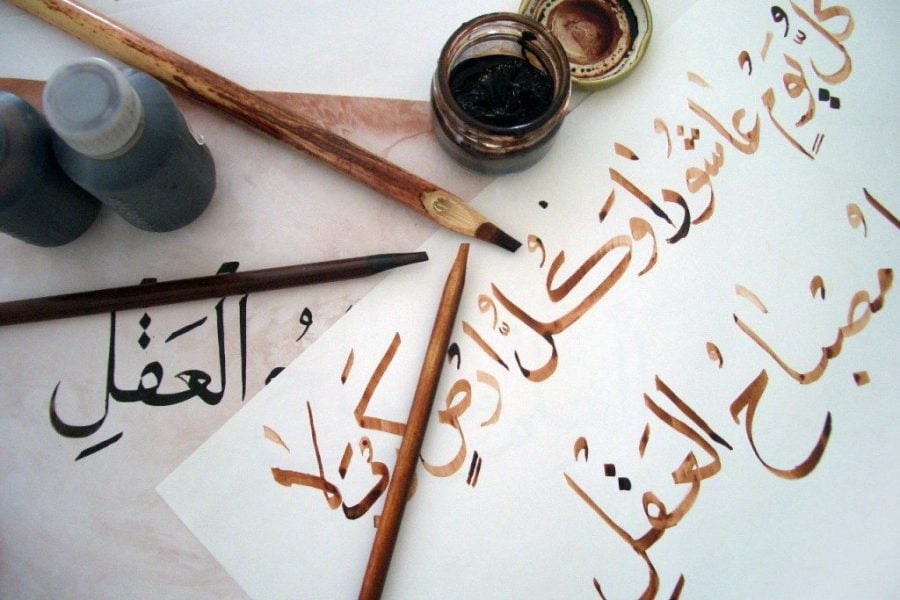
Saudi Minister of Culture Prince Badr bin Abdullah bin Farhan announced this Tuesday the registration of Arabic calligraphy on the Representative List of the Intangible Cultural Heritage of the United Nations Educational, Scientific and Cultural Organization (UNESCO).
Saudi Arabia, in cooperation with 15 Arab countries under the supervision of the ALECSO, led the joint efforts to register the “Arabic Calligraphy: Knowledge, Skills and Practices” item on the UNESCO list.
Prince Badr bin Abdullah bin Farhan described the registration as “important,” adding that it is consistent with the direction of the Ministry of Culture, to serve this art through several initiatives, including the “Year of Arabic Calligraphy” initiative, which included events and activities throughout the years 2020 and 2021.
The inclusion of “Arabic calligraphy” in the Representative List of the Intangible Cultural Heritage of UNESCO effectively contributes to the promotion of calligraphy in local communities.
Calligraphy is the ninth non-tangible cultural heritage recorded by the Saudi Kingdom, which includes Majlis, Arabic coffee, the Najdyah dance, the Saudi flute, falconry, the Qatt Al-Asiri painting, the date palm, and the Sadu weaving.
Arabic calligraphy is a symbol of Arab identity and has contributed to the transmission of culture and religious texts throughout history.
Professional calligraphers practice Arabic calligraphy according to the knowledge, skills, and rules acquired through apprenticeship, and artists and designers use it in their artwork through various mediums.




add your comment
Terms of publication : Not to offend the writer, people, sacred things, or attack religions or the divine self, and refrain from racist incitement and insults.