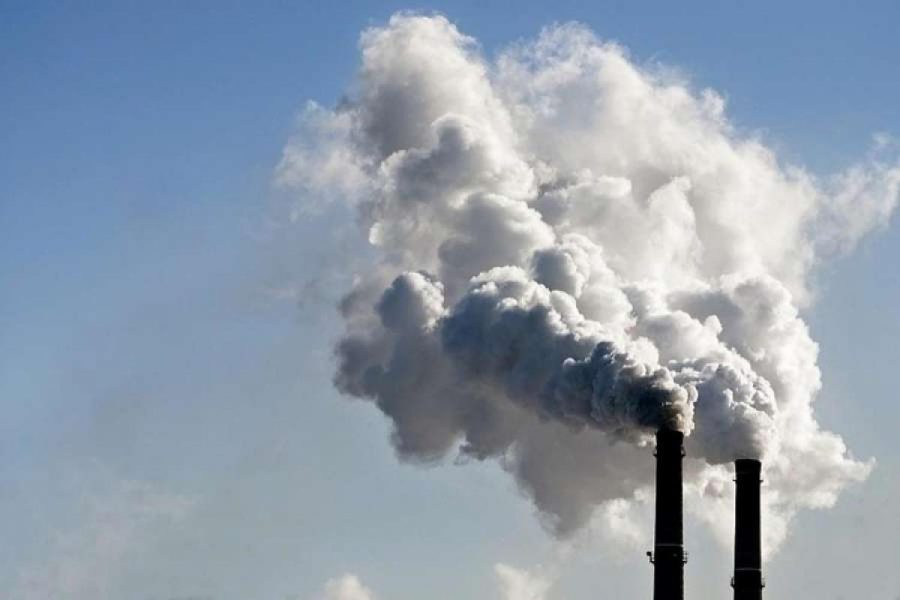
North-western Moroccan city, Kenitra, has been at the forefront of Moroccans’ fight for clean air for over a decade.
As the city expands, draws in more investments and residents, air pollution concerns have multiplied.
Air pollution has been a recurring concern for many urban residents across the country, leading to protests and humble government action in Mohammedia, ElJadid and Safi.
Local environmental activists have been sounding the alarm since 2010, maintaining that power generating plants are the first contributors to rampant air pollution in some of Morocco’s most populated cities.
The Decade Long Fight for Clean Air in Kenitra
Mostafa Salah Benramel, President of climate NGO Minarets based in Kenitra, spoke to Hespress EN of the seemingly insurmountable challenge of clean air in the city.
According to Benramel, residents have been complaining of “black dust, respiratory issues and degrading air quality” since 2010.
Benramel stated that the problems generated from additional industrial plants, such as textile, metal and paper factories are exacerbated by “an overwhelming number of cars in circulation, in a city that already struggles with inadequate circulation infrastructure.”
The activist deplores Kenitra’s “degrading vegetation and progressive deforestation,” pointing to the countless instances of black dust remnants found on rooftops, balconies and surfaces on a daily basis.”
A local resident spoke to Hespress EN, saying she had to “uproot (her) family, change jobs and deal with hefty healthcare bills, following frequent respiratory ailments,” which she alleges were “caused by living in Kenitra’s northern area,” the city’s industrial hub.
Locals’ claims are backed by science. In person studies carried out on a traffic site next to the city’s train station indicate significant concentrations of Particulate Matter (PM10) and Total suspended particles (TSP), significantly higher than those found on similar sites in Europe.
Particulate pollution is characterized by a high proportion of coarse particles, a sign of important terrigenous inputs, and by very high concentrations of lead, nickel and zinc.
Doctor Mouhcine Daoudi, a practicing pulmonologist in Kenitra, told Hespress EN that “despite there being many causes for respiratory ailments, over 50% of consultations relate to environmentally triggered pathologies.”
Dr.Daoudi added that “air pollution, caused by gas emissions and an abundance of CO2 levels in the air” significantly contribute to respiratory attacks.
Kenitra currently has only one monitoring station installed at a background site. According to scientists, it is “essential to install a complete monitoring network with stations on traffic and industrial sites.”
An International Challenge
The World Health Organization (WHO) said that 2.4 million people die annually as a result of causes directly attributable to air pollution, while 1.5 million people die from diseases attributed to indoor air pollution.
According to the WHO, the number of deaths attributable to air pollution is annually and internationally higher than the number of deaths related to traffic accidents.
The international organisation pointed to various chronic diseases resulting from air pollution, namely severe asthma, bronchitis, emphysema, heart and lung diseases.
An additional 2020 report by Greenpeace confirmed these challenges remain prevalent, as the report revealed air pollution from coal caused the death of an approximate 5,000 people in Morocco back in 2018.
Pollution Costs
This June, Morocco submitted its new nationally determined contribution (NDC) to the Executive Secretariat of the United Nations Framework Convention on Climate Change (UNFCCC).
With a new, bold and impressive ambition, the country committed to reducing its greenhouse gas (GHG) emissions by 45.5% by 2030, 18.3% of which is unconditional, to be achieved regardless of international support.
While Morocco’s commitment stems from its “determination to fight global warming and move toward clean energy,” the decision is also driven by the significant health costs resulting from air pollution.
According to a 2021 German study on the cost of air pollution from energy generation in Morocco , air quality levels in the country are considered moderately unsafe, as its PM 2.5 annual mean concentration of 33 ?g/m3 exceeds the recommended maximum of 10 ?g/m3.
In an attempt to estimate the magnitude of the financial and health costs of the coal, gas and oil-fired power plants that produce electricity in the country, the study found that “the current fossil fuel-based system emits high levels of CO2, in addition to other harmful air pollutants, causing stress on the environment through increased global warming and stress on the health of the local population.”
The research shed light on the external cost of air pollution from energy production in Morocco for 2015, concluding that pollution costs the country an approximate 18 billion euros, equating to 18% of Morocco’s GDP.
Domestic Efforts
While representing Morocco at the ongoing UN Climate Change Conference in Glasgow (COP26), Head of Government, Aziz Akhannouch highlighted world leaders’ responsibility towards humanity.
In his speech before the international plenary, Akhannouch stressed that a clear political commitment is needed, noting that Morocco is on the right path, considering ample efforts and various programs across many sectors, such as energy, agriculture and water management.
The newly elected prime minister has a point, as Morocco has been recognized as a continental pioneer when it comes to environmental issues, having taken a mu;titutde of measures to ensure clean energy sourcing, proper waste disposal and an emphasis on renewables.
Despite the government’s efforts, which have not gone unnoticed, Moroccans are still struggling with pollution, in the midst of a grand industrialization wave sweeping the country.
Reports covering air quality in Morocco paint a grim picture, confirming many climate related anxieties Moroccans in Mohammedia, Safi and Kenitra struggle with.
But Morocco’s ambitious plans to pioneer clean, sustainable and renewable energies on the African continent can only be achieved through adjacent regional policies.
Regional focus will not only find alternatives to polluting practices, but direct regional infrastructure investments towards a wholesome, well rounded sustainable approach that takes all factors involved into consideration.




add your comment
Terms of publication : Not to offend the writer, people, sacred things, or attack religions or the divine self, and refrain from racist incitement and insults.