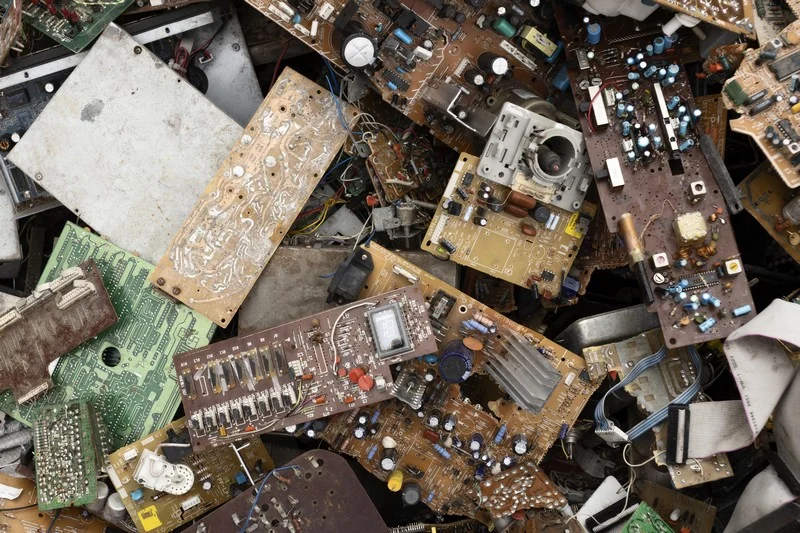
ority and the Customs and Indirect Taxes Administration have launched joint investigations into nine companies suspected of using the electronic waste trade as a cover for money laundering, according to sources familiar with the matter.
The companies, which operate in the collection, sorting and export of waste electrical and electronic equipment, are mainly based in Casablanca, Tangier and Kenitra.
The investigations have focused on commercial transactions worth a combined 137 million dirhams (MAD 137 million) over the past two years, the sources told Hespress AR. Preliminary comparisons between customs declarations and financial records revealed significant discrepancies between the declared value of exported electronic waste shipments and the amounts received through bank transfers from abroad.
The transactions under scrutiny include exports of waste printed circuit boards, computer processors and damaged industrial equipment.
The sources said inspectors had identified substantial differences in the prices charged for shipments that were similar in weight and type of waste. In several cases, the commercial documents submitted did not contain technical information that could explain the discrepancies, particularly regarding the concentration of precious metals in electronic components, a factor that determines their commercial value and potential for industrial recovery.
Investigators also identified incoming bank transfers from foreign companies whose names did not appear in the commercial documents accompanying the customs declarations. This prompted authorities to broaden the investigation to examine the contractual relationships between the exporting companies and the foreign parties involved in settling their payments, as well as to establish the beneficial owners of the companies involved.
A review of the companies’ accounting records also revealed substantial expenditure on the purchase of electronic waste from local suppliers, without sufficient supporting documents establishing the origin of the equipment. Information gathered on some suppliers indicated that they lacked the financial and commercial capacity to provide the quantities listed on their sales invoices, the sources said.
One company under scrutiny recorded a sharp increase in export revenue over a short period without a corresponding expansion in its capacity to collect, sort and store electronic waste. An examination of its operating premises, technical equipment and workforce found that the resources deployed were disproportionate to the volume of commercial activity declared.
Financial investigations also identified transactions between the companies under review and businesses operating in economic sectors with no direct connection to electronic waste trading. The nature of the services listed on invoices exchanged between them raised questions about whether the transactions were genuine and why payments had been made to those companies.
The audit also examined documents relating to the financing of sorting and processing equipment purchases and the rental of industrial warehouses. Accounting records showed that some funding had been provided by partners whose files did not contain sufficient information to establish the origin of the money. This prompted investigators to examine the financial circumstances of shareholders and company managers, as well as changes in their contributions to financing the businesses.
Customs investigations have also focused on whether exported waste was correctly classified and whether shipments abroad complied with the legal and regulatory requirements governing the cross-border movement of waste, particularly equipment containing components and materials classified as hazardous waste.
Audits of some files revealed shortcomings in the documentation describing the nature and composition of the waste, the sources said.






add your comment
Terms of publication : Not to offend the writer, people, sacred things, or attack religions or the divine self, and refrain from racist incitement and insults.