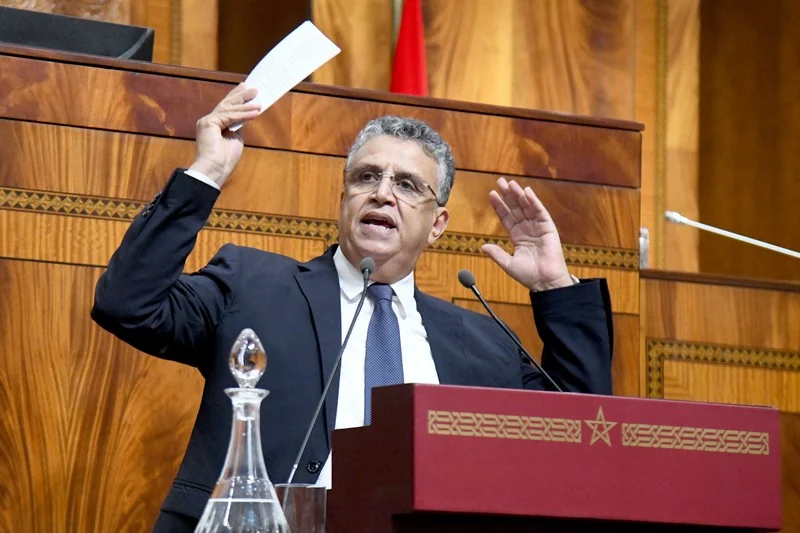
Morocco’s Justice Minister Abdellatif Ouahbi pledged Monday to introduce legislation targeting illicit enrichment, conflicts of interest and money laundering, while insisting that tougher anti-corruption measures must preserve the presumption of innocence and fair-trial guarantees.
Speaking during oral questions in the House of Representatives on November 2, Ouahbi faced renewed pressure from lawmakers over long-delayed reforms, including legislation withdrawn in 2021 that contained provisions criminalizing illicit enrichment.
“We will present a law on illicit enrichment, a law on conflicts of interest and a law on money laundering,” he told MPs.
Opposition challenges Ouahbi over withdrawn legislation
Lawmakers demanded stronger asset declarations, whistleblower protections and enforcement of constitutional accountability requirements.
PJD lawmaker Abdessamad Haiker described Ouahbi’s initial response as “pitiful,” arguing that constitutional protections must be balanced against obligations to combat corruption and conflicts of interest.
Haiker said the withdrawal of the earlier illicit enrichment legislation continued to undermine the minister’s position.
Ouahbi objected to the language, prompting PJD parliamentary group leader Abdellah Bouanou to request its removal from the official record.
Presumption of innocence at center of proposed reforms
Ouahbi argued that unexplained wealth cannot automatically establish criminal wrongdoing and that individuals should not be required to prove their innocence.
He raised concerns about the right to remain silent, asking whether someone questioned about the origin of substantial assets could be considered guilty simply for refusing to answer.
The minister also warned that public accusations and photographs of suspects could permanently damage reputations even after acquittal.
He said lawmakers must ensure that anti-corruption powers do not expose citizens or public officials to arbitrary prosecution.
Separate anti-corruption code under consideration
Ouahbi said his ministry was examining a standalone anti-corruption code that could consolidate illicit enrichment, conflicts of interest, money laundering and related offenses under dedicated procedures.
He disclosed that proposals from two parliamentary groups had already been collected and invited further contributions from the PJD.





add your comment
Terms of publication : Not to offend the writer, people, sacred things, or attack religions or the divine self, and refrain from racist incitement and insults.