
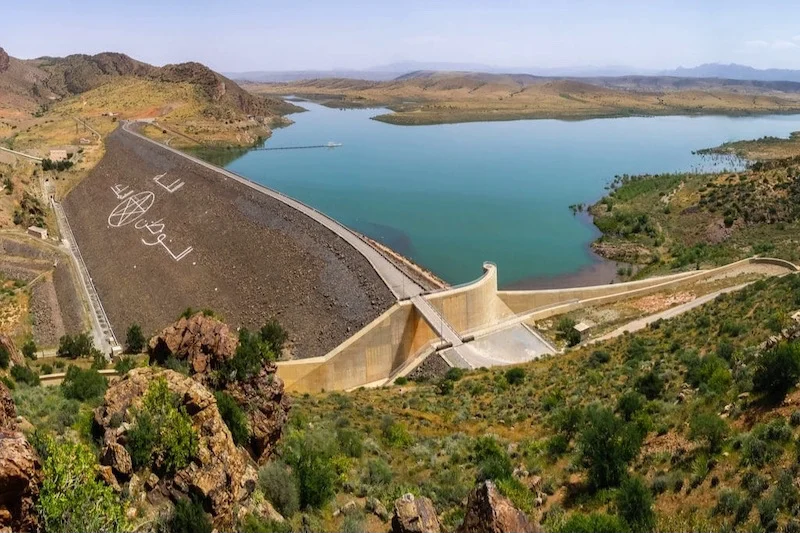
Morocco’s dam reserves have sharply rebounded to above 70 percent of capacity, marking a decisive turnaround from last year’s water stress and easing concerns ahead of the summer peak, according to official water planning data.
The national filling rate now exceeds levels seen at the same time in 2025, when reservoirs were below 40 percent, reflecting a near doubling of stored water after heavy rainfall and snowmelt during the 2026 season.
Total water reserves have climbed to around 12 to 13 billion cubic meters, up from roughly 6 billion a year earlier, strengthening supply buffers for drinking water and irrigation across major regions.
The recovery is uneven but concentrated in key northern and central basins, including Sebou, Loukkos and Bouregreg, where several strategic dams have reached or approached full capacity. These reservoirs supply major urban corridors such as Rabat, Casablanca and Tangier, reducing the likelihood of summer restrictions.
The improvement follows months of sustained precipitation that ended a prolonged drought cycle and allowed reservoirs to recover at an accelerated pace. Water authorities say the current levels provide a multi-year buffer for drinking water in several regions, while also stabilizing irrigation for agricultural zones.
The rebound is also easing pressure on groundwater reserves. Higher dam storage typically reduces reliance on aquifers, allowing them to partially recharge after years of overextraction.
Despite the improved outlook, officials continue to warn of structural vulnerability. Evaporation losses remain significant during summer months, and southern basins such as Souss-Massa and Draa still lag behind northern regions, requiring continued conservation measures.




add your comment
Terms of publication : Not to offend the writer, people, sacred things, or attack religions or the divine self, and refrain from racist incitement and insults.