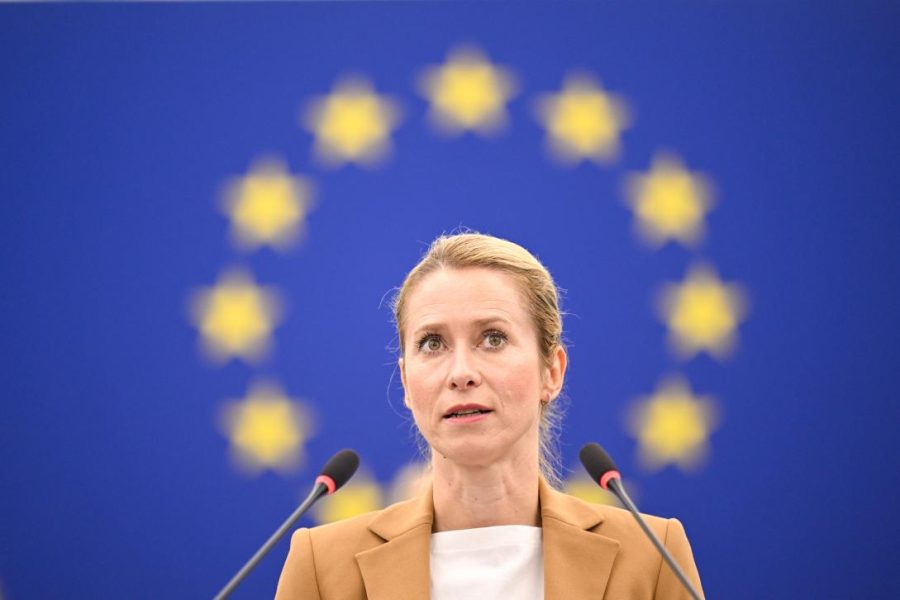
The European Union says it is entering a new phase in its relationship with Morocco, one it wants to anchor in investment, energy, innovation and regional security. But what, in practical terms, does Morocco gain that it did not already have, and how durable is this promised upgrade after years of legal and political friction?
In this interview, the European Union’s foreign policy chief, Kaja Kallas, addresses those questions, along with the bloc’s position on the Pact for the Mediterranean and on investment in Morocco’s southern provinces.
1. The EU describes Morocco as a “necessary and important partner.” What does Morocco actually gain from this new phase that it didn’t already have in previous agreements?
Morocco already benefits from a strong partnership with the EU. We are its largest trading partner and biggest foreign investor. Trade in goods is around 650 billion dirhams, five times the level in 2000. So the foundation is already very solid.
But we want to go beyond that. We are now expanding cooperation into new sectors like digital, renewable energy, and innovation. This will benefit Europeans and Moroccans. For example, on energy, the EU has helped fund wind farms along Morocco’s Atlantic coast that are already adding hundreds of megawatts to the national grid. This investment has created jobs and local income.
We are also working to ensure that economic benefits reach all regions. Extending EU tariff preferences to products from Western Sahara is part of that effort.
2. The EU referenced the Pact for the Mediterranean as a framework for deepening ties. Can you clarify whether this pact will redefine Morocco’s status: partner, hub, or subcontractor?
Morocco is a valued partner, there’s no doubt about that.
The Pact for the Mediterranean will mobilise billions more in European investment for over 100 projects across the entire Mediterranean region. But the real ambition is to build stronger, equal partnerships. In the end, the objectives are simple: more stability, more prosperity, and more opportunity for our societies. We can all rally around these goals.
This is also not a Brussels-designed initiative being exported south. It was built jointly with Morocco and other Mediterranean partners In fact, several ideas came directly from high-level talks hosted by Morocco last year. This is as much your Pact, as it is Europe’s.
3. After past legal and political tensions between Morocco and EU institutions, what guarantees exist that this new phase of cooperation is durable and not vulnerable to future disputes?
There is never a guarantee, but the closest you can get is with political will and the understanding that both sides get something out of it.
When I hosted Foreign Minister Bourita in Brussels in January, EU Foreign Ministers collectively endorsed this new phase of cooperation. This is a clear political signal that we are both committed to making this partnership work.We both know that cooperation makes us stronger. Take shared security challenges for example, such as the fight against terrorism, radicalisation, and organised crime. We can tackle these problems better by working together.
Of course, tension can arise in any relationship. In our case, this has often been linked to the Western Sahara. We continue to believe that the best way forward in Western Sahara is a just and mutually acceptable political solution. This has to be in line with the United Nations framework. The EU fully supports the UN’s efforts in this regard.
4. European companies often hesitate to invest in Morocco’s southern regions due to legal uncertainty. Will the EU provide explicit guarantees or protections for investments in these territories?
Morocco has one of the most stable investment environments in the region, which is why European companies are so present. But legal uncertainty can hold investors back. What businesses need are clarity and predictability.
That is precisely why the extension of EU tariff preferences to products from Western Sahara was carefully designed to comply with rulings of the European Court of Justice. The objective is simple: to provide a transparent, legally sound framework that businesses can trust. Our role is to make sure that certainty is there and I am confident we can deliver this.









add your comment
Terms of publication : Not to offend the writer, people, sacred things, or attack religions or the divine self, and refrain from racist incitement and insults.