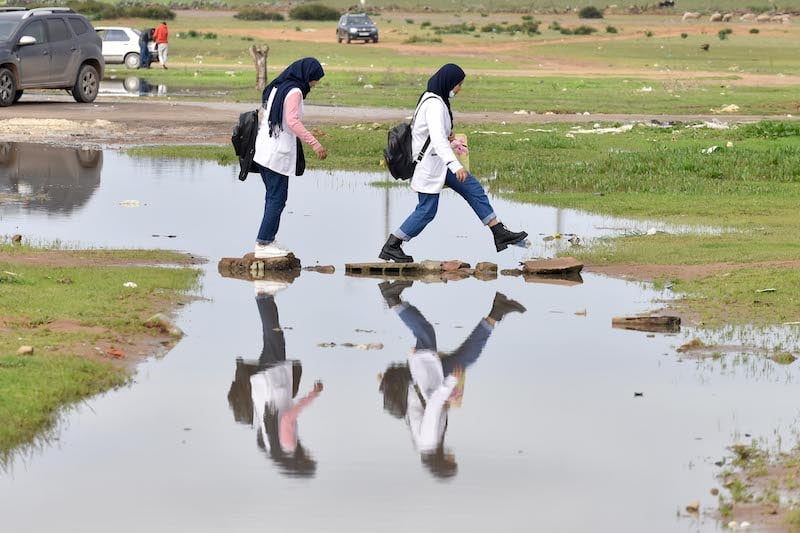
UNESCO’s 2026 Global Education Monitoring Report says Morocco has sharply expanded access to school over the past two decades, but a child’s chances of staying in class and learning still depend heavily on whether they grow up in the countryside or the city.
The report’s Morocco case study says school access has improved fast, yet rural and hard-to-reach areas still face the strongest dropout pressure and the weakest learning conditions.
UNESCO says Morocco cut the out-of-school rate for lower secondary age adolescents to 6% in 2023 from 42% in 2000, and for upper secondary age youth to 23% from 63%. The number of out-of-school adolescents and youth fell to 570,000 from just over 2 million over the same period, helped by a major school building push that more than doubled the number of public lower secondary schools and nearly tripled upper secondary schools.
But staying in school is not the same as progressing through it. UNESCO says repetition in primary fell to 7% in 2024, while lower secondary repetition climbed through the 2010s and reached 23% by 2019.
An IIEP-UNESCO note published in February said Morocco is still trying to prevent an estimated 270,000 learners from leaving school each year and warned that dropout is concentrated in rural, remote and hard-to-reach areas, where planners need far more granular local data.
UNESCO linked weaker rural outcomes not only to distance, but to poorer distribution of resources, teaching quality and learning environments. It also cites earlier UNICEF and ministry backed preschool evaluations saying 64% of preschool educators lack formal training.
Morocco has tried to close that gap with cash transfers, transport and boarding. UNESCO says the Tayssir stipend programme now reaches 3.1 million students, while school transport support for upper secondary students rose to 111,000 beneficiaries in 2023/24, three quarters of them in rural areas. Public upper secondary boarding schools with canteens nearly quadrupled in rural areas over the same period.






add your comment
Terms of publication : Not to offend the writer, people, sacred things, or attack religions or the divine self, and refrain from racist incitement and insults.