
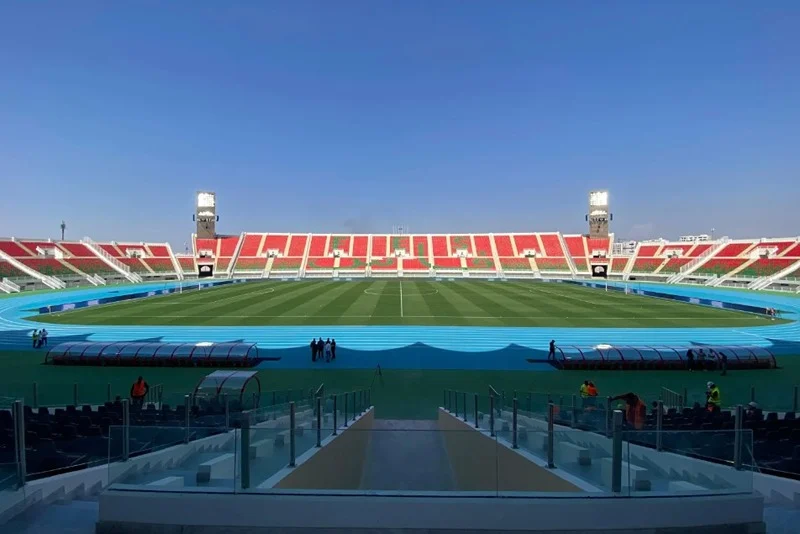
Morocco’s approach to securing major sporting events is drawing growing international attention as the country hosts the Africa Cup of Nations (AFCON) 2025, with officials and experts describing it as an emerging global reference in stadium security and crowd management.
Authorities say the model goes beyond traditional policing, combining field readiness with strict legal enforcement, advanced technology and international cooperation. Moroccan stadiums hosting AFCON matches have been transformed into tightly regulated spaces where violations are handled immediately through on-site judicial mechanisms.
According to official data from the Office of the Public Prosecutor, 128 people were detained for stadium-related offenses between Dec. 21 and Jan. 6.
Statistics obtained by Hespress show that the most common offense was attempting to enter stadiums through fraud, accounting for 61 cases. Other violations included unauthorized ticket sales, use of flares, document forgery and illegal access to the pitch.
Specialized judicial units operating inside stadiums handled these cases, allowing for immediate legal proceedings.
Security cooperation has also extended beyond Morocco’s borders. A senior delegation from the U.S. Federal Bureau of Investigation visited Moroccan stadiums in Rabat during the tournament, reflecting what officials describe as deepening strategic partnerships ahead of future global events.
Ehsan El Hafidi, a professor of political and legal sciences and a security affairs consultant, said Morocco has developed a distinct security paradigm built on two complementary pillars.
“The first is accumulated experience through international cooperation, including Morocco’s contribution to securing events like the Qatar World Cup and the Paris Olympics,” El Hafidi said. “The second is a domestic security model developed by the General Directorate of National Security, with specialized units dedicated to crowd management and football-related events.”
He said the system successfully combines risk management on the ground with modern stadium security technologies.
Ahead of AFCON 2025, Morocco introduced on-site judicial offices inside stadiums, providing what El Hafidi described as an immediate legal framework to address offenses such as fraud, impersonation, public intoxication and ticket forgery.
“This has had a tangible impact on discipline inside sports venues,” he said.
El Hafidi added that cooperation with U.S. security agencies is part of broader preparations, particularly as the United States prepares to host the 2026 World Cup.
“The goal is to exchange expertise, especially in understanding crowd psychology and cultural behavior, which is essential when managing diverse international audiences,” he said.
Sports analyst and former national technical official Aziz Daouda said Morocco’s success goes beyond security logistics and enters the realm of legal sovereignty and international leadership.
“Morocco was among the first countries to establish judicial courts inside stadiums,” Daouda said. “This is not just about punishment. Trying offenders at the scene of the violation strengthens deterrence and directly links behavior to consequences.”
He added that the approach also has an educational effect, reinforcing ethical conduct and sportsmanship among fans.
Daouda noted that the presence of FBI officials follows an established international practice at major tournaments and reflects strategic cooperation rather than external oversight.
“Understanding how crowd behavior varies by nationality allows Moroccan security services to anticipate risks before they materialize,” he said.
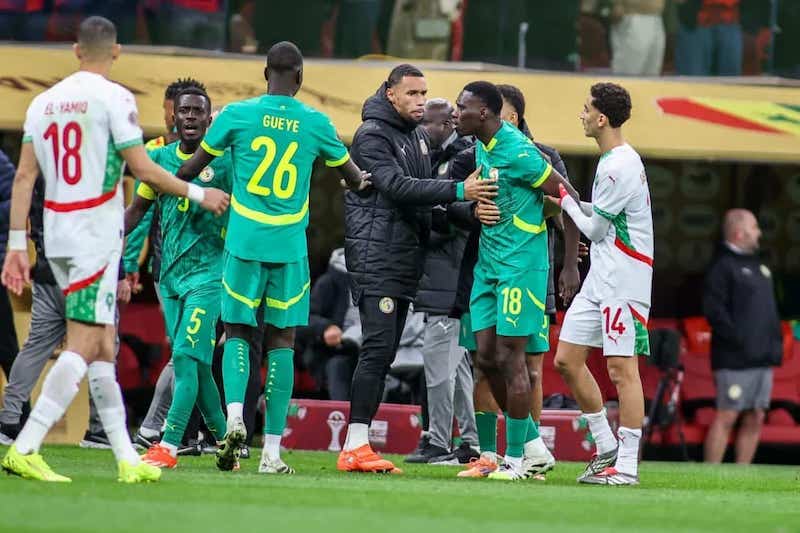
Both experts pointed to a decline in violence during national team matches compared with club competitions, attributing it partly to the absence of organized ultra fan groups at international tournaments.
Morocco is also hosting a three-day scientific forum on the security of major sporting events, focusing on legal and security challenges in the digital age. The event is organized by the Ministry of Justice in partnership with regional and international security institutions, as part of preparations for AFCON 2025 and the 2030 World Cup, which Morocco will co-host with Spain and Portugal.
Officials say the experience is positioning Morocco as a regional and international reference in sports security, transforming stadiums from potential flashpoints into controlled spaces for celebration.




add your comment
Terms of publication : Not to offend the writer, people, sacred things, or attack religions or the divine self, and refrain from racist incitement and insults.