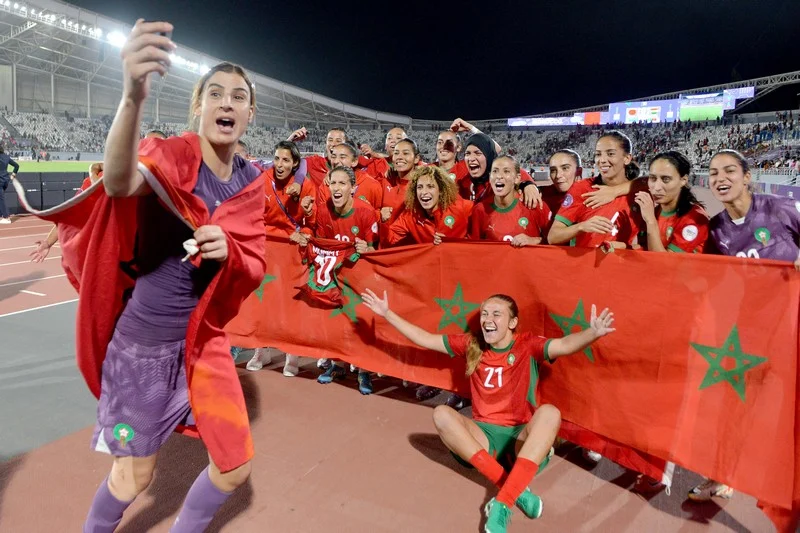
Morocco’s rise in women’s football is gathering pace, with national and club teams breaking new ground five years after a reform plan transformed the sport.
The change stems from a 2020 plan by the Royal Moroccan Football Federation to professionalize the women’s game, including formal contracts, new youth divisions, and direct financial support to clubs.
Within five years, the league structure has been unified, salaries standardized, and Morocco positioned as one of Africa’s best-funded women’s programs.
And already, the senior team reached the FIFA Women’s World Cup Round of 16 in 2023 and twice finished as WAFCON finalists, the U‑20 and U‑17 teams played in FIFA youth World Cups, and the senior futsal team won the first Women’s Futsal Africa Cup of Nations in 2025, and many more.
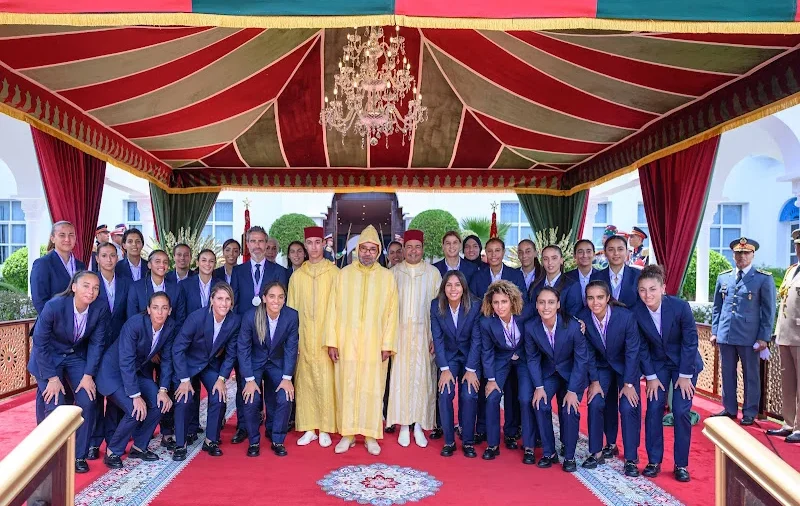
“The national championship has become a true model for developing women’s football at every level, from national teams to youth divisions and regional leagues,” said Khadija Illa, president of the National Women’s Football League, re-elected in 2023 to lead the body in charge of structuring competitions and club licensing, and recently named head of the women’s commission of the North African Football Union.
Across Africa, few federations have built women’s football structures as formal or well-funded as Morocco’s. Nigeria’s Women Football League, despite the country’s dominance at the Women’s Africa Cup of Nations, continues to operate on limited sponsorship and without full professional contracts for players, according to the Guardian Nigeria.
South Africa’s SAFA Women’s League, launched in 2019, remains largely semi-professional, with clubs and players still pushing for a fully professional tier, Reuters reported in August 2023.
Elsewhere, Ghana and Cameroon have established national women’s leagues but struggle with irregular fixtures and travel funding, while Tunisia and Egypt only recently began reform programs tied to CAF’s new licensing framework for women’s clubs.
A CAF development review published in 2024 found that fewer than half of African federations provide direct player salaries or centralized transport support, two areas Morocco’s Royal Federation now covers in full.
Signing an objectives contract with the Royal Moroccan Football Federation, the National Women’s Football League, the Regional Leagues, and the National Technical Department in 2020 gave a major boost to women’s football and helped move it toward professionalism.
The agreement aimed to develop players’ skills, support clubs financially, and provide regular salaries, along with other incentives.
The Royal Moroccan Football Federation now pays players through professional contracts, provides clubs with transport buses, and has launched youth competitions for under-17 players.
The contract also increased funding for women’s football to 210 million centimes for clubs and 10 million for regional leagues, and aimed to grow the sport to 90,000 players by 2024, train 1,000 coaches, and raise the level of play across all competitions.
Four years after signing this contract, Moroccan clubs have achieved strong results: ASFAR won the CAF Women’s Champions League, Sportif Casa finished as runner-up, and in the most recent edition, ASFAR and Sportif Casa took second and third place.
“This progress shows how Moroccan sports have grown and received real attention, making the country’s participation in every competition meaningful, whether returning home with honors or winning titles,” Illa said.
The Royal Federation has also raised player salaries from MAD 3,500–5,000 to MAD 5,000 per month, while technical staff have also received higher pay and new benefits.
“In the past, players faced delays in their salaries, but under Lekjaa’s leadership, the federation now ensures timely payments, allowing players to stay focused on their work,” said Mehdi Azwar, coach of Raja Women’s Club, stressing that “without this financial support, women’s football might not have survived.”
The National Women’s Football League has also reorganized the competition system, cutting the top division to 12 clubs and merging the second division into a single national group, Illa said.
It also created an amateur division, launched a national women’s futsal championship, and “is preparing the first-ever under-19 and under-16 national competitions, where first and second division teams will compete together.”
Just a few years ago, there were very few women’s teams, but making it mandatory for clubs to create them is already showing results, with more professional staff now involved, according to the coach of Raja Women’s Club.
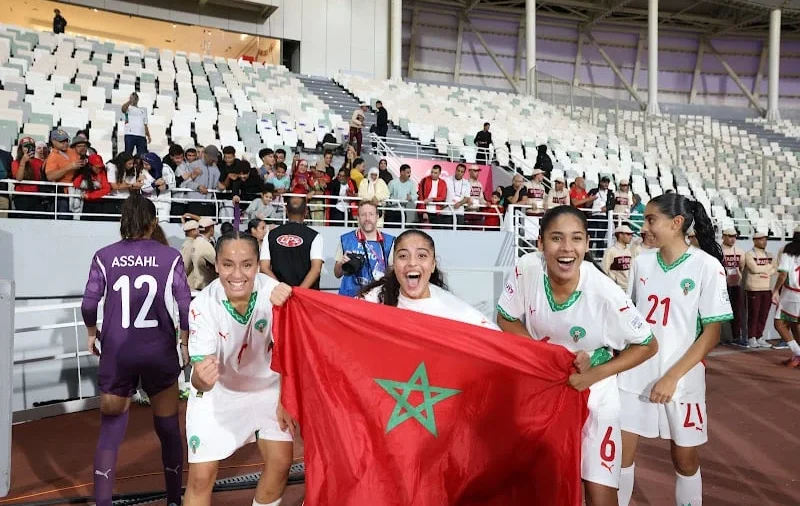
The league’s growth is also attracting talent. “Foreign players are coming to Morocco, and Moroccan players are beginning to compete professionally abroad in Europe and the Gulf countries,” said Fayçal el Karkouri, a coach in the women’s football championship.
But coaches say the same system that enabled this growth has yet to extend fully to the youth level, where girls remain outside the Mohammed VI Football Academy, a key training hub for elite players.
“The academy should open its doors to girls as well,” stressed el Karkouri, noting that joining its programs with the Maamoura training center, where female players currently train, would make it easier for coaches to manage teams with big differences in player levels.
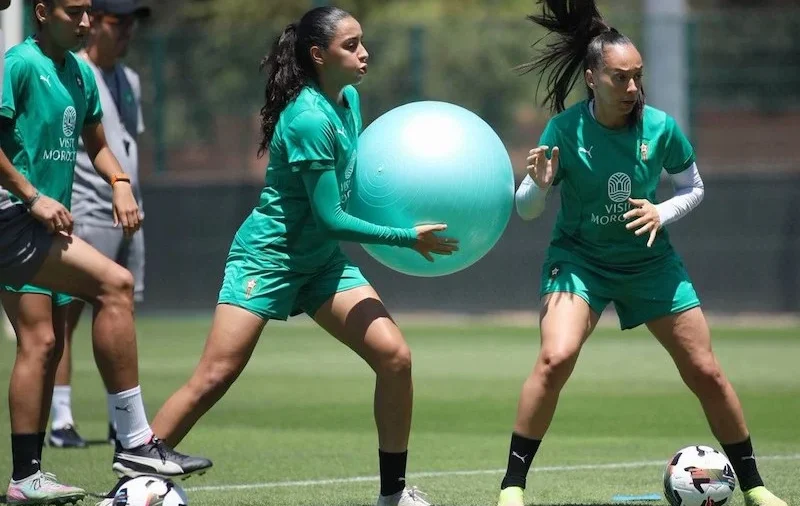
This is important because, unlike boys, girls have fewer training opportunities and competitions, which means coaches must put in extra effort to prepare them and build their skills.
“There aren’t many female players to choose from, so the selection is limited and competition stays low,” complained el Karkouri.
He explained that men’s football offers competitions from under-11 to under-23, helping players grow step by step, while in women’s football, it only begins at under-16, which slows their overall progress.
Refereeing is another challenge slowing the sector’s progress, according to coaches.
“There is still no VAR, even in the top division, leaving many with no way to review decisions,” said the coach of Raja Women’s Club, adding that many female referees, who once dominated the women’s game, still make frequent mistakes.
This sentiment was echoed by coach el Karkouri, who called for improvements in the women’s league refereeing, saying it would help promote female referees to both national and international levels.
“The refereeing department is moving in this direction,” he revealed, signaling ongoing reforms.



add your comment
Terms of publication : Not to offend the writer, people, sacred things, or attack religions or the divine self, and refrain from racist incitement and insults.