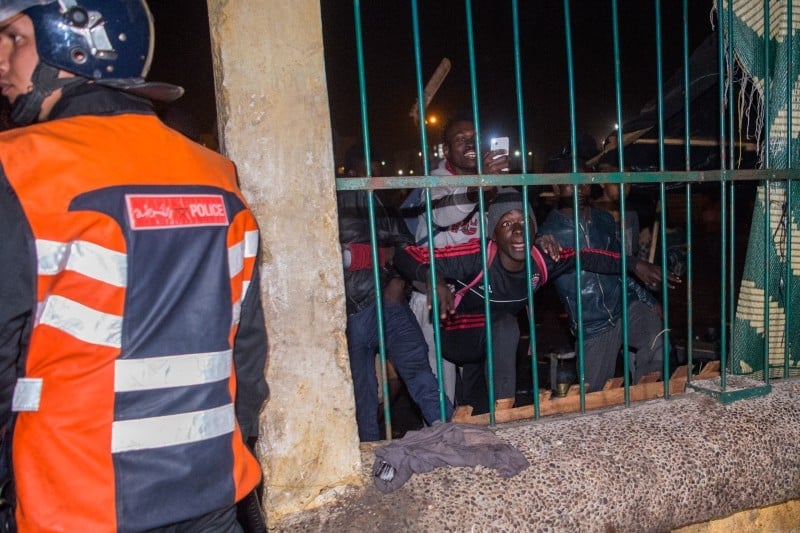
Human rights groups are raising alarms over Morocco’s ongoing practice of relocating hundreds of Sub-Saharan migrants from northern cities to the small southern city of Tiznit, accusing authorities of operating without transparency or support infrastructure.
According to the Moroccan Association for Human Rights (AMDH) and the migrant aid network Alarm Phone, buses arriving from Ceuta and Tangier are dropping off up to 200 migrants per week, often without shelter, food, or guidance.
“Migrants are being abandoned in a city with no capacity to absorb them,” AMDH said in a statement, adding that the relocations are conducted secretly and without planning.
Many of the migrants had previously attempted to cross into Spain, only to find themselves stranded in Tiznit, a city of just 90,000 people grappling with its own high unemployment and limited resources. With no formal housing, migrants are sleeping on the streets, squatting in public spaces, or seeking shelter in local markets.
While some manage to survive through informal labor, such as selling fruit or street vending, most struggle to make ends meet and aim to return north as soon as possible.
Romeo Nyamsi of Alarm Phone said that groups of 50 to 70 migrants are arriving every two to three days. “They’re dropped off and left to fend for themselves,” he said.
Local residents have stepped in to provide food and basic support, but tensions are rising. In March, a fire at a migrant encampment on the city’s outskirts killed a woman and her daughter, injuring several others. Survivors who remain are now living in even worse conditions, NGOs report.
Ahmed Andalaarf, president of the Al-Mahabba Association, said the national government has effectively abandoned the city. “There are no jobs, no social programs, and no plan,” he told local outlet Hespress Ar. “You can’t talk about integration when people are sleeping in the streets.”
Nouh Aarab, an opposition city councilor, blamed the Interior Ministry, accusing it of forcing small cities like Tiznitto bear the burden of a failed migration policy.
Meanwhile, migration pressure in the north shows no sign of easing. In late July, more than 80 migrants — including 54 children — swam across rough waters to reach the Spanish enclave of Ceuta. One body was later recovered offshore. Earlier this year, two other migrants went missing during similar attempts.
In September 2024, 500 migrants tried to storm the Melilla border, but all were stopped. More than 50 were later sentenced to prison in Morocco.
The Moroccan government says it has intercepted over 78,000 irregular migration attempts and dismantled 419 smuggling networks in 2024 alone.
Spain continues to support Morocco’s border efforts, including a €2.5 million fund granted in December 2024. But for Tiznit residents and the migrants left behind, rights groups say that EU-backed border control efforts have offered little in the way of humane solutions.









add your comment
Terms of publication : Not to offend the writer, people, sacred things, or attack religions or the divine self, and refrain from racist incitement and insults.