
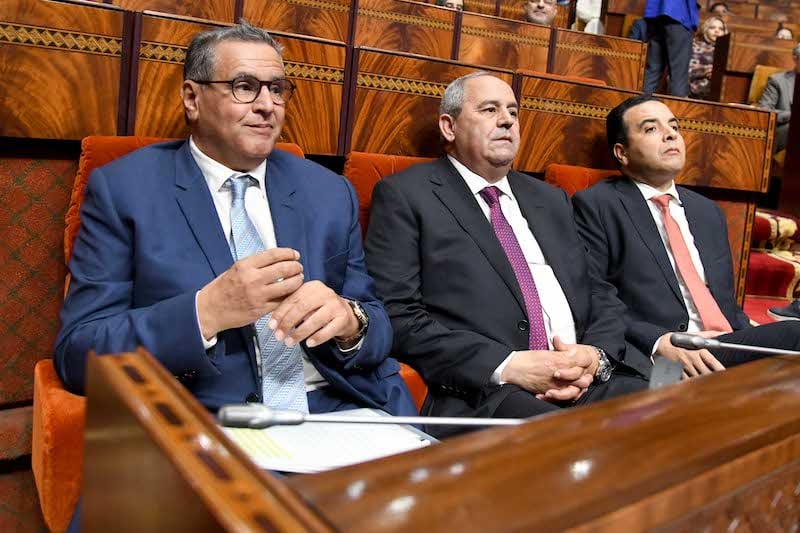
Moroccan Head of Government Aziz Akhannouch on Monday touted what he described as “positive indicators” in the country’s education reform efforts, calling the transformation of public schools a “sovereign political choice” and a pillar of the kingdom’s social development agenda.
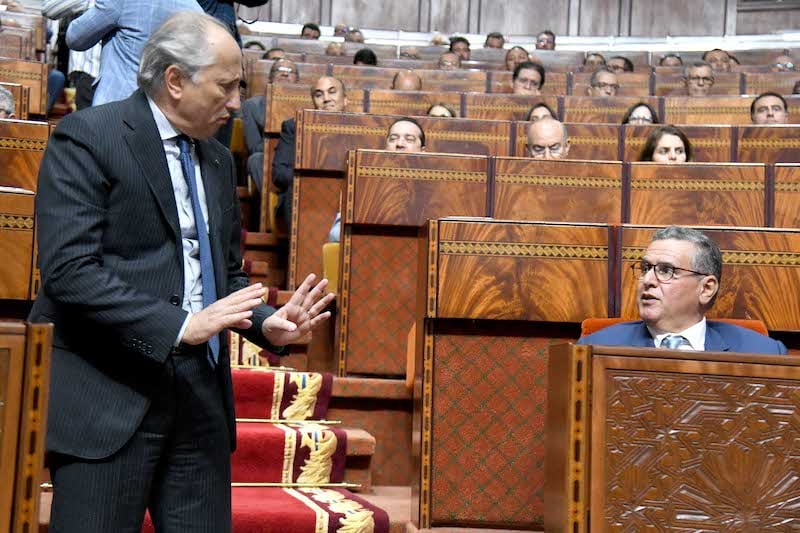
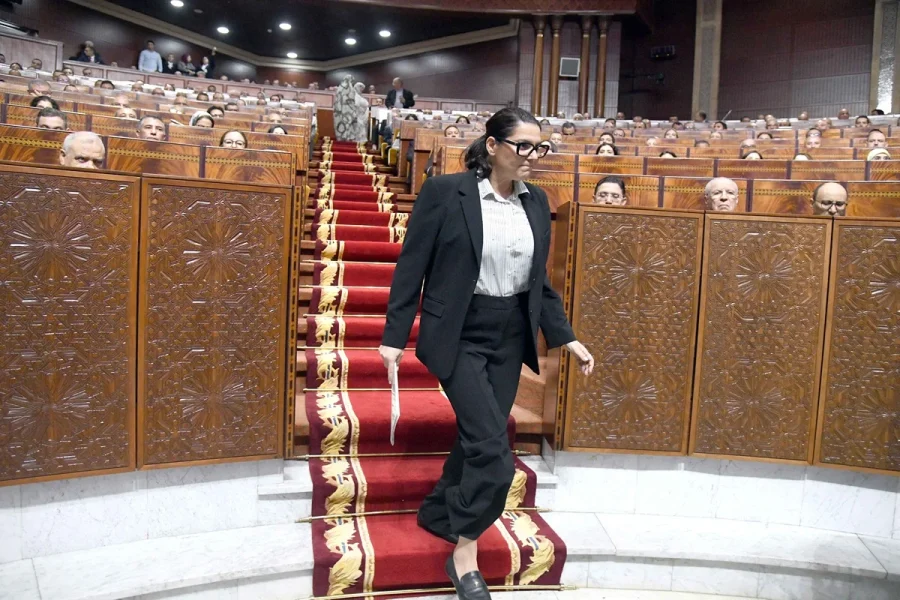
Speaking during a monthly parliamentary session dedicated to general policy questions, Akhannouch emphasized that the government and parliament share a unified goal: restoring Moroccan families’ trust in the public education system.
Education as a National Priority
“Reforming the educational system has been a sovereign choice from the outset,” Akhannouch said, stressing that the government’s approach transcends sectoral management to focus on developing students’ capabilities and fostering upward mobility. “Education is one of the pillars of the social state,” he added.
The Head of Government underscored the government’s increased investment in education, with the 2025 finance bill allocating over 85 billion dirhams, a significant rise from 68 billion dirhams in 2019. This budget includes a commitment to mobilize an additional 9.5 billion dirhams annually by 2027 to support reforms, particularly improving conditions for teaching staff.

Citing Royal Vision
Akhannouch drew on the guidance of King Mohammed VI, noting that education has been a consistent national priority throughout the monarch’s 25-year reign. He recalled the King’s 1999 Throne Day speech, which identified education and training as Morocco’s second-highest priority after territorial integrity. The PM also referenced the 2015 Throne Day address, where the King stressed the importance of equipping learners with knowledge, language proficiency, and technical skills for integration into modern society.
“Our government’s choices are rooted in this royal vision,” said Akhannouch, pointing to their inclusion in the government’s program, which he called “a contract with the Moroccan people.”
Acknowledging Learning Gaps
Despite highlighting progress, the Head of Government acknowledged persistent learning deficits, especially at the primary level. He cited both national and international evaluations — including Morocco’s PNEA 2019 and the OECD’s PISA 2018 — which exposed a “real crisis” in foundational learning.
This, he said, prompted the Ministry of Education to engage in broad consultations and develop a roadmap for 2022–2026 reforms, based on the national education framework law. The roadmap centers on three pillars: the student, the teacher, and the school.
The “Pioneering Schools” Initiative
Central to the reform is the “Pioneering Schools” (Écoles de la Réussite) initiative, launched in 2022 to improve the quality of education using modern teaching methods. Initially covering over 620 primary schools and benefiting 330,000 students, the program introduced the “Teaching at the Right Level (TARL)” method to address learning gaps.
Evaluation results showed significant improvements — learning gains equivalent to one to two school years, including fourfold gains in math, threefold in French, and double in Arabic.
Encouraged by these results, the government expanded the initiative in 2024–2025 to 2,626 schools, now encompassing 1.3 million students, or 30% of all public school students. Akhannouch confirmed the program will undergo external evaluations to ensure quality and sustainability.

add your comment
Terms of publication : Not to offend the writer, people, sacred things, or attack religions or the divine self, and refrain from racist incitement and insults.