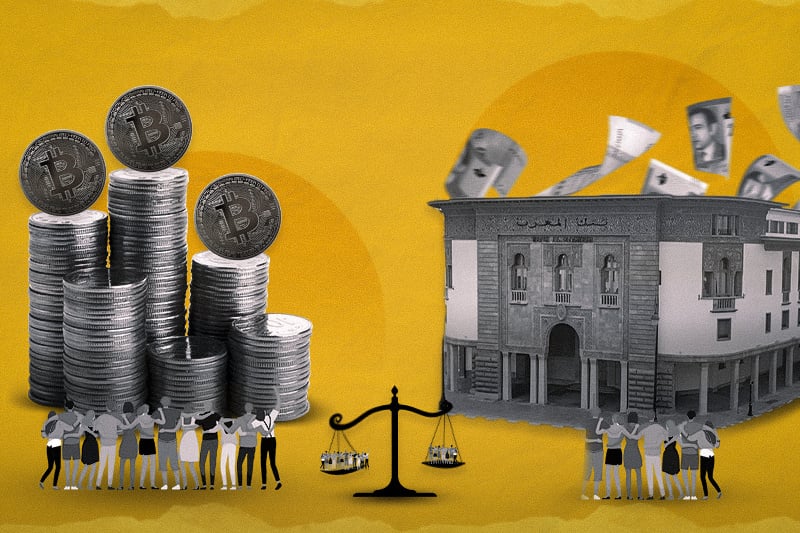
Transitioning into a digital currency is the obvious evolution of money in our increasingly digital world, but the few cases where it has been implemented have, at best, resulted in public disinterest and, at worst, violent backlash.
Such cases is in Nigeria where a forced adoption of the e-Naira, exacerbated by ill-conceived economic policies including a sudden and aggressive cash withdrawal limit and currency swap in 2023, has plunged the nation into widespread chaos as citizens scramble to adapt to the new monetary system.
Long lines at banks, ATM failures, and limited cash withdrawals caused severe hardships. Many businesses, especially small ones that relied on cash, were forced to close. The situation escalated into protests and violence as people struggled to access basic needs.
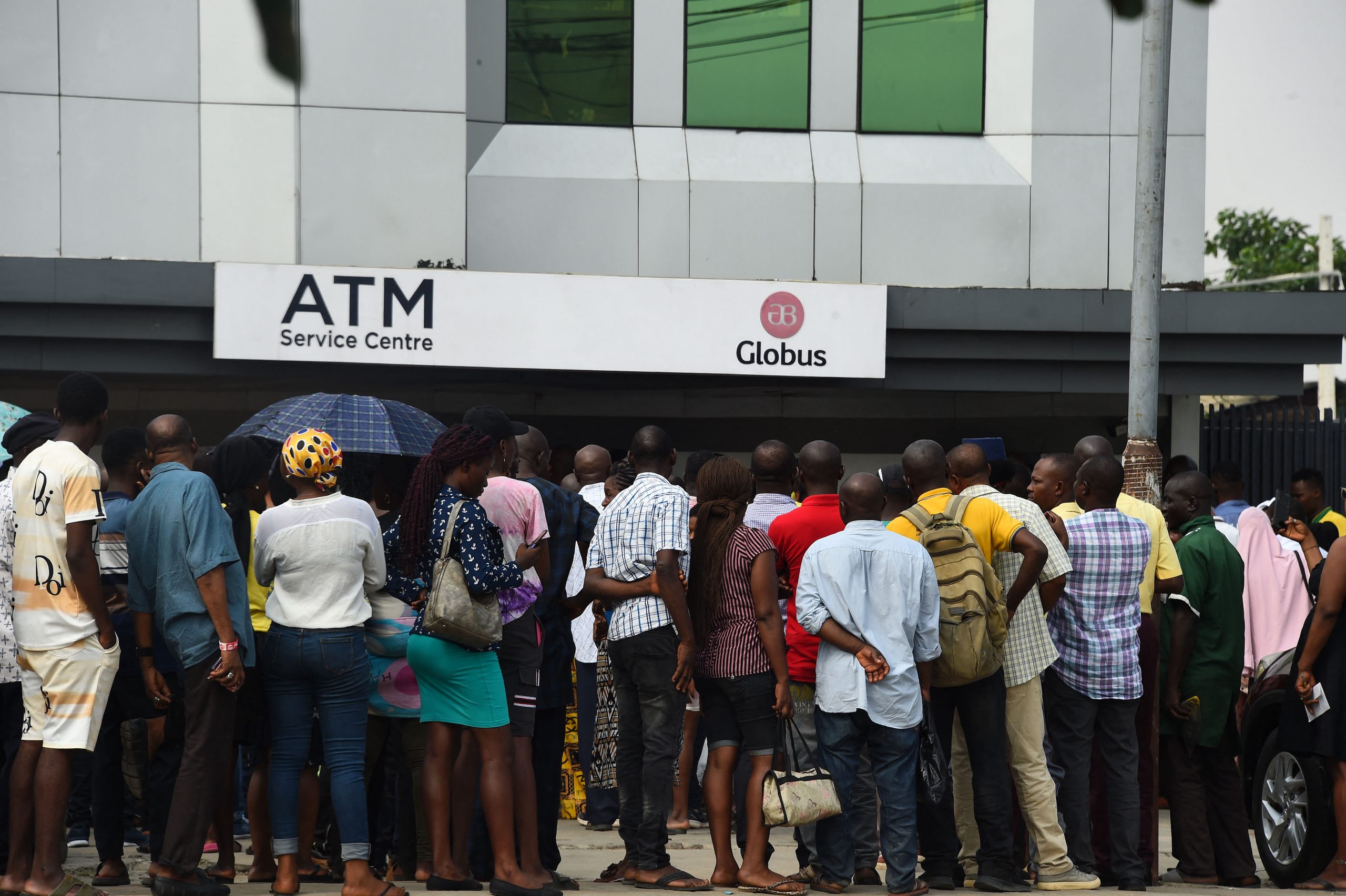
Low adoption rates and infrastructure deficiencies have also hampered the eNaira’s effectiveness, exacerbating public discontent and subsequently failing to provide a viable alternative to cash,
Millions of citizens have slipped into penury and destitution as a result of the disruptions and tribulations perpetrated by the currency redesign policy, especially the mopping up of over 70 percent of cash in the economy. Nigerians have not been this traumatised in recent history.” CEO of the Centre for the Promotion of Private Enterprise in Lagos Dr Mada Yusuf told researcher Rate Captain.
A year after the launch of the eNaira, less than 0.5% of Nigerians were using it.

Nigeria is not an isolated case in the struggle to transition to a cashless society. Finland and Ecuador have both attempted to implement CBDCs and subsequently failed and abandoned them.
“These experiences can be summarized as a series of abandoned experiments, embarrassing flops, and monumental exercises in policymaker hubris, one of which has already produced a major disaster,” says British economist Kevin Dowd, reflecting on the experiences of countries that have adopted CBDCs.
However, not all CBDC initiatives have been disastrous. The Bahamas, often lauded as a pioneer in the space, successfully integrated its CBDC, the Sand Dollar.
But despite its smooth implementation, the digital currency has encountered challenges in terms of widespread adoption. The total value in circulation remained minimal compared to physical currency, and the number of merchants accepting it is limited.
Similar to the Bahamas, Jamaica’s e-currency, JamDex, struggled to gain widespread adoption, despite the Bank of Jamaica’s efforts to promote its digital currency, including offering incentives and simplifying the onboarding process.
The Eastern Caribbean Currency Union’s (ECCU) CBDC, DCash, has not been a successful implementation either. Despite aiming to enhance payment efficiency, financial inclusion, and economic resilience, the project has been marred by data transparency issues and a major system outage due to a certificate expiry.
And as Morocco prepares to adopt its own digital currency in experiment that begs the question: will this attempt to limit physical cash from the Moroccan economy echoe the disastrous path trodden by others.
The E-dirham’s goal is to revolutionize a cash-heavy economy currently reliant on physical currency currently accounting for 30% of GDP.
This heavy reliance on cash presents several challenges, including security risks, inefficiencies in handling large cash volumes, and difficulties in tracking financial flows.
The introduction of the e-dirham is expected to curb the circulation of physical cash, which remains linked to cultural issues and the presence of the informal economy, said Abdellatif Jouahri, Governor of Bank Al-Maghrib (BAM).
Economist Mohamed Jedri told Hespress English that it is premature to predict the success or failure of the e-dirham, given that its launch is still five to six years away.
But the expert said that the e-dirham’s implementation could be successful if it fulfills its potential benefits, such as enhanced traceability, increased tax revenue, reduced informal economy transactions, and decreased physical cash circulation.
What are Morocco’s Central Bank e-currency plans?
When launched, Moroccans would be able to acquire E-dirham through various methods: by transferring funds from existing bank accounts to their digital wallets, converting physical cash into E-dirham at authorized points, or sending and receiving E-dirham directly from other users, similar to mobile payment services like Apple Pay or Google Pay.
Unlike cryptocurrencies like Bitcoin, which operate on decentralized networks, the e-dirham is a Central Bank Digital Currency (CBDC) issued and regulated by Bank Al-Maghrib, Morocco’s central bank. This ensures its stability and value are directly linked to the Moroccan dirham.
The underlying technology, a licensed or private blockchain, provides a secure and transparent platform for transactions.
Bank Al-Maghrib (BAM) began exploring the potential of a central bank digital currency (CBDC) in 2021. This involved researching the design and management of a CBDC.
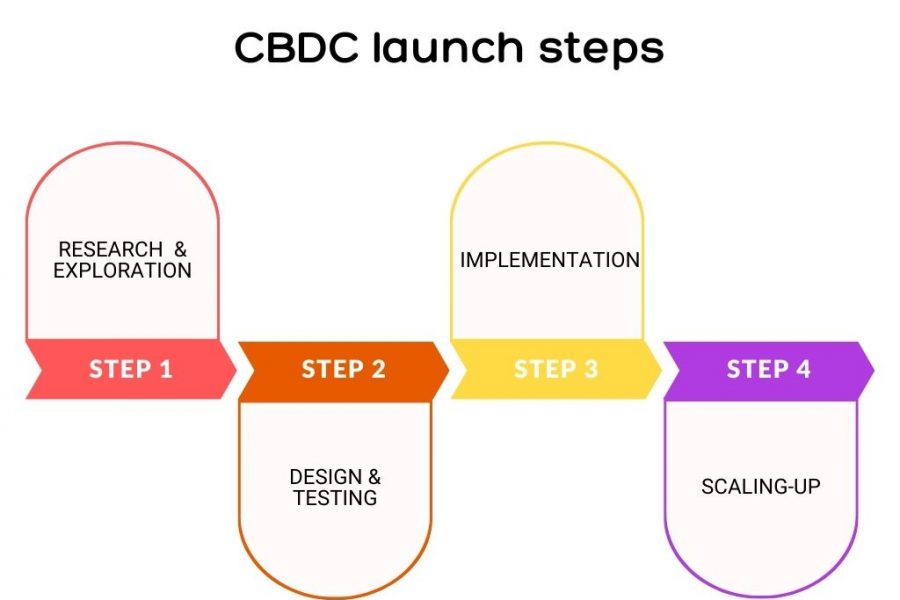
The second phase has focused on testing retail digital payments and evaluating key features. To gain practical insights, an internal experiment was conducted using a World Bank platform in Washington D.C. to simulate the use of the e-dirham in a real-world environment.
BAM also undertook tests to evaluate the performance of the E-dirham in specific financial operations. A primary focus was on assessing the digital currency’s capabilities in installment payments.
Bank Al-Maghrib is now working on a proof of concept with support from the World Bank and the IMF.
“The most difficult challenges are ahead. These relate to legal and regulatory issues, as well as the impact on the central bank’s primary responsibilities and monetary policy,” said Jouahri.
There are two types of CBDC. The first is retail CBDCs, designed for widespread public use in everyday transactions. These digital currencies aim to provide accessible and convenient payment options for individuals.
The second type is wholesale CBDC, which primarily facilitates transactions between financial institutions, such as banks, within the money market.
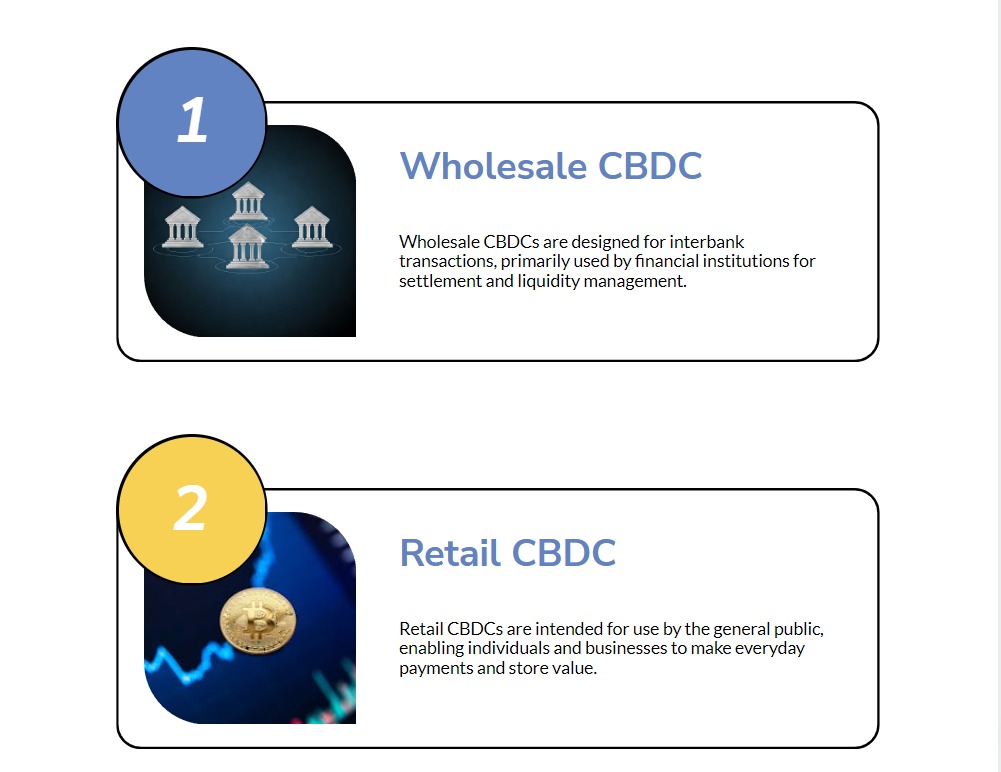
While separate in function, retail and wholesale CBDCs can often work together to form a comprehensive digital currency ecosystem.
BAM plans a gradual approach to implementing CBDC. Initially, they will focus on a wholesale digital currency for transactions between the central bank and commercial banks.
Only after this initial phase will they consider a retail digital currency, which would be accessible to the general public.
Why opt for a digital currency?
As more people turn to digital payment methods, CBDCs offer central banks a way to stay relevant and maintain control over the money supply.
By providing a digital equivalent of cash, the E-dirham can help offset the decline of physical banknotes.
However, the CBDC’s introduction is complex. While it could improve financial systems, their potential use as investment asset rather than just payment methods could create new economic challenges like increased volatility.
Investment assets are subject to market fluctuations. If the E-dirham’s value becomes highly volatile, for example, it could disrupt economic activity as people and businesses become hesitant to use it for transactions.
Bank Al-Maghrib would need to carefully monitor public and market demand for the E-dirham to effectively manage its issuance and impact on the economy.
Morocco’s E-Dirham promises increased transparency, traceability, and security in financial transactions.
These benefits are inherent in digital systems, which can record and analyze payment data more efficiently than traditional cash.
Such capabilities are crucial in the fight against financial crime, such as money laundering and terrorist financing, as well as for tax compliance.
However, the trade-off between security and privacy is a complex issue. While digital currencies offer increased transparency, they also raise concerns about potential government overreach. This was a key factor in Nigerians’ reluctance to adopt the e-Naira.
“The only reason to use the e-Naira over cryptocurrency would be trust in the government, and that trust has been eroded for many,” said the CEO of a blockchain consultancy.
Citizens value the anonymity afforded by cash, and any perception of excessive surveillance could hinder the adoption of digital currencies.
To ensure public trust, BAM will have to establish robust data protection measures and clearly communicate how user information will be handled.
E-Dirham can also expand financial inclusion by providing access to formal financial services for previously underserved populations. While the concept of CBDCs boosting financial inclusion is widely discussed, concrete evidence is still limited.
It remains to be seen whether the E-Dirham will successfully attract individuals and businesses currently operating outside the formal financial system.
While digital currencies can facilitate access to financial services, they are not a solution for broader economic challenges such as income inequality and financial literacy.
The E-Dirham, like other digital currencies, has the potential to significantly reduce transaction costs. The digital currency can streamline payment processes, leading to substantial savings for individuals and businesses alike.
However, while digital currencies can bypass traditional banking intermediaries, reducing reliance on banks, they may also facilitate capital flight. Lower transaction costs could make it easier to move large sums of money out of a country quickly and discreetly.
A potential drawback of CBDCs is the unknown impact on financial stability. A shortage of central bank liquidity might hinder the system’s ability to manage large-scale withdrawals in times of crisis, meaning that the central bank may not have enough digital currency available to meet the sudden and high demand for withdrawals.
Given the history of cyberattacks targeting cryptocurrencies, a digital currency like the E-dirham would undoubtedly be a prime target for hackers.
The E-dirham offers significant potential, but its success hinges on building public trust and understanding of digital currencies, which is essential for widespread adoption.
Morocco will also have to invest in robust digital infrastructure, including internet connectivity and cybersecurity measures, to support the e-dirham.
Improving financial literacy among the population will be essential for individuals to use and benefit from the e-dirham.





add your comment
Terms of publication : Not to offend the writer, people, sacred things, or attack religions or the divine self, and refrain from racist incitement and insults.