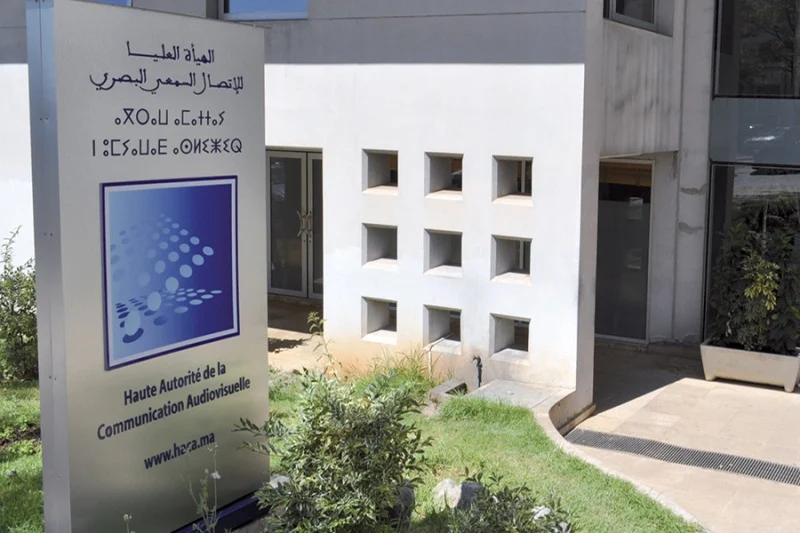
The High Authority for Audiovisual Communication (HACA) has called for the preservation of the citizen’s right to vigilant and safe media content, against the backdrop of a case involving the fabrication of fictitious offenses and the dissemination of false information during a radio broadcast.
In a press release issued on Thursday, the HACA said it was following developments in the prosecution of citizens in a case involving the fabrication of a fictitious offence, contempt of a constituted body and the dissemination of false information during participation in a radio broadcast.
Taking into consideration the principle of presumption of innocence, which considers that any suspect or accused of a crime is presumed innocent until his or her conviction has been confirmed by a court decision, the HACA recalls certain principles governing radio and television services, particularly in the context of their responsibility to safeguard the safety of citizens.
These principles, which are based on the philosophy and spirit of the Constitution, the legal and regulatory provisions in force and the accumulation of norms achieved thanks to the action of the High Authority in this area, in no way affect the editorial freedom of audiovisual operators.
They even contribute to the preservation of this freedom, which is the foundation of media practice and the right to information.
In this regard, HACA considers that “the legislator’s introduction of the principle of editorial responsibility for radio and television services, and the duty of on-air control, is not an objective in itself.
Rather, it is a means of preserving the right of the citizen, both listener and viewer, to access trusted, vigilant and safe media content, which is not incompatible with the principle of freedom of audiovisual communication and the freedom of choice of operators in terms of the style of presentation and production of their programs.”
The HACA constantly monitors the honesty and integrity of information and programs, both in terms of the editorial content produced and presented by radio and television professionals, and in terms of the collection and broadcasting of citizens’ testimonies.
The ultimate aim of the regulator’s action, when it intervenes to prevent the listener/viewer from being misled as to both the veracity of the information broadcast and the identity and quality of the people interviewed, is to extend the benefit of quality information in line with professional ethics.
HACA wishes to emphasize that the principles and mechanisms of self-regulation as defined by the specifications of audiovisual operators are by no means “a regulatory luxury.”
These principles are an important means, among others, of consolidating the culture of regulation.
HACA therefore urges all audiovisual operators to redouble their efforts in this area, in order to promote responsible media practice and help limit the impact of certain harmful practices inherent to the unregulated digital space, which sometimes have serious repercussions in the real world.
The HACA considers that reminding people of the principles and aims of responsible radio and television broadcasting is an integral part of its educational mission, which it carries out in tandem with its normative powers. This mission, which is clearly distinct from the prerogatives of other institutions, aims to strengthen public confidence in the media.








add your comment
Terms of publication : Not to offend the writer, people, sacred things, or attack religions or the divine self, and refrain from racist incitement and insults.