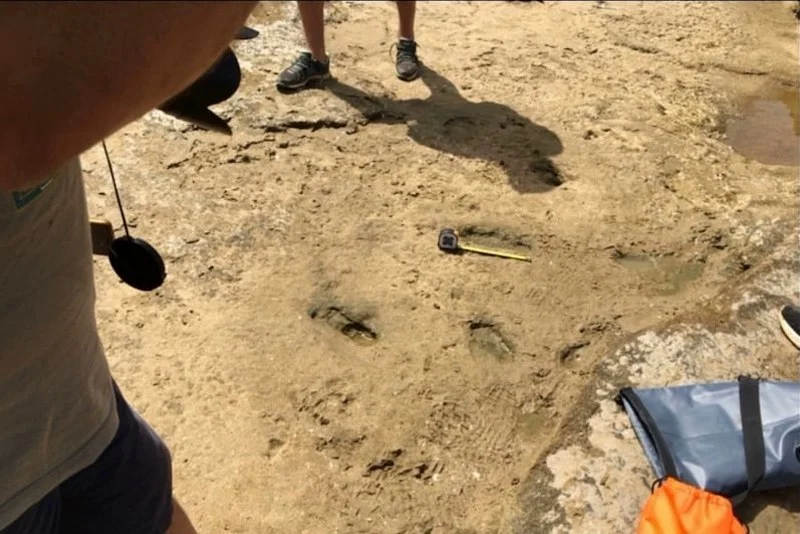
A new archaeological discovery in Morocco found the oldest human footprints on record in Larache, dating an approximate 90,000 years.
Its scientific paper was published in Nature magazine, a group of researchers found the oldest human footprints of Homo sapiens in North Africa and the southern Mediterranean.
The research was led by an international group that includes Moroccan, German, Spanish, and French academics and scientists, headed by Moncef Essedrati, a research professor and laboratory director at the French University of Southern Brittany.
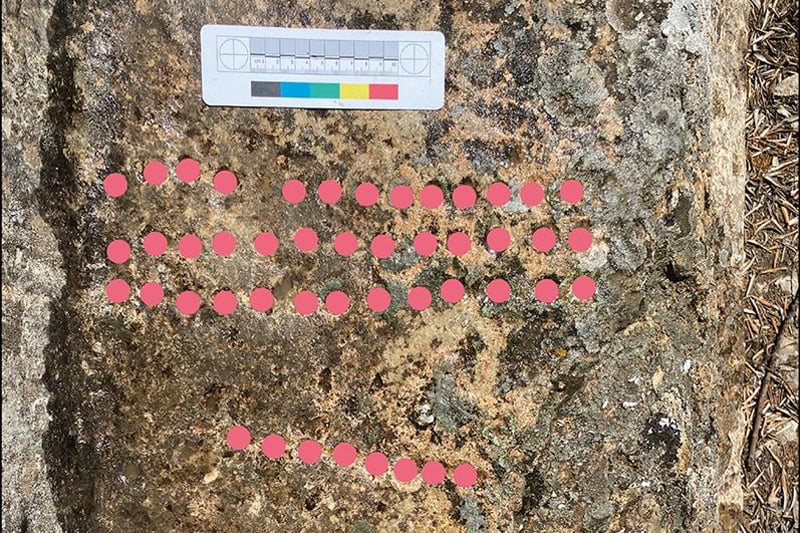
These traces, numbering 85, were estimated by the scientists supervising the research to belong to at least five separate individuals, including children, teenagers, and adults.
They are traces directed mainly towards the water, and could be traces of “Homo sapiens’ search for water, as they were living or moving on the banks of Larache for nearly 100,000 years,” according to information obtained by Hespress.
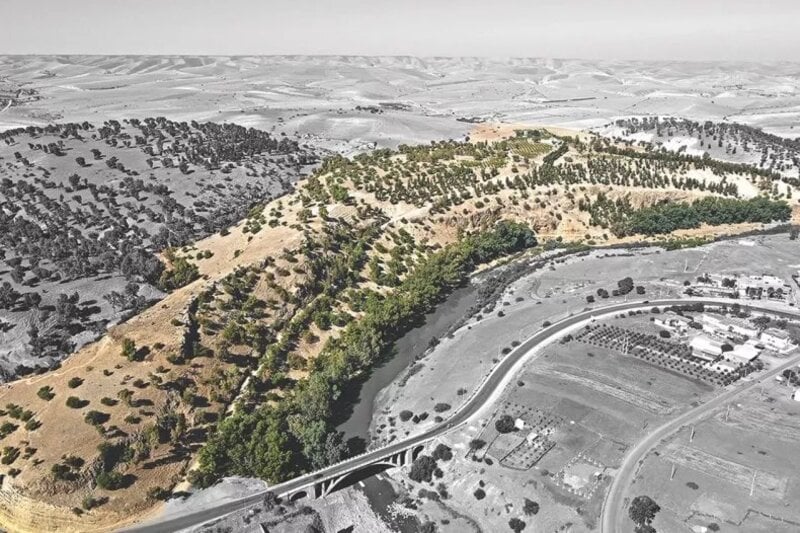
This discovery was made while the team was measuring the lands during July of 2022, within the framework of a scientific research project on the origins and dynamics of rock boulders on the southern coast of the city of Larache, led by Moncef Sedrati, and including Juan Morales, Jeremy Defoe, Abdel Moneim El Merini, Eduardo Mayoral, and Ignacio Diaz Martinez, Edouard Anthony, Glenn Belot, Anas Essedrati, Romain Le Gall, Ana Santos, and Jorge Rivera Silva.

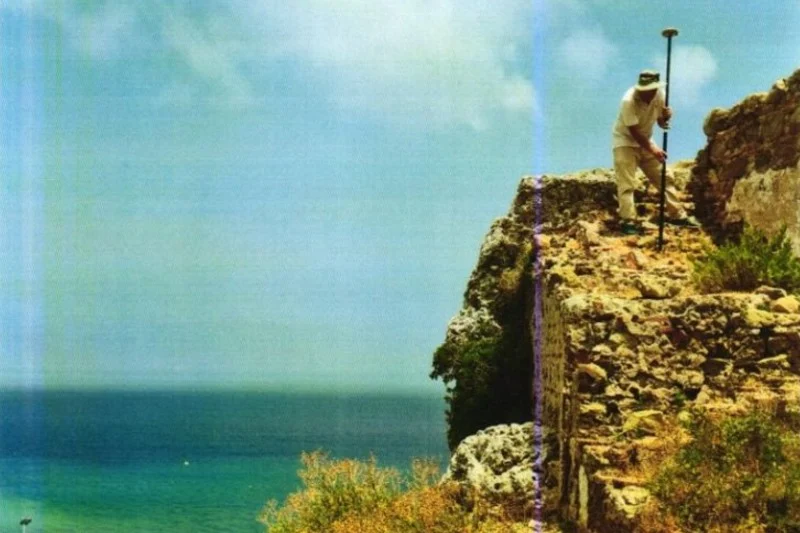
Since the summer of 2022, in-depth measures have been taken regarding the lands where these monuments were found and determining their location using the Global Positioning System (DGPS) via a drone, taking a series of high-quality photos, and measures to measure the height, distance, and depth of the monuments.
Based on this work, three-dimensional models were made, based on the most preserved antiquities. The scientific team also examined the age of some of the models and determined it to be more than 90,000 years old and less than 100,000 years. These examinations also identified discrepancies in the estimated ages of their owners based on the size of their owners. Footprints.
Among what this new discovery highlights, according to an official statement by the team, is that “North Africa, and Morocco in particular, provided the first appearance of Homo sapiens, especially through the fossils of Jebel Irhoud.” The discovery of his footprints in Larache provides additional evidence of the importance of North Africa, and Morocco in particular, in human development.”
The research published in “Nature” shows the importance of this discovery in that these footprints can provide “direct information about the biology, mobility, and behavior of the individuals who left them,” adding that the place where they were found (Morocco) is important in tracking the evolution of humans. It contains “the record of the oldest Homo sapiens (Jebel Irhoud), and the oldest and richest human monuments in Africa in the Mesolithic Age.”





add your comment
Terms of publication : Not to offend the writer, people, sacred things, or attack religions or the divine self, and refrain from racist incitement and insults.