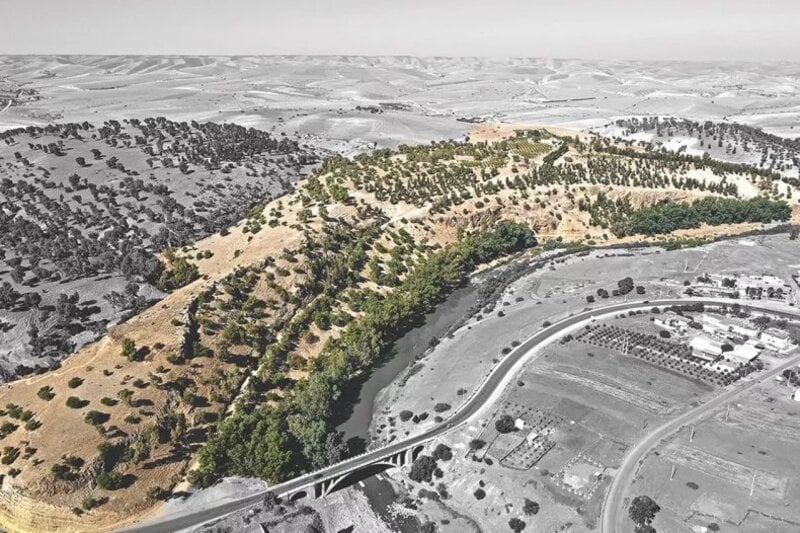
Archaeologists have identified the first clear evidence of Bronze Age activity at Oued Beht, one of Morocco’s most important prehistoric sites, extending the known history of the site by several centuries.
The discovery comes from excavations conducted in 2023 by the Oued Beht Archaeological Project in Morocco’s Khémisset province. Researchers uncovered evidence of a major phase of construction dating to the early-to-middle second millennium B.C., following the site’s better-known Final Neolithic period.
The findings center on the southern part of the ridge, where archaeologists investigated an extensive system of walls, an embankment and a ditch. Although the structures had been known for decades, their earliest dates had remained uncertain.
Radiocarbon dating provided evidence that people continued to build and use the site during the second millennium B.C. Researchers tested 17 samples from one area of the site, establishing the first clear evidence of occupation and construction at Oued Beht after the Final Neolithic period.
The findings indicate that construction took place in at least two phases. The earliest wall was built sometime between about 2010 and 1623 B.C. using a mixture of mud and possibly limestone. A later stone structure was subsequently built over it.
Dating from the earlier wall places its construction within either approximately 2010-1747 B.C. or 1896-1623 B.C., depending on the sample analyzed.
Researchers also dated a separate posthole used to support a structure to between 1502 and 1324 B.C., providing further evidence that construction activity continued at Oued Beht into the middle of the second millennium B.C.
Earlier excavations at the site uncovered extensive evidence of farming, food storage, pottery production and stone-tool manufacture across an area of roughly 9 to 10 hectares.
The site’s Neolithic inhabitants cultivated crops including barley, durum wheat and peas and used wild plants such as carob, jujube, olive and pistachio. The latest excavations provide additional evidence of the long-term use and development of the landscape.
Archaeologists also found evidence of much later activity at Oued Beht. Parts of the ridge were used during the medieval period for settlement and funerary activities, dating roughly from the 11th to the 13th centuries A.D.
The study, published Sept. 7 by Cambridge University Press in Libyan Studies, highlights Oued Beht’s growing importance for understanding prehistoric settlement and economic activity in northwestern Morocco and the region’s connections with communities across the Mediterranean.




add your comment
Terms of publication : Not to offend the writer, people, sacred things, or attack religions or the divine self, and refrain from racist incitement and insults.