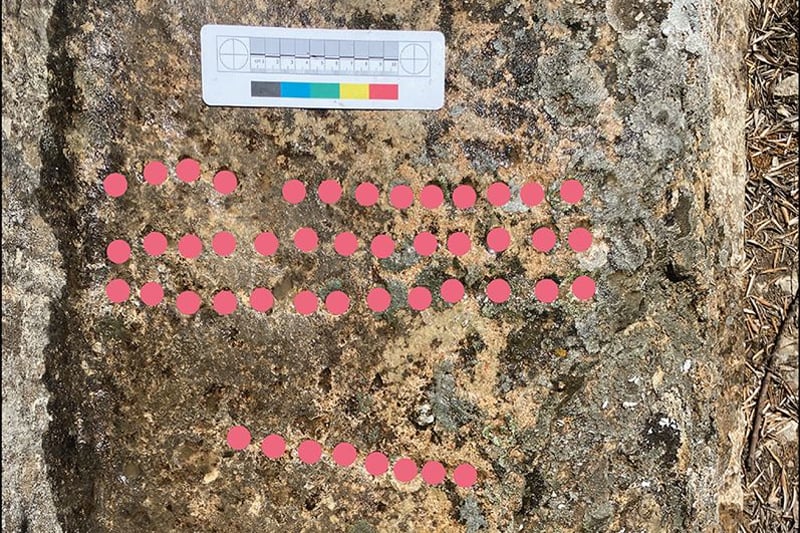
A stone game board discovered in the ruins of a 1,200-year-old bathhouse in Morocco has pushed back the known history of a game still played across North Africa by several centuries, and offered a rare window into how people socialised in one of the Islamic world’s earliest settlements.
Measuring roughly 34 by 9.5 centimetres, the board consists of three rows of small, shallow holes carved into a stone step leading to a cold plunge pool in a medieval hammam at Walili, the site known to the Romans as Volubilis, near Meknès.
Researchers identified the board as almost certainly used for tāb/sīg a running-fight game in which two players move pieces across the board from opposite sides, attempting to capture each other’s pieces.
But its significance, detailed in a new study published in the journal Libyan Studies by researchers from the University of Reading and UCL, is considerable.
The bathhouse where it was found was built in the late eighth or early ninth century CE and abandoned by the tenth or eleventh, a narrow window that gives the board something almost impossible to establish for graffiti-carved game boards: a reliable date.
Most such boards can only be dated to the construction of the surface they were carved on, leaving centuries of ambiguity. Here, the archaeology does the work.
The game is still played across North Africa, the Middle East and Turkey. But until now, the earliest written reference to it came from the work of Egyptian author Ibn Daniyāl, who died in 1310. The Walīla board predates that by at least three to four centuries, making it the earliest known physical evidence for the game in North Africa.
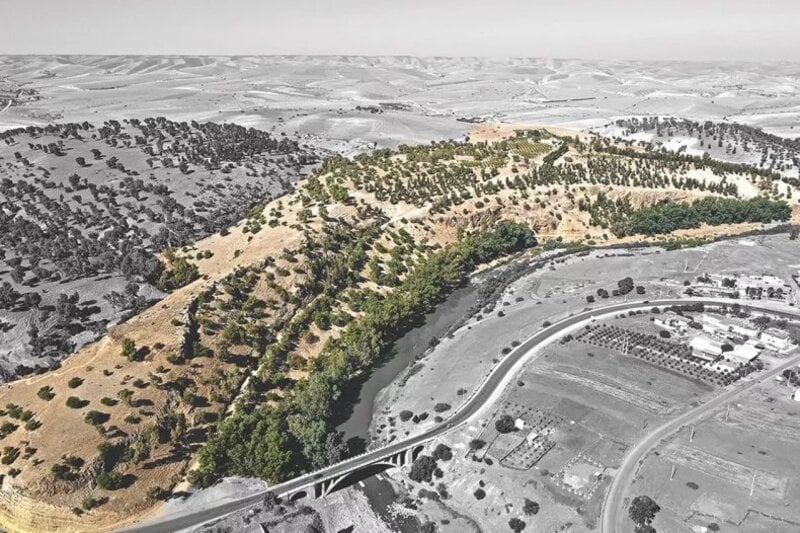
After the Muslim conquest of Morocco in the early eighth century, Volubilis became the seat of Idrīs I, a descendant of the Prophet who fled the Hijaz and was declared imam by the local Berber Awraba tribe in 788–89, establishing one of the earliest Islamic successor states in North Africa and the founding dynasty of Morocco.
The hammam where the board was found formed part of a complex that researchers believe served as the residence of Idrīs I and his son. The people who played this game may have been connected to the very origins of the Moroccan state.
For the study’s authors, the board is also a social document. Bathhouses in the early Islamic world were not just places of hygiene; they were public spaces where people lingered, talked, and apparently played.
The presence of a game board carved into a step of the cold pool suggests the hammam functioned much as a community hub. “This case study sheds light on how games intersected with communal life and public spaces in early medieval North Africa,” the researchers write.
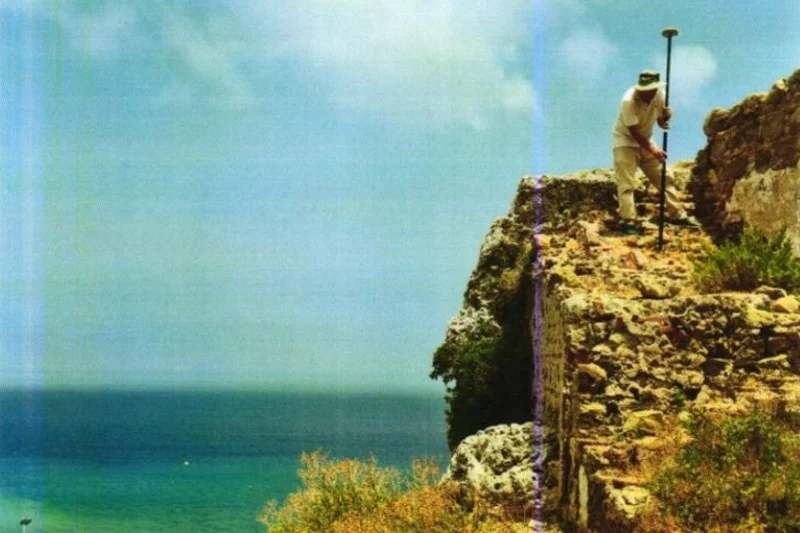
Volubilis is a UNESCO World Heritage Site, and its medieval layers continue to yield finds that complicate the familiar Roman-era image of the ruins.




add your comment
Terms of publication : Not to offend the writer, people, sacred things, or attack religions or the divine self, and refrain from racist incitement and insults.