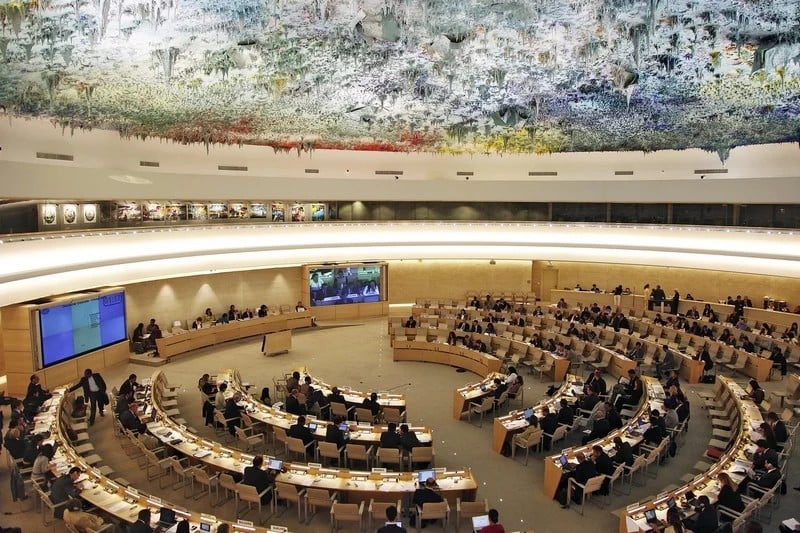
Morocco was declared today the 2024 President of the United Nations Human Rights Council in its race against South Africa that led to a rare dispute regarding the leadership of the 47-member council.
The Ministry of Foreign Affairs in Rabat announced Morocco secured support from 30 out of 47 members of the Council, surpassing South Africa’s nomination, which only received 17 votes.
The vote went to a secret ballot on Wednesday for the second time in the U.N. Human Rights Council’s 17-year history which left it without a president at the start of the year.
This annual presidency, highly esteemed but largely symbolic, holds the potential to significantly boost the political trajectories of ambassadors, according to diplomats who spoke to Reuters.
“The election of the Kingdom, thanks to the support of a large number of countries from all over the world, and despite the anti-mobilization of Algeria and South Africa, expressed the confidence and credibility enjoyed by Morocco’s external movement under the royal leadership in Africa, on the international scene, and in the multilateral system,” said Morocco’s foreign ministry in a statement.
The contest for the presidency was fiercely contested, Reuters previously wrote. Morocco, asserting sovereignty over Western Sahara amid opposition from the Algeria-backed Polisario Front, refuted allegations of human rights abuses within the region.
Sahrawi associations initiated a campaign weeks ago against Morocco’s candidacy, emphasizing that Morocco’s status as “a military occupying force in an African country and its failure to ratify the African Charter on Human Rights disqualify it from presiding over the UN Human Rights Council on behalf of Africa.”
Morocco actively pursued a diplomatic strategy, engaging neighboring African nations to gather support for its policies concerning the former Spanish territory. However, it has not succeeded in swaying South Africa, which actively supported an event promoting self-determination for the Sahrawi people in Geneva last year.
South African Ambassador Mxolisi Nkosi highlighted the country’s successful history of overcoming apartheid and its reputation as a bridge-builder, positioning itself as a formidable candidate. In contrast, he sharply criticized Morocco, labeling it as contradictory to the council’s principles.
Morocco’s ambassador, Omar Zniber, countered these claims by stating that Rabat had secured African Union support as the exclusive candidate months ago. Zniber defended Morocco as a law-abiding nation that has made significant strides in upholding human rights, dismissing criticisms of its policies in Western Sahara as unfounded propaganda.





add your comment
Terms of publication : Not to offend the writer, people, sacred things, or attack religions or the divine self, and refrain from racist incitement and insults.