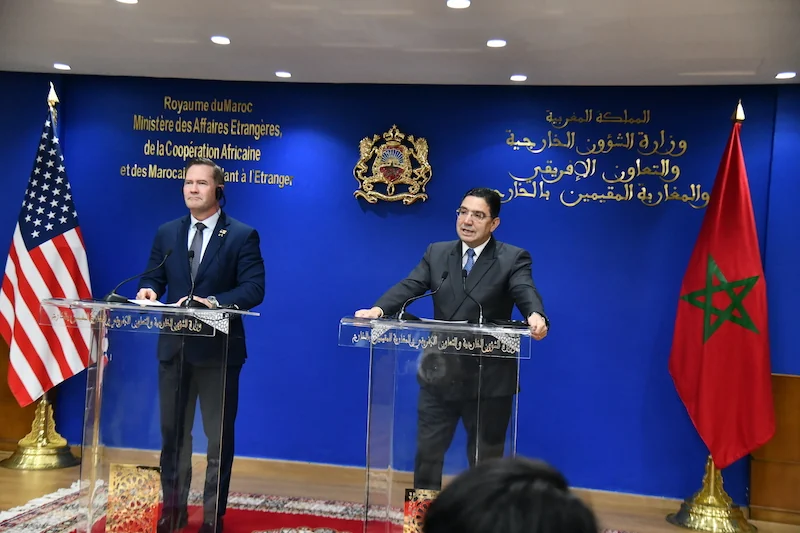
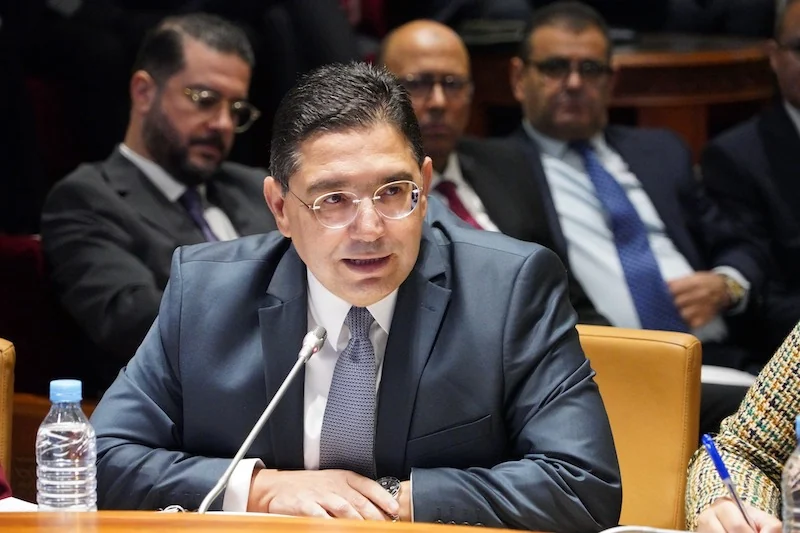
Moroccan Foreign Minister Nasser Bourita said Tuesday that Morocco and the United States had developed proposals aimed at addressing the concerns of parties involved in the Sahara dispute without forcing them into a humiliating political outcome, as Washington pledged to continue negotiations despite the failure of its latest Security Council initiative.
Speaking at a joint news conference in Rabat with US Ambassador to the United Nations Mike Waltz, Bourita said the two countries remained committed to securing a settlement based on autonomy under Moroccan sovereignty.
He said their cooperation over the past year had produced ideas and proposals designed to accommodate different positions while preserving the framework of Morocco’s autonomy initiative.
The minister did not disclose the proposals’ contents or indicate whether they had been formally presented to Algeria or the Polisario Front.
Bourita described the current diplomatic situation as a confrontation between two approaches: one seeking to resolve the dispute and address its humanitarian and regional consequences, and another favoring the continuation of the status quo.
He argued that prolonging the dispute would perpetuate humanitarian suffering, undermine regional stability and deprive North Africa of economic integration and development opportunities.
The minister’s remarks followed Russia’s October 30 veto of a US-drafted Security Council resolution that sought to establish Morocco’s autonomy proposal as the basis for negotiations and reshape the mandate of the UN mission MINURSO.
Bourita said the diplomatic setback had not ended the momentum toward a political settlement, emphasizing continued coordination between Rabat and Washington.
The two countries had already participated in negotiations involving Morocco, Algeria, Mauritania and the Polisario Front earlier this year, under a process co-chaired by Waltz and UN envoy Staffan de Mistura.
According to UN Secretary-General António Guterres’ October report, three rounds of talks took place in Washington and Madrid between January and February 2026.
The discussions addressed autonomy, transitional governance, resource-sharing, elections and security arrangements, but fundamental disagreements over sovereignty and self-determination remained unresolved.
Bourita also reaffirmed Morocco’s commitment to maintaining the ceasefire following the expiry of MINURSO’s mandate on October 31.
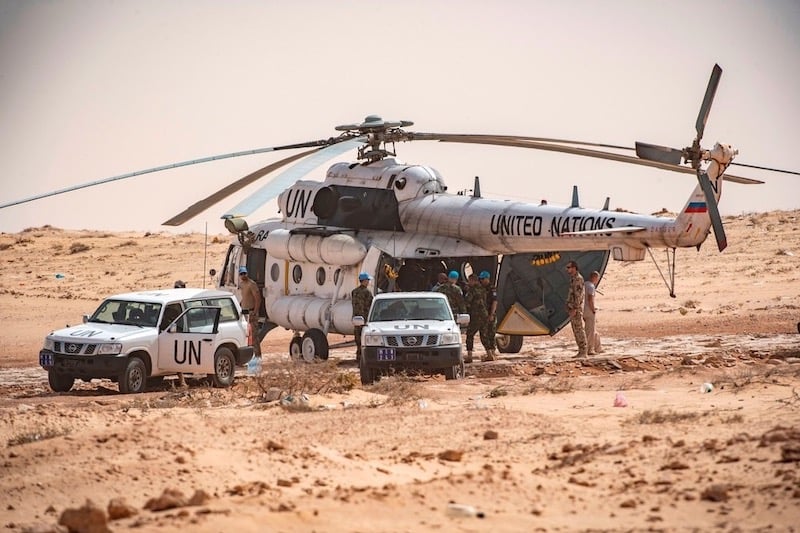
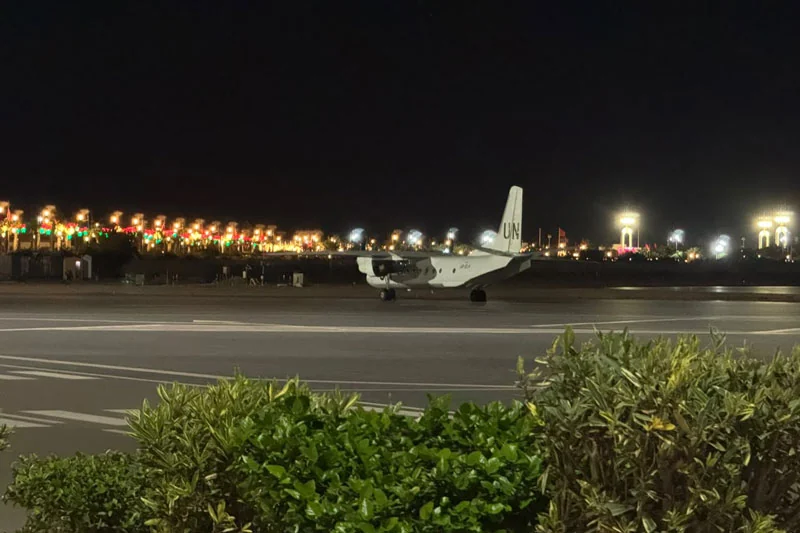
The United Nations began withdrawing personnel from Laayoune on Monday, with the first five military observers leaving as part of the mission’s liquidation.
Beyond the Sahara, Bourita said an exchange of messages between King Mohammed VI and US President Donald Trump in July had helped establish a new phase of bilateral cooperation.
He identified defense industries, technology, artificial intelligence and energy among the areas where Morocco and the United States intended to strengthen their partnership.
The minister’s statements outlined Morocco’s position as Washington seeks to sustain negotiations outside the framework proposed in its vetoed resolution.



add your comment
Terms of publication : Not to offend the writer, people, sacred things, or attack religions or the divine self, and refrain from racist incitement and insults.