
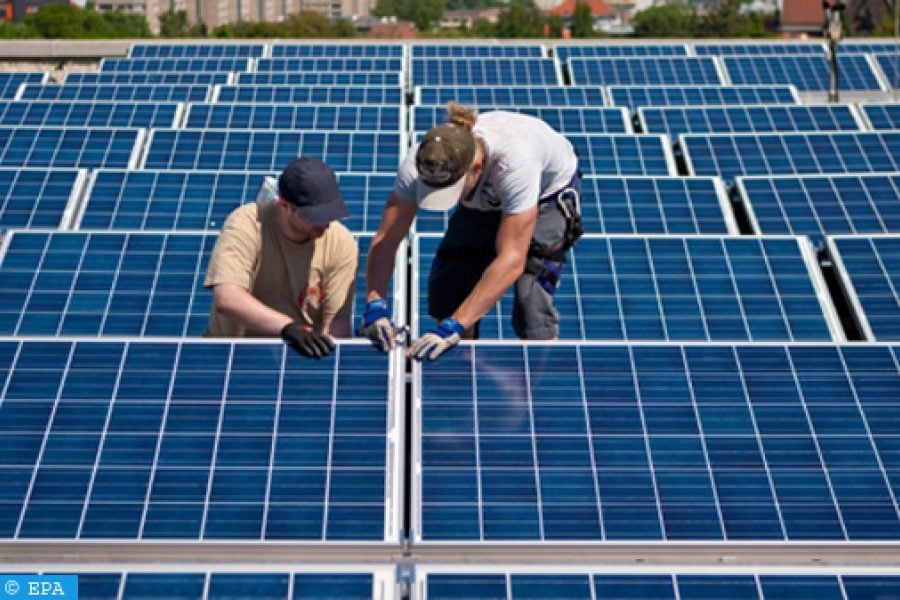
Morocco and Norway have signed a 10-year carbon credit agreement that could help finance up to 2,000 megawatts of new renewable energy capacity, including solar and wind power, as Morocco seeks to expand its clean electricity production.
Under the agreement, Norway will purchase carbon credits representing up to 8.78 million tons of greenhouse gas emission reductions generated by eligible Moroccan projects between 2027 and 2036.
Norway’s Ministry of Climate and Environment announced the deal on Monday, saying the payments would help finance renewable energy projects that face difficulties attracting investment or competing financially with conventional energy sources.
The agreement also covers battery storage projects, which can help address fluctuations in solar and wind power generation and improve the reliability of renewable electricity supplies.
The two countries signed the agreement on the sidelines of the 31st United Nations Climate Change Conference, known as COP31, in Antalya, Türkiye.
Under the mechanism, Norway will pay for emission reductions achieved by eligible projects in Morocco. Payments will be made only after the reductions have been measured and independently verified, ensuring that the credits correspond to actual cuts in greenhouse gas emissions.
The program will follow a results-based financing model, with renewable energy developers receiving financial incentives according to the emission reductions their projects deliver rather than receiving funding upfront.
Norwegian Climate and Environment Minister Sigrun Aasland said the agreement would help Morocco generate more clean electricity, create jobs and achieve additional emission reductions.
The next phase will involve establishing the program’s regulatory framework and systems for monitoring, reporting and verifying emission reductions. The two countries plan to launch a pilot phase, with the first transferable carbon credits expected in 2028.
The agreement builds on a cooperation framework established in May 2026 between Morocco’s Ministry of Energy Transition and Sustainable Development and Norway’s Ministry of Climate and Environment.
It falls under Article 6.2 of the Paris Agreement, which allows countries to cooperate on emissions reductions and transfer verified emission reductions across borders.






add your comment
Terms of publication : Not to offend the writer, people, sacred things, or attack religions or the divine self, and refrain from racist incitement and insults.