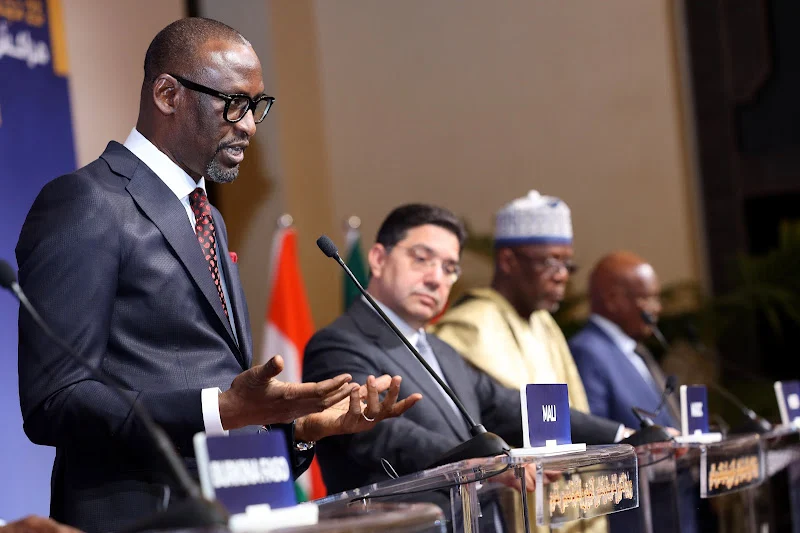
Algeria froze loan accounts granted to foreign governments, primarily from African countries like Mauritania, Mali, Niger, Burkina Faso, and Guinea, as well as others like Yamen, and UNESCO, as per the official newspaper N 86, released on December 31, 2023.
This decision coincides with the coastal countries’ participation in the Atlantic Initiative, Yemeni endorsement of Moroccaness of the Sahara, strong Rabat-Nouakchott diplomatic ties, and documentation of Moroccan intangible heritage with UNESCO multiple times in recent years.
Those balances will be transferred to the state treasury.
The decision ended the 1965 agreement between Mauritania and Algeria, despite Nouakchott not officially participating in the Moroccan initiative aimed at providing economic opportunities and enhancing regional communication and trade in the coastal area.
Mali, which used to borrow from Algeria based on agreements dating back to 1965 and 1977, is now no longer eligible for loans from the Algerian regime.
This decision was prompted by Mali’s rejection of Algerian interference in its internal affairs, in addition to Mali’ Foreign Minister, Abdoulaye Diop, participation in the first ministerial coordination meeting in Marrakech, along with Niger, Burkina Faso, and Chad.
The Algerian decision did not exempt the Republic of Niger and Burkina Faso, both with agreements with Algeria since 1975.
Both countries represented by their respective Foreign Ministers, Bakary Yaou Sangaré and Karamoko Jean-Marie Traoré, also attended the meeting in Marrakech.
Guinea and Guinea-Bissau were also stripped of Algerian loans due to their strong ties with Morocco and their recognition of its sovereignty over its Sahara as well as opening consulates in Dakhla.
The decision did not exempt the Republic of Benin, which expressed its willingness to establish a consulate in Laayoune, as confirmed by its Foreign Affairs Minister Aurélien Agbénonci, while meeting with Nassar Bourita on December 12, 2023.
Experts argued that the Algerian regime’s decision was a mere reaction to the political developments between Rabat and the African coastal countries, while others viewed it as an attempt to exert influence on the current situation through a punitive policy.





add your comment
Terms of publication : Not to offend the writer, people, sacred things, or attack religions or the divine self, and refrain from racist incitement and insults.