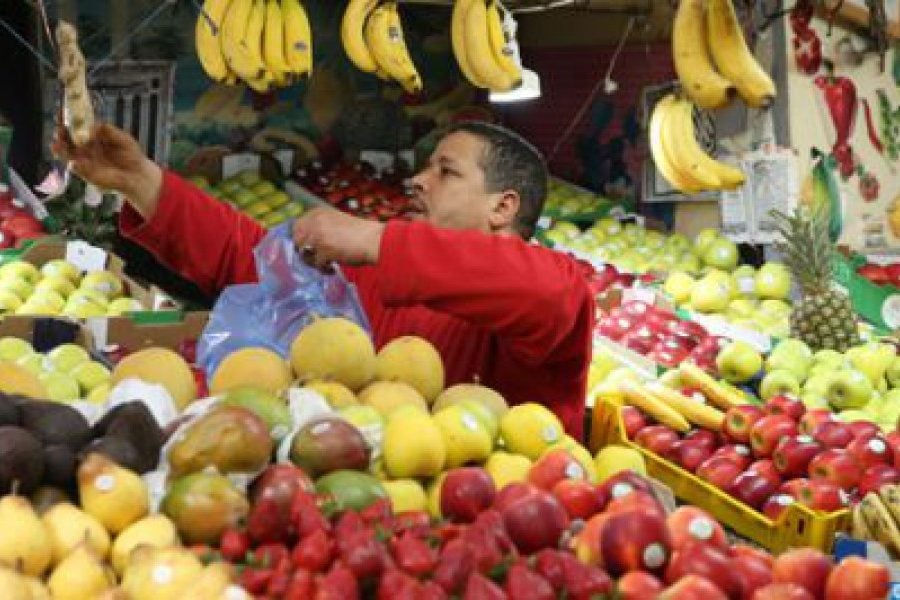
Morocco, the main beneficiary of the United Kingdom’s withdrawal from the European Union from the horticultural sector.
Alongside Egypt, the two countries have experienced a significant increase in their exports to the British market in the last five years, according to the Spanish specialized portal EastFruit.
“Morocco recorded the highest growth in its export volume to the United Kingdom. Between 2018 and 2022, Moroccan products almost tripled.
On the other hand, imports from traditional European suppliers such as the Netherlands, Belgium and France have decreased markedly, with French imports having halved in the same five-year period, ” reveals EastFruit.
In detail, in 2022 alone, the United Kingdom spent $542 million on Moroccan vegetables and fruits, the figure for the first nine months of the current year already reaching a record level of $450 million. Moroccan exports to the United Kingdom are dominated by greenhouse tomatoes and mandarins, with fresh berries becoming increasingly important in recent years.
The United Kingdom’s spending on fresh Moroccan raspberries, blackberries, blueberries and garden strawberries reached $204 million last year, while imports of tomatoes and mandarins amounted to $208 million and $47 million, respectively.
Other notable Moroccan exports include a variety of greenhouse vegetables (peppers, zucchini, cucumbers, broccoli, cauliflowers, Brussels sprouts), watermelons and avocados.
As for British imports of fresh, dried and frozen Egyptian products increased by 150%. Although half as large as those of Morocco, Egyptian exports to the United Kingdom also reached a record $230 million in the first nine months of this year.
According to the same source, “about 75% of this value is attributed to the four main categories: fresh grapes, oranges, fresh strawberries and onions, with fresh strawberries having the highest growth rates.
It should be noted that the United Kingdom has recently intensified its imports of frozen strawberries from Egypt. The other most important Egyptian exports are sweet potatoes, mangoes, peaches, lemons and dried onions”.
Explaining the why of how, the site reiterates that “the promulgation of Brexit in 2020 has resulted in more complex import protocols for products originating in EU Member States, including fruits and vegetables”. As a result, British importers have gradually shifted their attention to supplies from countries outside the EU. This strategic realignment has led to an increase in the proportion of non-EU imports within the structure of the British market, from 47% to 51% by 2022, a ratio that has been maintained until the current year.
In addition, the period 2022-2023 was marked by high food inflation in the United Kingdom which, combined with the complexity of import procedures, precipitated the decline in supplies from many non-European countries. This scenario has led to a complete transformation of the British vegetable and fruit market, in particular in the composition of its supplier base.
Poland, the only one that has been able to make the exception, although it is a member of the EU, has managed to strengthen its market share in the United Kingdom, with imports of Polish fruit and vegetables having increased by 33% in five years. Similarly, Spanish exports to the United Kingdom also increased in 2022, due to the escalation of product prices due to climate change and other adverse events in 2022-2023. Before this development, Spanish export figures had remained relatively stable.
Other parties come into play. Beyond Europe, the United Kingdom has also developed its import relations with Peru and Turkey, while reducing its purchases of fruits and vegetables from South Africa, the United States, Costa Rica, Colombia and Chile. In many cases, the products of the latter countries have been replaced by imports from Morocco and Egypt.








add your comment
Terms of publication : Not to offend the writer, people, sacred things, or attack religions or the divine self, and refrain from racist incitement and insults.