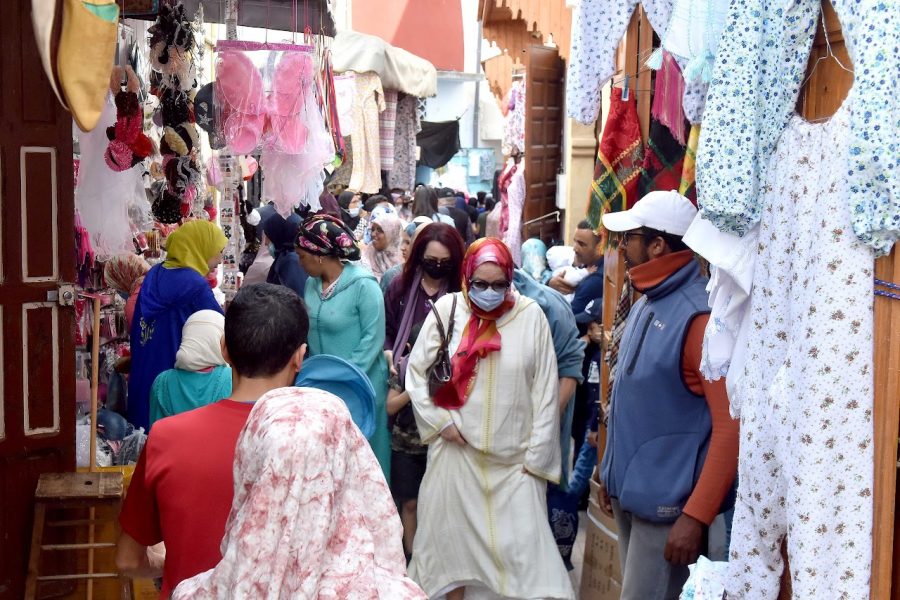
Informal employment in Morocco has reached 77.3% of the workforce , according to a World Bank report called “The Informal Sector and Inclusive Growth in the Middle East and North Africa Region”.
Despite Morocco’s shared traits with Egypt and Tunisia, the two nations scored 62.5% and 43.9% respectively, according to the World Bank.
The report examines how chances for socioeconomic progress are impacted by informal work in Morocco, Egypt, and Tunisia, three countries in North Africa.
Rates of informal work in the three countries remain higher than most countries in the region.
“Most workers in developing countries work in informal jobs, which include any jobs that do not provide social security benefits.” Said the report.
Approximately two out of every three workers in the Middle East and North Africa region are employed in informal positions, with men making up 63% of this group while women make up 58.1%.
The rise in the number of informal jobs in North African nations brings up a number of issues, including “limited access of families to social protection and insurance,” “obstacles to productivity and growth,” and “limited public finances.”
Additionally, deeper structural challenges in the economy are brought on by informal employment, which results in “slower growth and less equitable growth.”
The level of informality was determined by a number of elements, including social insurance, the costs and processes of the legal and tax systems, the application of rules and regulations, the procedures for registering businesses, the resolution of commercial disputes, credit availability, corruption, and unfair competition.
In the Middle East and North Africa region, the World Bank report suggests that countries “start the transition to a social protection system that allows all citizens to access basic health services; and at least a minimum income in old age.”
Advocating “coordination of reforms and policy optimization through the initiation of targeted social protection reforms” was another recommendation made in the report.
Additionally, the report called for “private sector reforms” that would facilitate legislation that aim to create job stability and streamline the registration process for businesses while simultaneously promoting formal employment and raising productivity.







unfortunately it’s worst amongst the male population of Morocco especially young adults who are looking for low wage jobs … putting women in the workforce was the worst decision unfortunately.