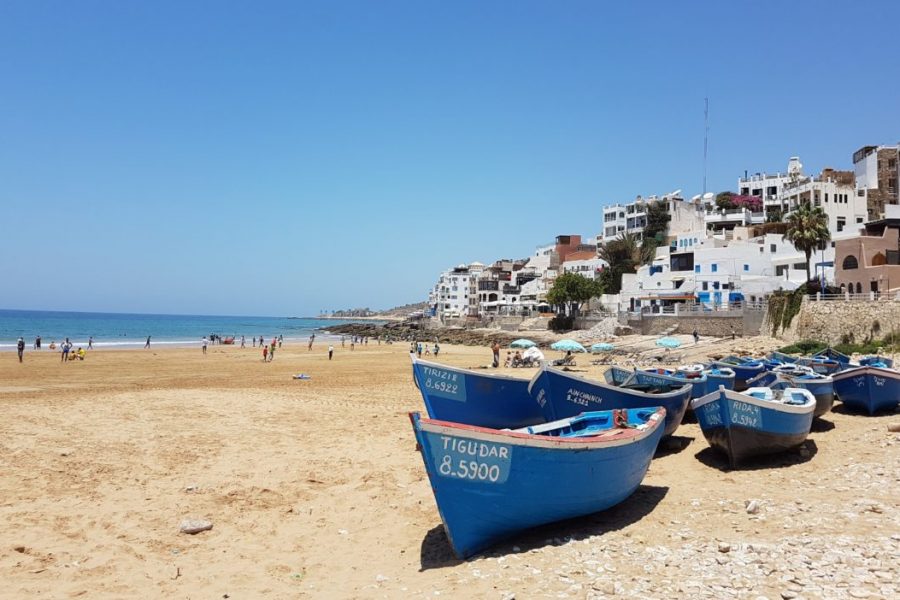
Morocco’s Ministry of Energy Transition and Sustainable Development, together with the National Laboratory for Pollution Studies and Monitoring, shared the latest findings from their monitoring program for bathing water quality and beach sands.
The program included important components, such as monitoring water quality at 496 stations across 193 beaches. The assessment also involved evaluating sand quality and identifying marine litter at 61 beaches, specifically focusing on 38 along the Atlantic coast and 23 along the Mediterranean coast.
The results revealed a stable overall percentage of stations suitable for bathing. However, further efforts and measures from all stakeholders are necessary to improve water quality.
The study highlighted that 70 to 80% of waste found in seas and coasts originates from land sources, with plastic waste making up over 80% of the total. Notably, specific items like cigarette butts, plastic caps and lids, and candy wrappers and sticks accounted for approximately 60% of the surveyed items.
The assessment process included analyzing fungi and identifying marine litter, particularly plastic. The program generated seven environmental reports on bathing water, serving as proactive tools for managing water quality. So far, a total of 173 reports have been produced.
The analysis also indicated the presence of fungi in some beach sands which do not pose a threat to the health of beachgoers.
The ministry has established mechanisms utilizing modern technologies such as dedicated websites and applications. It has implemented various environmental monitoring and assessment programs, including regional observatories for sustainable development, pollution monitoring programs, household waste management, and liquid sanitation programs.
These initiatives aim to monitor environmental quality, especially in marine and coastal areas, aligning with Morocco’s commitments to pollution control and ensuring a healthy environment for present and future generations.
The ministry has also initiated several programs and projects, such as the “MEDPOL” and “IMAP” programs under the Barcelona Convention framework.
These initiatives specifically focus on monitoring marine and coastal pollution resulting from water runoff and discharges in the Mediterranean region, and they are carried out in collaboration with relevant stakeholders.
The recent environmental incidents in the Gulf of Oued Dahab and Larache have underscored the pressing need for action.
Plastic pollution has emerged as a major concern, with an alarming annual flow of approximately 11 million tons of plastic waste into oceans. This number is projected to triple by 2040, posing a significant threat to over 800 marine and coastal species.



add your comment
Terms of publication : Not to offend the writer, people, sacred things, or attack religions or the divine self, and refrain from racist incitement and insults.