
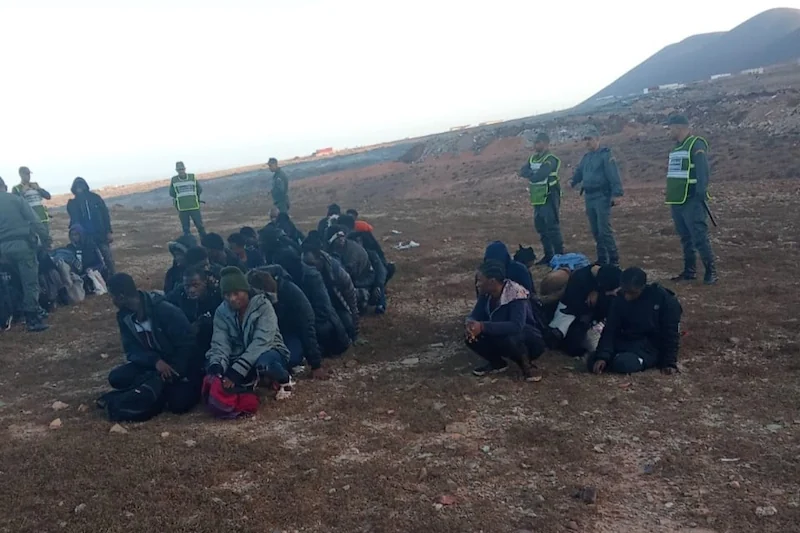
Human trafficking organizations have intensified their illicit operations along the Moroccan coasts, capitalizing on a recent surge in individuals attempting to illegally migrate to the Spanish coast.
This increase in migration attempts is attributed to favorable weather conditions during the summer season, as reported by Hespress AR.
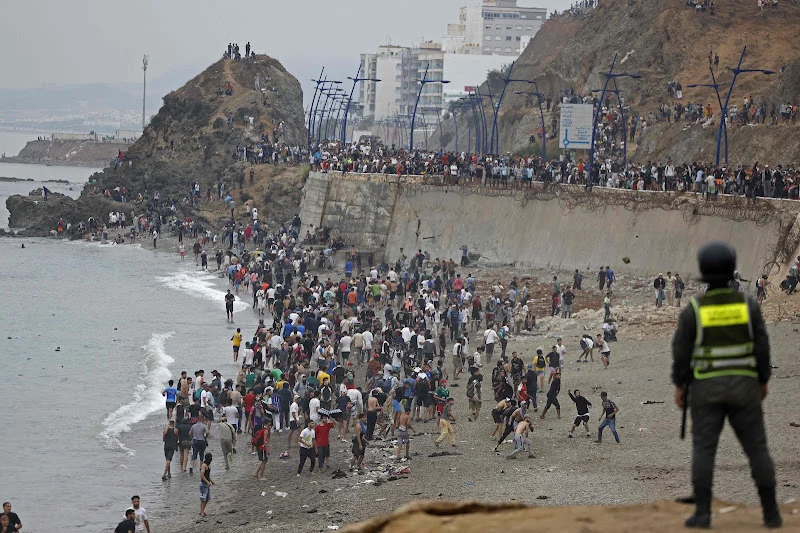
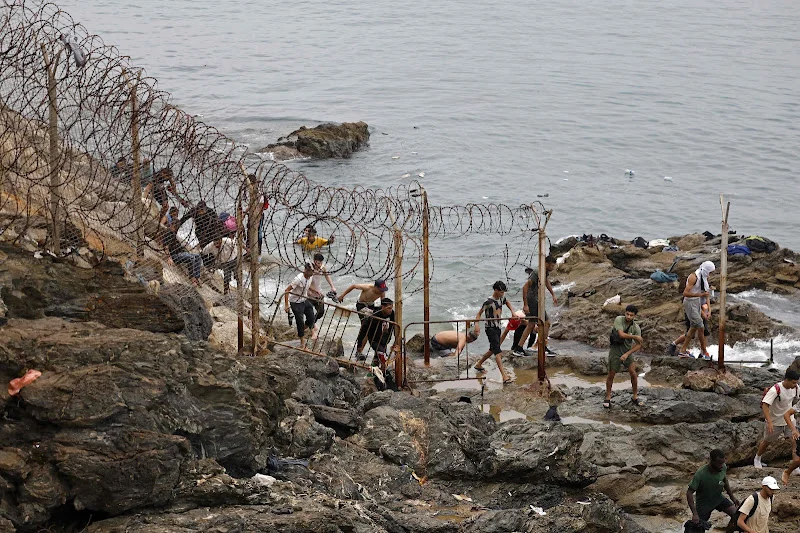
In response to the events that unfolded in Ceuta and Melilla, Moroccan authorities are expressing concerns and implementing heightened security measures in border regions. The impact of enhanced surveillance at northern border crossings has consequently led to a shift in irregular migration activities towards southern regions.
Exploiting the seasonal vacation schedules, criminal groups are leveraging the opportunity to facilitate illegal immigration across sea borders. This presents a significant challenge for both Moroccan and Spanish border guards, who must diligently monitor the coasts throughout the entire summer.
Nonetheless, the collaborative efforts between Madrid and Rabat in recent months have proven instrumental in thwarting numerous attempts at irregular migration, particularly in the Canary Islands and at shared border crossings. Since resolving a diplomatic dispute last year, the number of arrivals from Morocco into Spain has notably decreased. Consequently, both nations have intensified their cooperation to mitigate migration flows, and Morocco has proactively implemented measures to prevent migrants from entering Spain.
According to Muhammad Benaissa, a representative from the Northern Observatory for Human Rights, the period from May to September is the prime time for irregular migration attempts. The individuals involved in these attempts comprise not only individuals from Sub-Saharan countries but also Moroccans, as well as refugees from diverse Arab, Asian, and African nationalities.
The European Union (EU) maintains a strong and reliable partnership with Morocco, recognizing its crucial role in migration management. Thanks in part to Morocco’s assistance, irregular migrant flows to Spain have declined by approximately 36% during the first four months of this year compared to the same period last year, as confirmed by the Spanish Ministry of Interior.
Specifically, the number of irregular immigrants entering Spain decreased from 10,256 at the end of April 2022 to 6,525 during the same period in 2023, indicating a decline of 36.38%. Notably, arrivals to the Canary Islands have halved, experiencing a decline of 51.52%, while the number of unauthorized immigrants entering the Spanish peninsula and the Balearic Islands has increased by 28.94%.






add your comment
Terms of publication : Not to offend the writer, people, sacred things, or attack religions or the divine self, and refrain from racist incitement and insults.