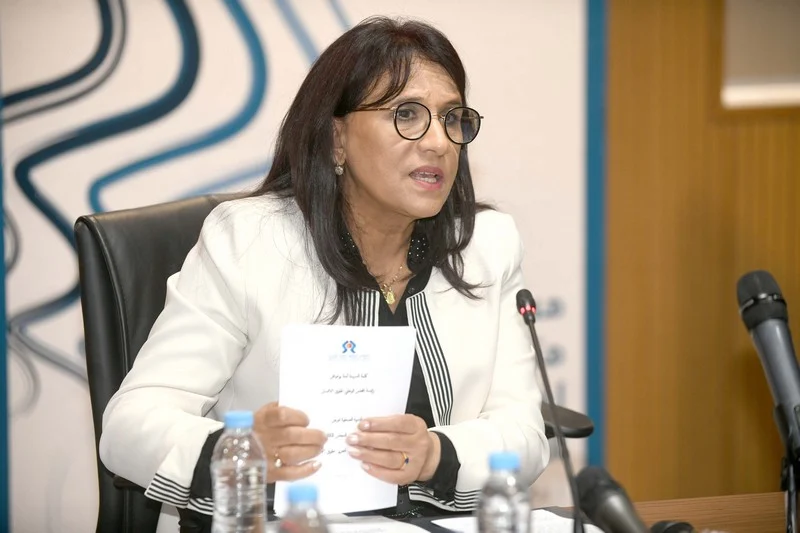
In the midst of rampant public debate concerning rights and personal freedoms legislation, the President of the National Council for Human Rights (CNDH) expressed her optimism about the positive dialogues in Parliament to expand the scope of individual rights and freedoms in Morocco.
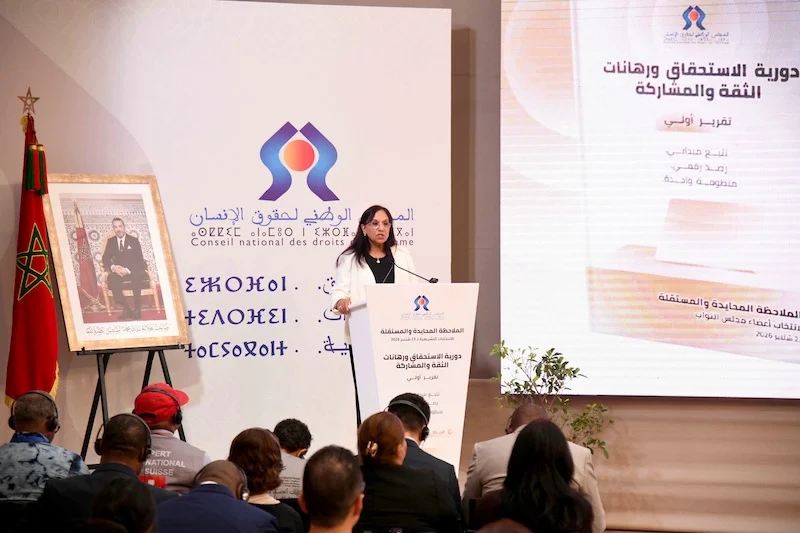
Bouayach said in a meeting to present the annual report of the National Council for Human Rights today, that the Council considers that the bills that will be discussed in Parliament “should be laws of freedoms, rights and equality,” and that their contents “should respond to the cultural transformations taking place in Moroccan society.”
In the midst of the ongoing tension between conservatives and modernists regarding the limiting laws of freedoms, the President said: “We are optimistic about Parliament’s handling of the issue.”
Bouayach’s optimism stems from the recent mass-involvement of various actors and citizens in reaction to the shocking child rape in Tifelt,which reflected in the Rabat Court of Appeals decision.
“The voice of civil society was heard in court, and we hope that the mobilization around the legislative reforms will have a voice in Parliament discussions as well.”
Popular calls for legislative reforms for both the criminal and family code have echoed in Parliament for years, but as the legislative takes on these reform challenges, civil society continues to request “real change.”
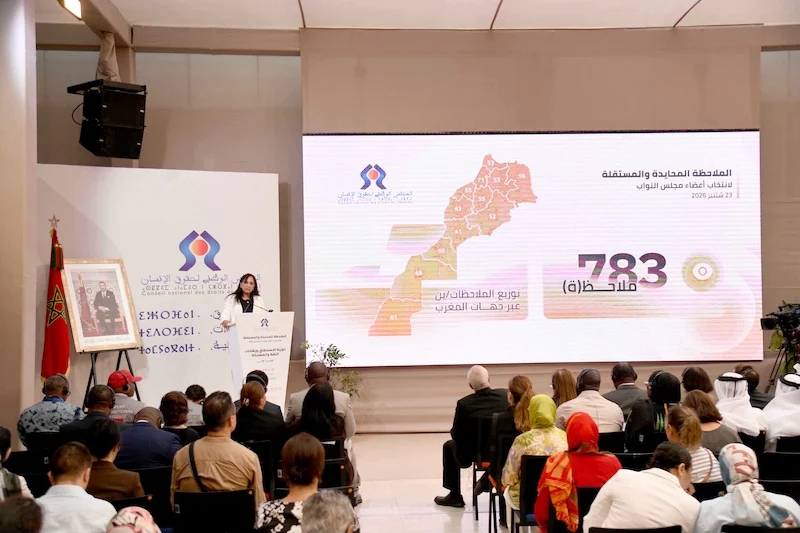
Entitled “Redefining priorities to consolidate the effectiveness of rights”, the CNDH report presents in particular an assessment of the actions of the CNDH in terms of protection, promotion and prevention of human rights violations, with figures on 21 thematic rights and 5 categorical rights, in addition to the rights of women and girls.
According to Bouayach, the document details some of the failures related to rights. She says that one of the most important conclusions it makes relates to the need for regular monitoring and evaluation of public policies.
“Although the trend is beginning to reverse, the lack of clear and quantified objectives for public policies, whether in terms of time or outcome, makes their monitoring and evaluation (M&E) difficult,” she explains.
She also emphasizes that the work carried out by the CNDH, both through the publication of its annual and thematic reports, although relevant and necessary, can only shed light on certain limited aspects, depending on its prerogatives, but it can in no way replace a systematic M&E of public policies, which is a real software program for translating written rights into effective, tangible and enforceable rights for citizens.
What is new, according to the president, is the recourse of the citizen to a non-judicial mechanism, namely the CNDH, in order to guarantee his right of access to justice, hence the need to reinforce the dynamics of reform in progress for an efficient and impartial justice.
“It is not an exaggeration to say that the changes that our society is experiencing, as well as the continuous efforts of all, are giving birth to a valuable societal dynamic. We are in a context of public debate and soon parliamentary, around the amendment of four legislative texts, namely the Penal Code, the Code of Criminal Procedure, the Code of Civil Procedure and the Family Code, which constitute the basis for managing the various relationships within society,” she argues.
Similarly, Bouayach believes that these Codes are of primary importance for the consolidation of the rule of law by redesigning the criminal policy as a policy to protect freedoms and rights and equality between women and men.
In addition, the CNDH reported that the Council and its regional commissions as well as the three national mechanisms received a total of 3,245 complaints and requests, of which 1,895 were processed by the CRDH, 70 by the National Recourse Mechanism for children victims of violation of their rights, and 47 by the National Mechanism for the protection of the rights of persons with disabilities.
The number of complaints and requests received in 2022 corresponds to an increase of 7.52% compared to 2021.
Regarding press freedom in Morocco and the low rating issued by Reporters Without Borders (RSF), Bouayach called on the NGO to update its data.
“We do not comment since we consider our reports to be the reference,” she said, noting that “the Council has a relationship of communication and dialogue with RSF.
We will present our data, information and analysis of the situation to this organization,” referring to the need to update this data.
“This report that we present today is a response to the French organization,” said the president of the CNDH.



add your comment
Terms of publication : Not to offend the writer, people, sacred things, or attack religions or the divine self, and refrain from racist incitement and insults.