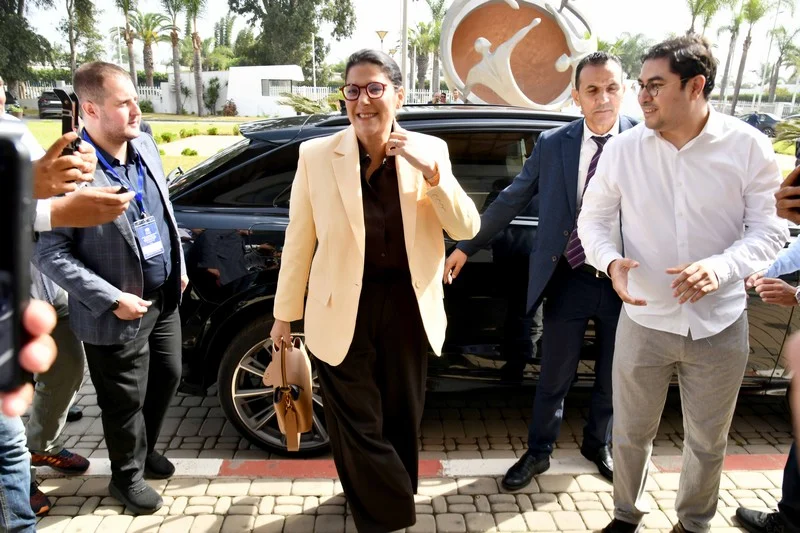
There are good reasons to doubt that much will change under Fatima Zahra Mansouri. She takes office after an election most Moroccans chose to sit out. Being a woman buys her no patience from the young Moroccans who rushed into Sebta weeks before the vote, and no exemption from the demand they took to the streets for hospitals and schools. She should be judged, like everyone else, on what she does with the office.
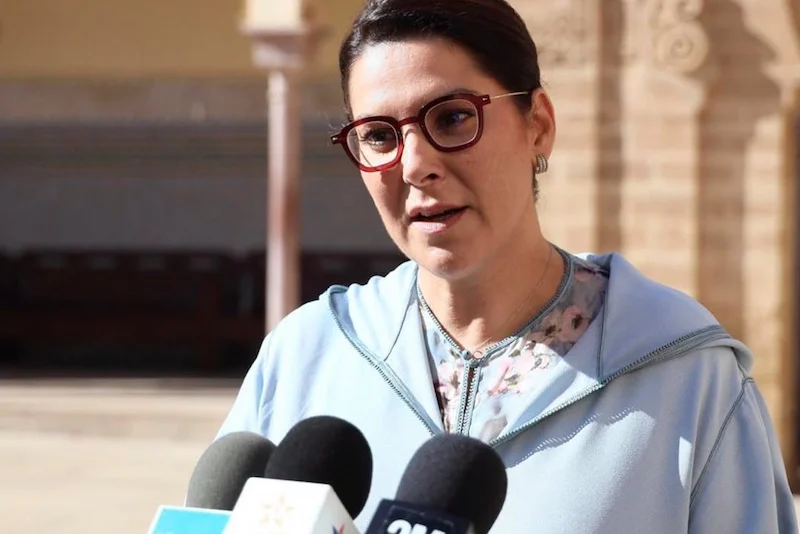
But that judgment will not capture everything her appointment changes. Her male predecessors could disappoint voters without anyone asking whether men belonged in the job. Mansouri will be read as a woman before she is read as head of government, and the reading has began before she formed government: her pixie cut, the cheek kisses she exchanges with male colleagues, the question of where she will pray beside the King. Will she bring Sephora to Morocco? Will women get menstrual leave, or longer maternity leave? Are those bags under her eyes, and is that an Hermes she’s carrying?
Seventeen men held Morocco’s top civilian post before Mansouri, the “natural occupants” of authority, in sociologist Nirmal Puwar’s terms. In her 2004 book Space Invaders, Puwar argued that, over time, the body that holds an office begins to seem like the body it was built for, and a woman stepping into it suddenly reveals how much of the old picture was male without anyone having to say so.
None of that requires Mansouri to govern differently from a man. Joyce Banda, Malawi’s first female president, was a sidelined deputy, expelled from the ruling party, when her predecessor’s sudden death brought her to power in 2012.
She inherited his office and, crucially, his Parliament. The same MPs remained, their formal powers stayed the same and no new group of women entered the chamber. Almost by accident, Banda became the perfect experiment that allowed researchers to observe what happens when you change the sex of the person at the top and leave almost everything underneath in place.
She was entering a political culture Banda herself reduced to a proverb: “A female cow does not pull the cart, the female cow is kept for milking.” Under her presidency, women in Parliament began behaving less like that rule applied to them. Female MPs, who had spoken roughly half as often as men, were soon speaking nearly as often, and not just on women’s issues. Across nearly 110,000 interventions, the gap narrowed on economy, governance and crime.
“When a woman takes up a position of such magnitude, it challenges the traditional understandings of female leadership being a remarkable deviation from the norm,” according to political scientists Michael Wahman, Nikolaos Frantzeskakis and Tevfik Murat Yildirim, whose 2021 American Political Science Review study has become a reference point in research on female political leadership.
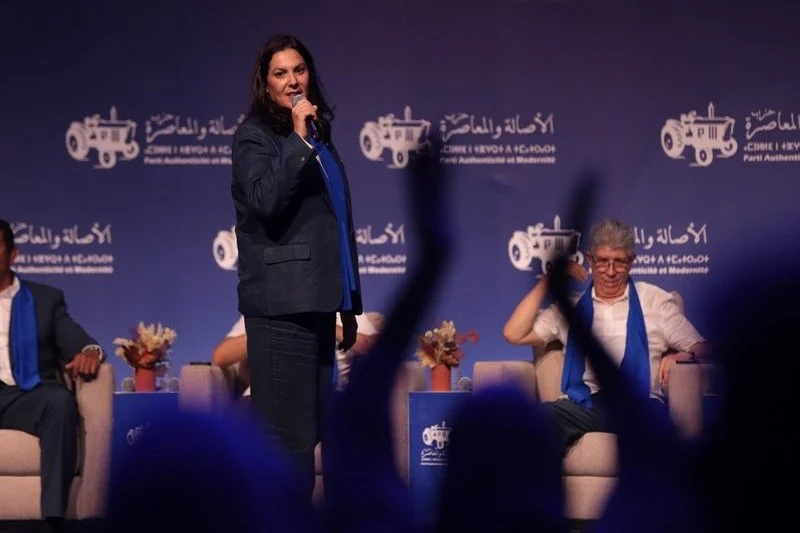
Within six days, having Mansouri at the top had begun to change who could look natural in another position of authority. Popular Movement secretary-general Mohamed Ouzzine said Rim Chabat was being considered to head the party’s parliamentary group. “We are moving toward having a woman as head of the group after a woman was appointed head of government,” he said.
But for opposition figure, Fatima Tamni there is little interest in celebrating Mansouri simply because she is a woman. “The real question is: what kind of government will she lead?” she asks, even though research suggests gender can enter that judgment before the record does.
In Indian villages, men rated the same leader’s performance lower when they believed the leader was a woman, a gap that disappeared among men who had already lived under female leadership, and in experiments on companies already in trouble, people became more willing to put women in charge, preferring the understanding and sympathetic qualities they associated with them, a pattern researchers called “think crisis, think female,” even as other work found that women elevated in such moments could inherit both the risk of failure and the blame that followed.
Mansouri was in Rabat when the Al Haouz earthquake struck at 11:11 p.m. on September 8, 2023. Within three hours she was on Jemaa El Fna in trainers instead of heels, while the government drew criticism for slow and scattered communication.
Eight days later in Amizmiz, residents crowded around her with no podium or microphone between them, calling her by her first name and pressing her on compensation. “I haven’t slept in a week,” she told them, and kept answering.
Years later, hundreds of families were still outside the aid lists, according to the national coordination of earthquake victims. In Marrakech, where she stayed mayor while serving as a minister, opposition councillors accused her of governing at a distance, and residents of the city’s outlying districts complained of missing transport, sanitation and roads.
“The earthquake struck people before it brought down stone,” said Montasser Ithri, a member of the victims’ coordination.
Scholars of foreign policy describe this as a game played on several levels at once, in which what a woman leader shows at home in a crisis travels abroad and becomes part of how her country is seen, much as Canada and Sweden turned equality at home into a national brand.
In Africa, that image now has rooms of its own. Around the African Union’s formal summits runs a parallel circuit built around women in power, from the African Women Leaders Network’s retreats, which gather sitting and former presidents with AU leaders, to the female presidents’ gatherings held on the margins of the AU summit.
With Mansouri at the head of its government, Morocco now has a seat in those rooms, beside leaders from Namibia and South Africa, long opposed to it on the Sahara. There the dispute is on no agenda, and Rabat’s case can be made in conversation.
Such rooms have opened doors before. Liberian women sat in on the 2003 peace talks in Akosombo, and Former President of Liberi, Ellen Johnson Sirleaf later said that, once unified, they helped open dialogue among the region’s leaders.
“Hold the African woman’s hand in those closed sessions,” a former Ugandan vice-president told Ethiopia’s first female president when she took office in 2018, speaking of the summits where heads of state meet alone.
Mansouri called her appointment “a message to all women in the kingdom.” In the Indian villages where men had once marked down a woman’s speech, researchers later found that girls raised under women leaders wanted more for themselves, and their parents wanted more for them.
Mansouri may disappoint, her coalition may fracture, and her party may give her critics plenty to work with, but a girl growing up in Amizmiz or Marrakech will still have seen a woman pull the cart.

add your comment
Terms of publication : Not to offend the writer, people, sacred things, or attack religions or the divine self, and refrain from racist incitement and insults.