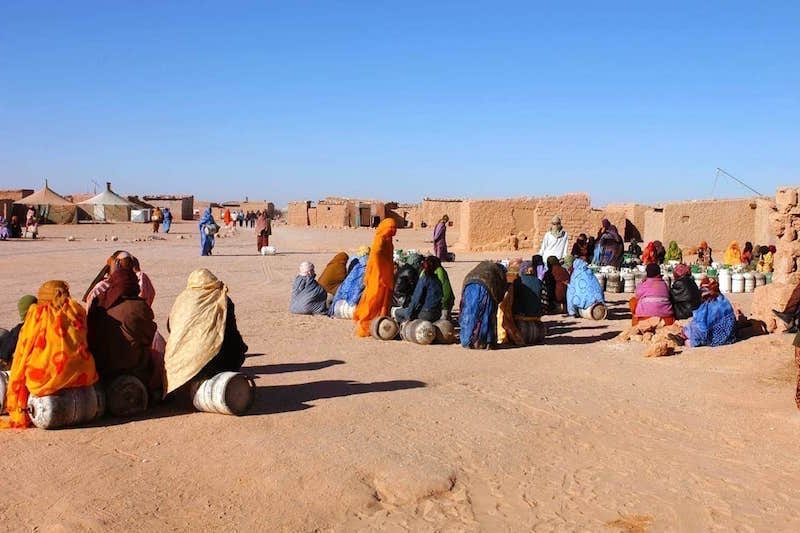
The researcher at the Institute of International Politics and Economics in Belgrade, Mihajlo Vucic, questioned Algeria on its responsibility in the systematic detour, by the “polisario”, of humanitarian aid intended for the populations sequestered in the camps of Tindouf, in light of the conclusions of the Report of the evaluation of the action of the World Food Program (WFP) in Algeria 2019-2022.
“States that have the ability to influence the policies of +polisario+, first and foremost Algeria, are required under international law, and not only from a moral point of view, to prevent the exploitation of the situation of the sequestered populations on its territory and the use of humanitarian funds for illicit pecuniary purposes,” said the Serbian researcher, highlighting the salient points of the report published by the UN agency, based in Rome.
In the opinion of Mr. Vucic, also associate professor at the Faculty of Diplomacy and Security at the University of Belgrade, the WFP report could serve as “additional evidence” of the detour of humanitarian aid to the population of the Tindouf camps, which “Morocco has continued to denounce for many years to the international community.
Indeed, the living conditions in these camps, where the population lives in a certain legal limbo while being deprived of the protection of the 1951 Convention relating to the Status of Refugees, are marked by chronic malnutrition, especially among women and children, he noted, noting that the detour of food to the black market and out of reach of those who need it most “makes this unique situation even more alarming.
For the researcher, the WFP report pointed out the impossibility for specialized UN agencies to have unhindered access to the camps, calling the internal control of the distribution of humanitarian aid carried out by the “polisario” of “biased in nature”.
“The control of the distribution of humanitarian aid granted to these militias by Algeria could be characterized, according to the rules of International Humanitarian Law, as an illegal delegation of authority to be exercised by the state to an armed separatist group with no status or responsibility in the eyes of international law,” he stressed, warning of “additional security risks” arising from the close links of the “polisario” with terrorist groups operating in the Sahel.
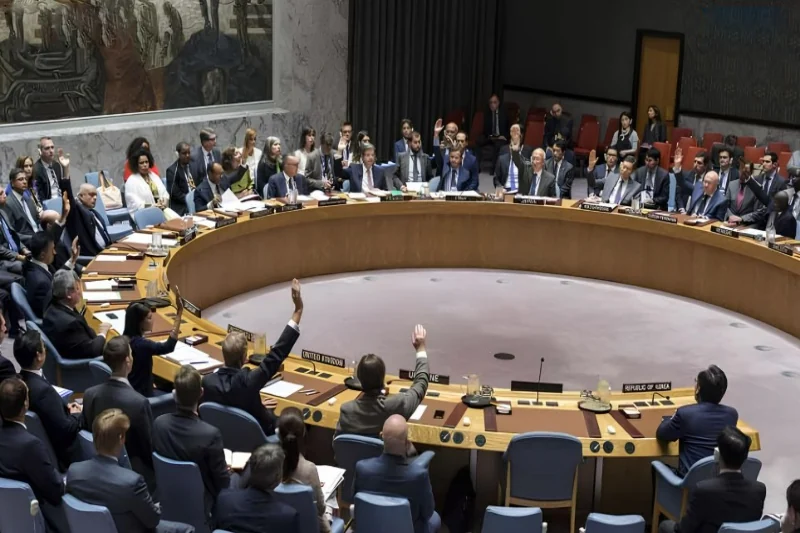
Mr. Vucic also recalled that all UN Security Council resolutions, since 2011, call on Algeria to authorize the census of the population of the Tindouf camps, in accordance with international humanitarian law.
The new Security Council resolution 2654 has (in the preambular paragraph No. 23) “urged again” Algeria that the populations of the Tindouf camps “be duly registered and stressed the importance that all necessary measures be taken to this end,” continued the expert, noting that “the same request has been addressed (in the operative paragraph No. 15) to UN agencies to observe the +best practices+ of the UN in the delivery of humanitarian aid to the populations of the camps.”
Regarding the financial flows created for the benefit of the leaders of the “polisario”, the researcher recalled that the Anti-Fraud Office of the European Union (OLAF) had pointed, in a report made public in 2015, a methodical detour for more than four decades of humanitarian aid granted to the Sahrawi population sequestered in the camps of Tindouf on Algerian territory.
This report based on an investigation conducted by OLAF has highlighted the responsibility of Algeria, “active accomplice in the detour of such aid, which usually begins upon arrival of shipments at the Algerian port of Oran,” he said, noting that these detour have been reported by other inspection reports of the Office of the United Nations High Commissioner for Refugees, as well as other intergovernmental and non-governmental organizations.
And to specify that in his report of 2021, the UN Secretary General, Antonio Guterres, had drawn attention to the misappropriation of funds and food aid intended for the population sequestered by the “polisario”. For its part, the European Parliament adopted a resolution calling on the EU to audit the use of European humanitarian aid by the “polisario” since 2015.
Given all these facts, the expert in international law concluded that “any aid provided to +polisario+ by Algeria, whether financial, military or otherwise, would only perpetuate these illegal practices that are contrary to international legal norms recognized by Morocco and Algeria, as well as other members of the United Nations.”




add your comment
Terms of publication : Not to offend the writer, people, sacred things, or attack religions or the divine self, and refrain from racist incitement and insults.