
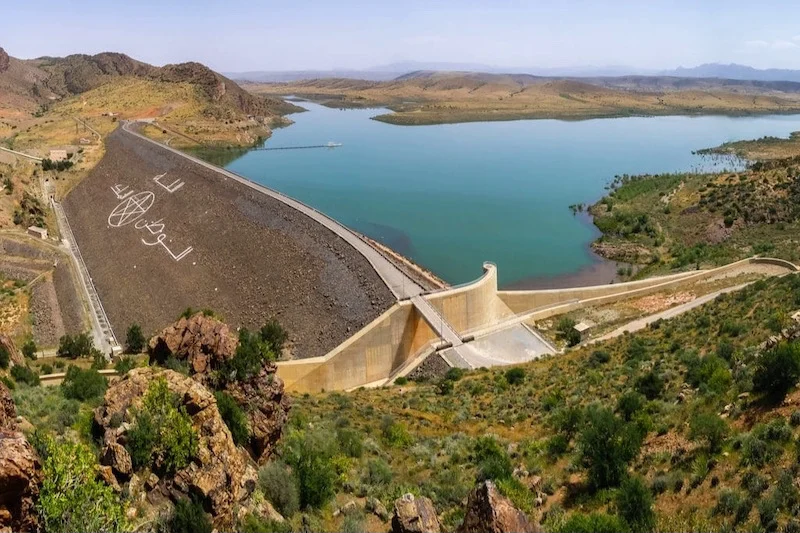
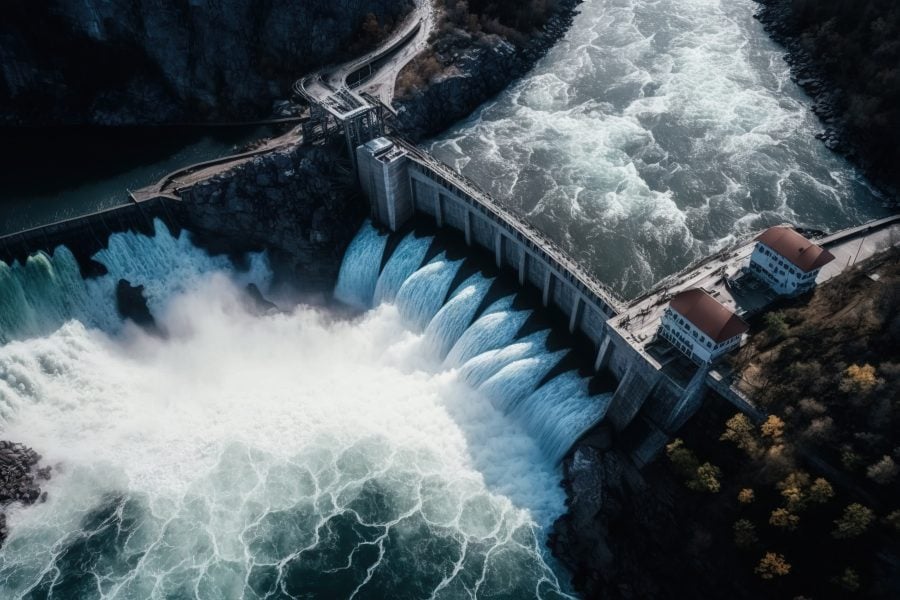
Morocco’s Ministry of Economy and Finance has revealed that almost half of the dams in the country are currently filled to more than 50 percent of their capacity, according to a report released by the Directorate of Financial Studies and Forecasts in March.
A total of 30 dams have received an impressive 61 percent of the national dam reserves, accounting for approximately 3.4 billion cubic meters of water.
The country’s main dams have seen a significant increase in water reserves, recording an annual surge of 6 percent due to recent rainfall.
The total water level in the dams has reached approximately 5.6 billion cubic meters, resulting in an overall filling rate of 34.8 percent, compared to last year’s 32.8 percent.
The regions that recorded the highest increase in water reserves include Tangier-Tetouan-Al-Hoceima, the Levant, Draa-Tafilalet, and Marrakesh-Safi.
Several areas in the country, such as Tangiers, Tetouan-Al-Hoceima, Rabat-Sale-Kenitra, Marrakech-Safi, and Fez-Meknes, have reported a filling rate that exceeded 50 percent, showcasing the nation’s progress in water resource management.
The Ministry’s report also shed light on the national program for the supply of potable water and irrigation, initiated by the Kingdom to ensure water security and mitigate the effects of climate change.
The program, with a budget of 140 billion dirhams, aims to keep pace with the demand for water resources and accelerate investment in the field of water. It involves constructing major dams in Bouregreg-Tensift, integrating five medium dams in Benslimane, Tata, Tiznit, Al Haouz, and Taroudant, and studying 200 additional projects for the period of 2025-2027.
The program primarily focuses on completing 129 small dams between 2022 and 2024.


add your comment
Terms of publication : Not to offend the writer, people, sacred things, or attack religions or the divine self, and refrain from racist incitement and insults.